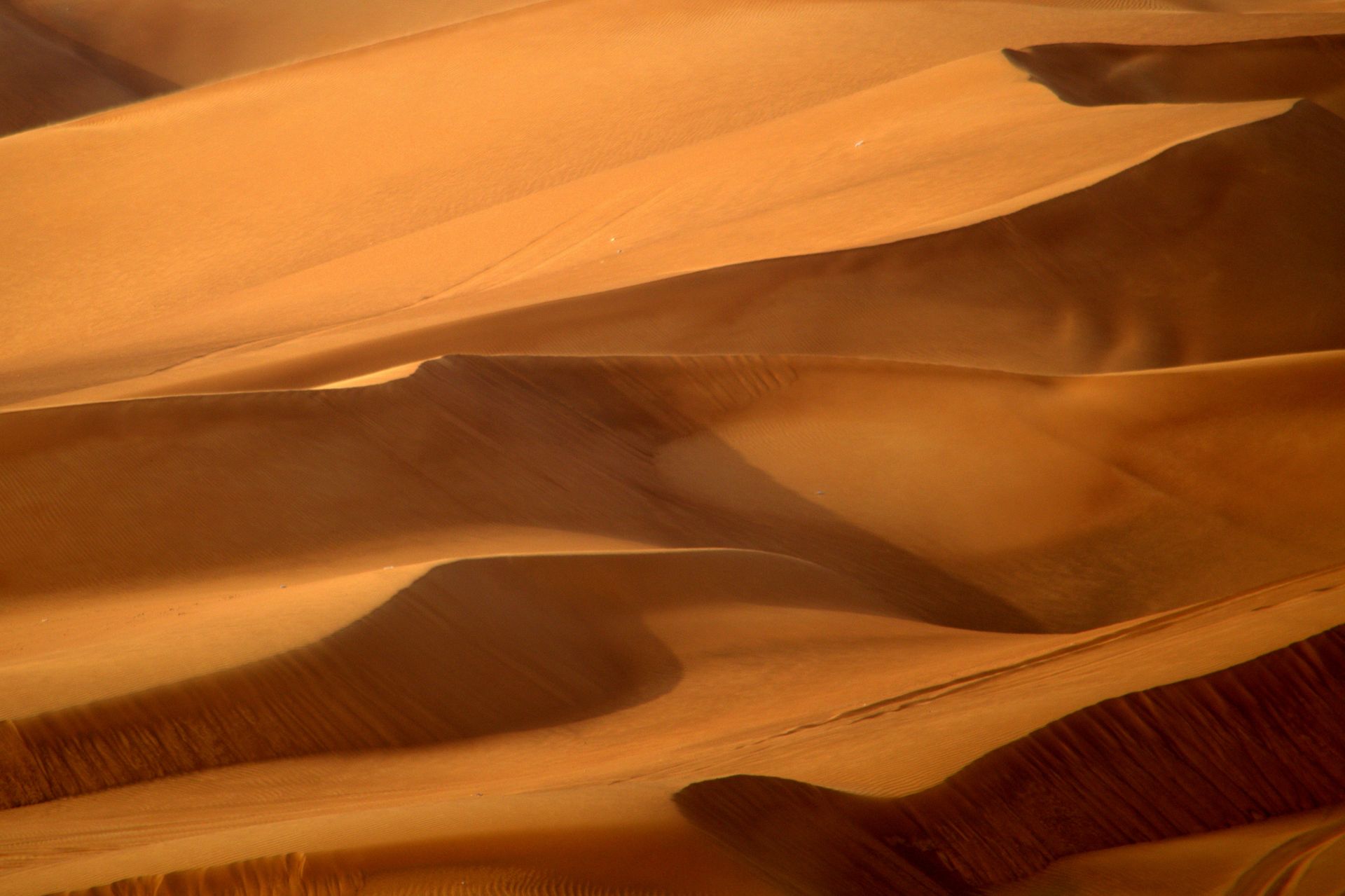
Arabian Gulf
United Arab Emirates
Desert, wadi and oasis: the Gulf's other rhythm.
This is the United Arab Emirates
Seven emirates, not all of them with a skyline.
Beyond the well-known cities lies a country of dunes, wadis and oasis villages with an entirely different pace. Anyone who knows only Dubai and Abu Dhabi has not yet seen half the country: the rust-red dunes of Liwa on the edge of the Empty Quarter, the gorges of the Hajar Mountains near Ras Al Khaimah, the palm gardens of Al Ain that have been fed for centuries by underground falaj channels.
The Emirates are not a contrast between old and new, but a country where both exist side by side. A quarter of an hour outside a city of skyscrapers, an entirely different landscape already begins: quieter, drier, with a horizon that doesn't rise but falls away.
In short
- Best time to go
- From November to March afternoons sit between 24 and 31 degrees and evenings cool down, good for mountains and desert. April and October are already hot, and from May to September temperatures reach 40 degrees or more.
- How long
- A week to ten days for a city, the Liwa dunes, the Hajar Mountains near Ras Al Khaimah and the east coast. Good roads let you give each region a few nights without long travel days.
- Who it suits
- Travellers who want to look beyond Dubai and Abu Dhabi: walking in the wadis of the Hajar Mountains, snorkelling on the east coast, a night among the Liwa dunes and the palm gardens of Al Ain.
- What sets it apart
- Combining several emirates shows more than a skyline: Fujairah is the only emirate lying entirely on the Gulf of Oman, and in Ras Al Khaimah the country's highest point, at 1,892 metres, lies on the flank of Jebel Jais.
The regions
One country, four entirely different landscapes.
The Emirates are only slightly larger than Belgium and the Netherlands combined, yet the distance between a dune at Liwa and a wadi near Ras Al Khaimah feels like another world.
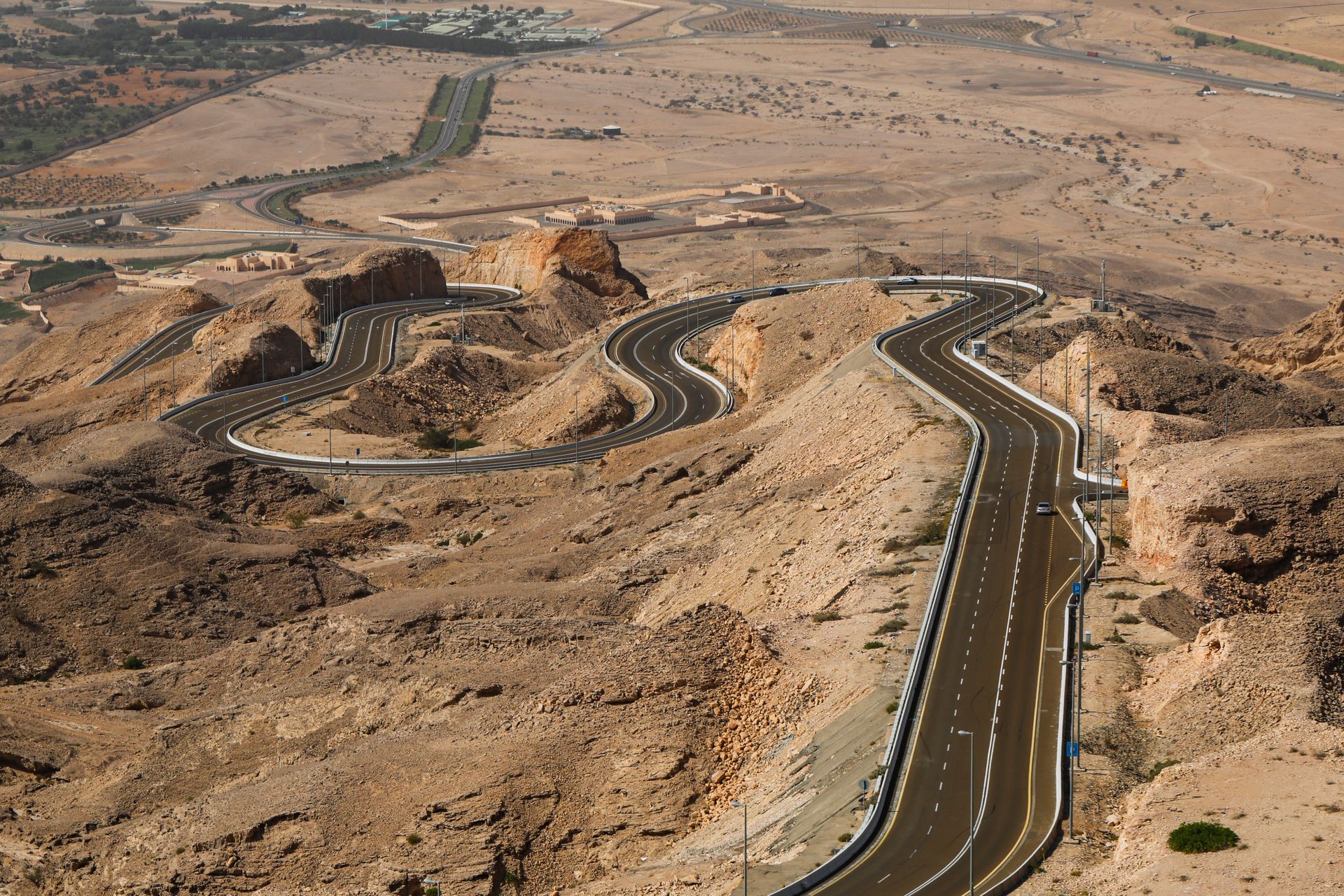
Oasis city
Al Ain
The 'garden city' against the border with Oman, built around an oasis that has given water for thousands of years. Falaj channels run right through the palm gardens, and from the top of Jebel Hafeet the view opens onto a plain that gives way abruptly to the mountains.
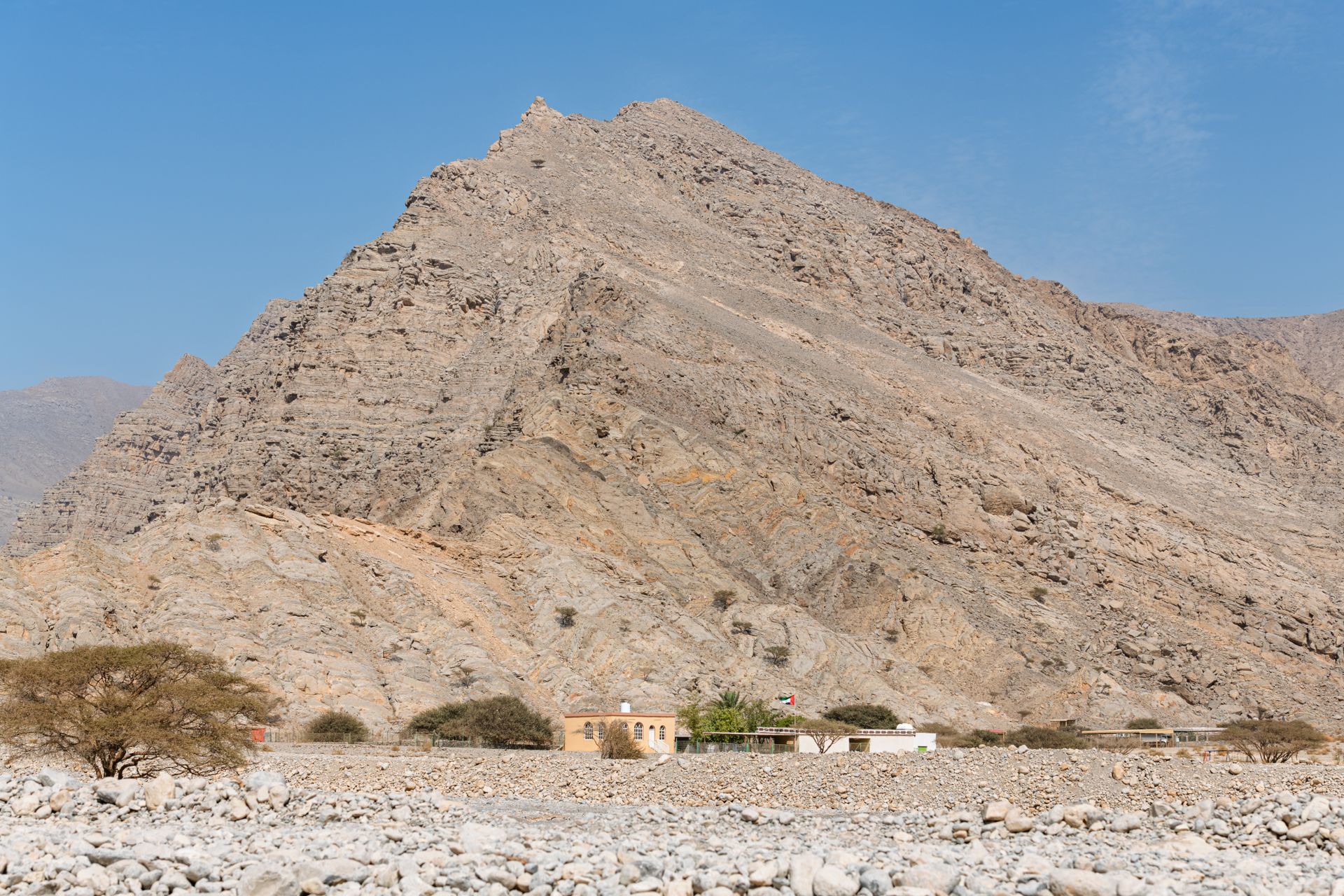
Mountain country
Ras Al Khaimah and the Hajar Mountains
The northernmost emirate leans against a mountain range that stretches all the way into Oman. Wadi Shawka and Wadi Bih cut deep gorges into the rock, with abandoned stone villages clinging to the mountainside.
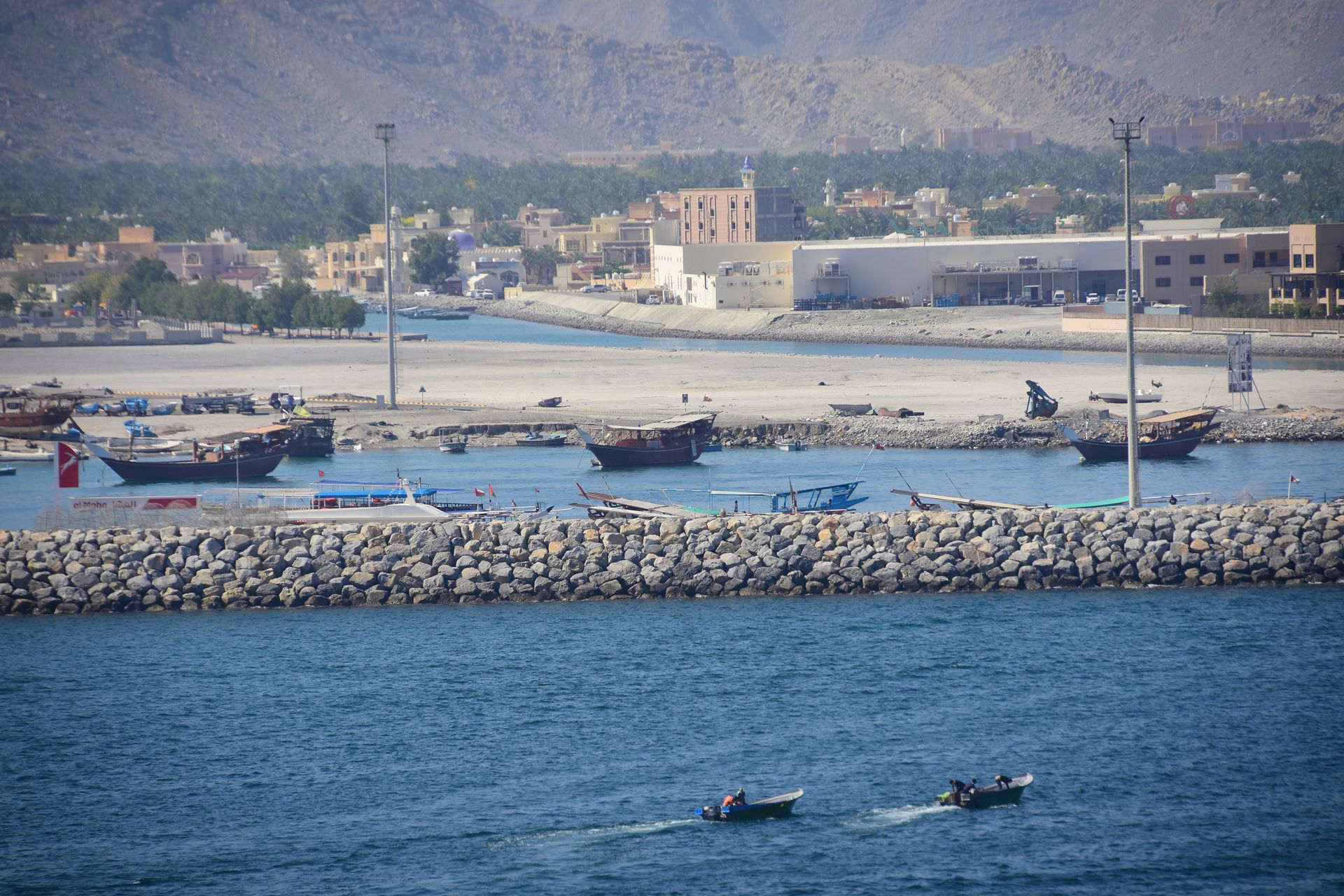
Coast
The east coast: Fujairah and Khor Fakkan
On the Gulf of Oman, where the mountains drop straight into the sea, sit fishing villages that have nothing to do with the familiar image of the Gulf coast. Dhows are still built on the beach here, and the reefs offshore remain little known to visitors.
Desert
Liwa and the edge of the Empty Quarter
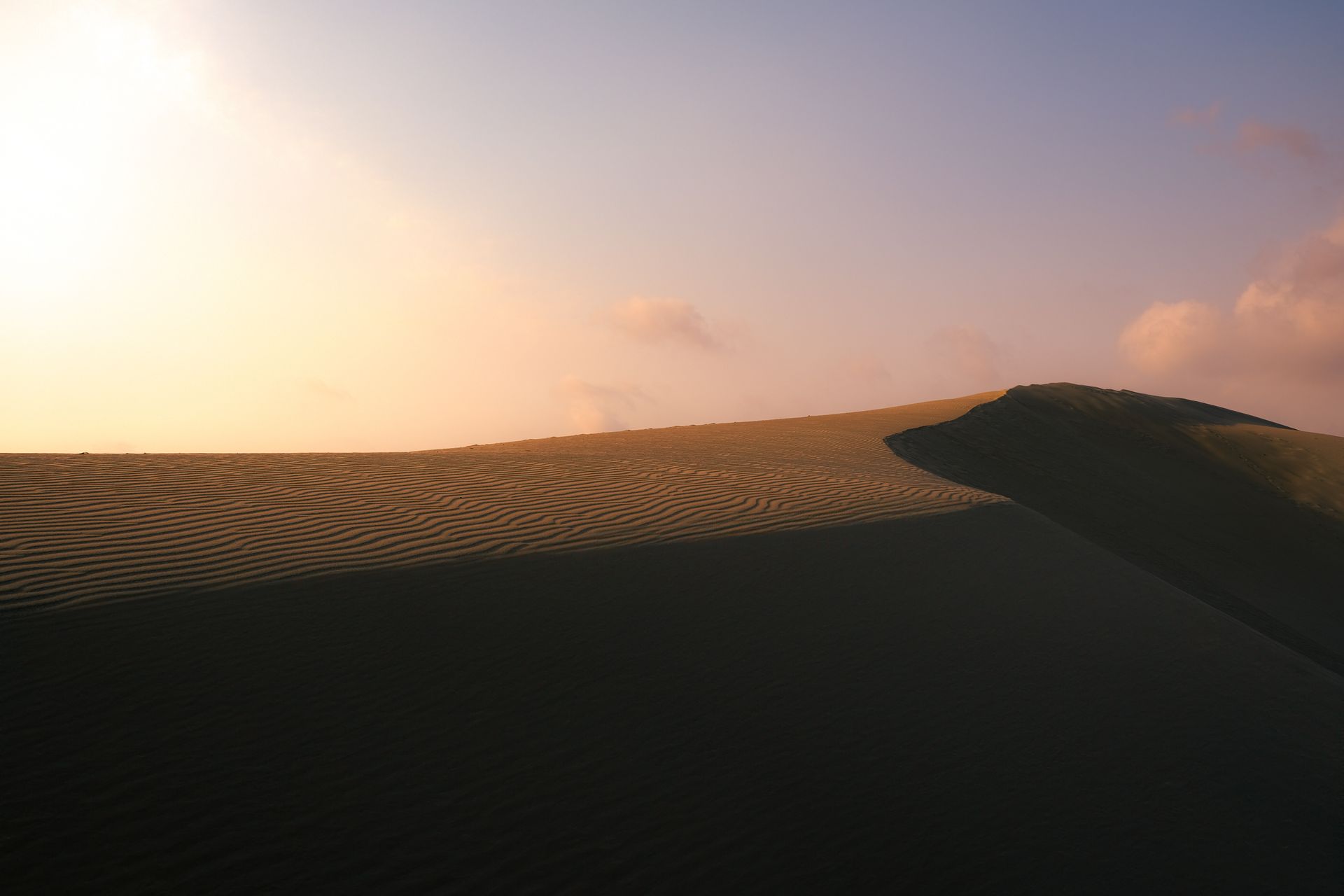
This is where the country's highest dunes begin, outliers of the Rub al Khali that stretches into Saudi Arabia. Liwa is where Bedouin families have long grazed their camels, and where the sand can rise up to a hundred metres.
People and customs
Hospitality as a fixed form, not a chance occurrence.
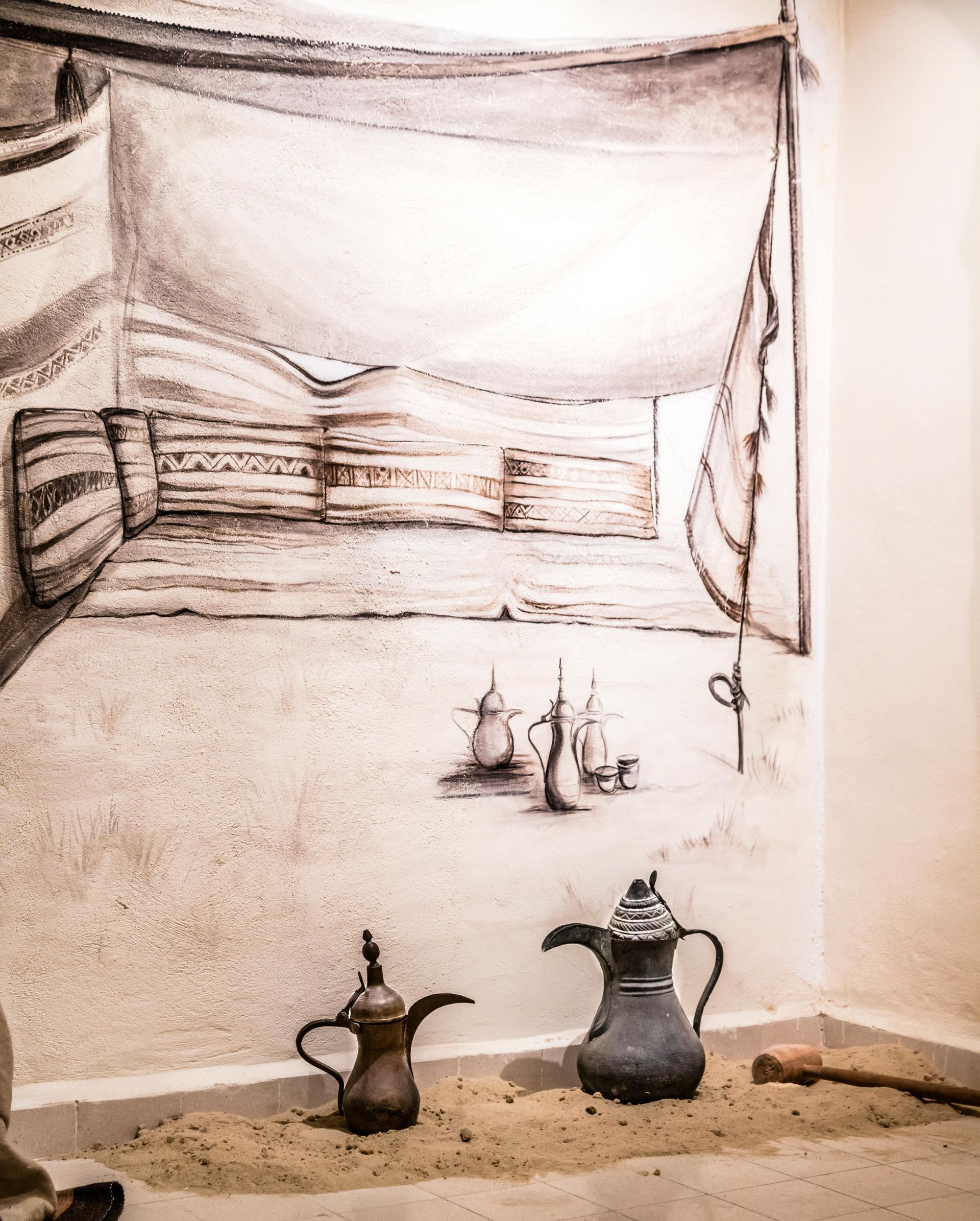
The majlis, the sitting room where guests are received, is more than a space: it is a custom that goes back to Bedouin culture before oil. Arabic coffee with cardamom is poured from a dallah, followed by dates, and a conversation that rarely hurries.
That tradition hasn't disappeared alongside the modern cities, it exists next to them. In Sharjah, the emirate that holds most firmly to its heritage, the old souks and the Heritage Area remain the heart of the city. Falconry, once a necessity for hunting, is now recognised UNESCO heritage and a sport that families pass down through generations.
Landscape
Three worlds within half a day of each other.
The dunes of Liwa
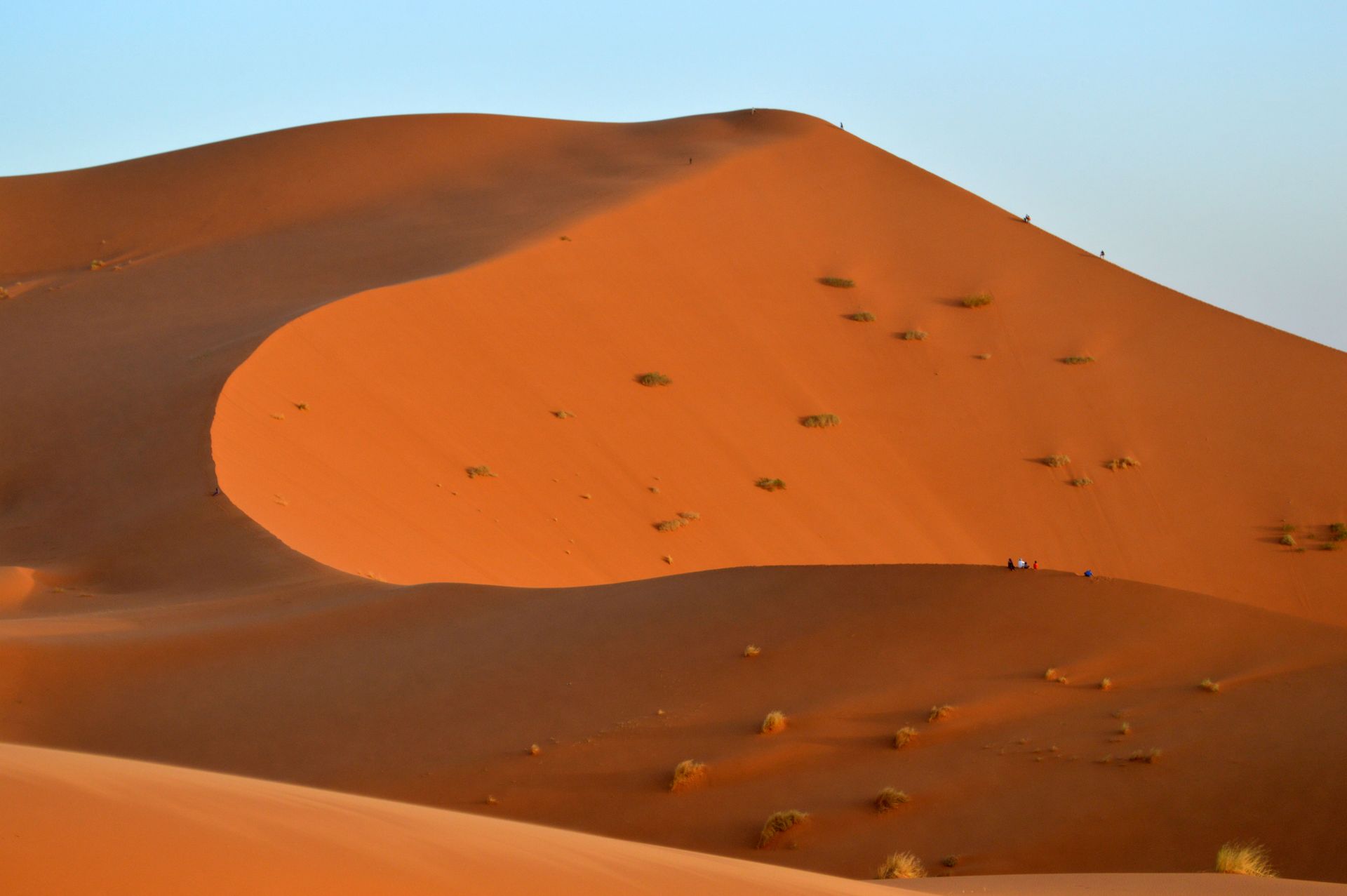
Red and gold dunes that shift colour with the position of the sun, and at night a sky free of any light pollution.
The wadis of the Hajar
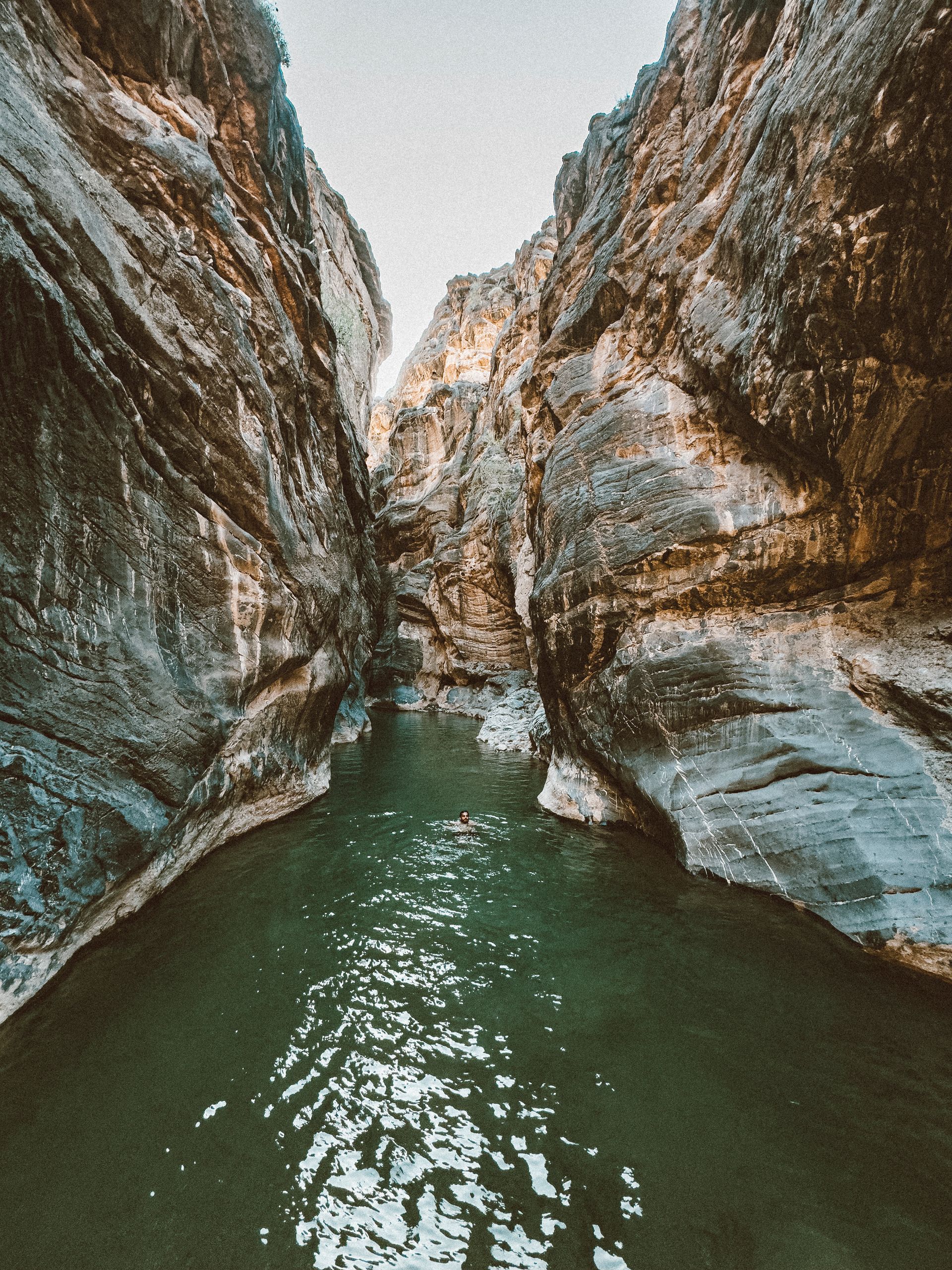
After rain, the dry riverbeds fill with clear water between rock walls, a landscape few people associate with this part of the Gulf.
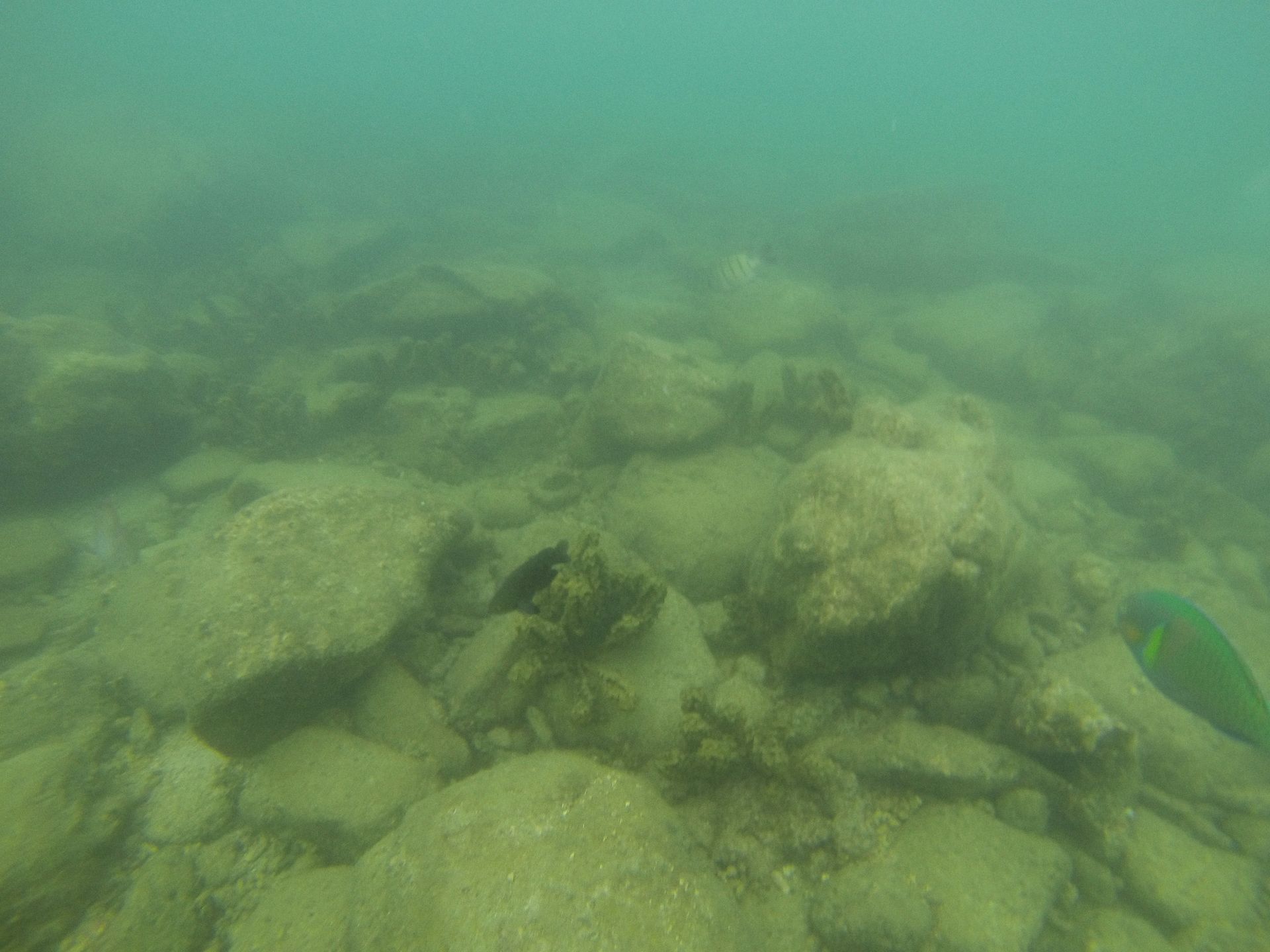
The reefs of the east coast
Off Dibba and Khor Fakkan lie coral formations that have remained relatively untouched, with turtles and a striking diversity of species for this latitude.
What a trip here can be
Possibilities, not a programme.
Every trip to the Emirates takes shape differently depending on what you're after. These are directions, not a fixed route.
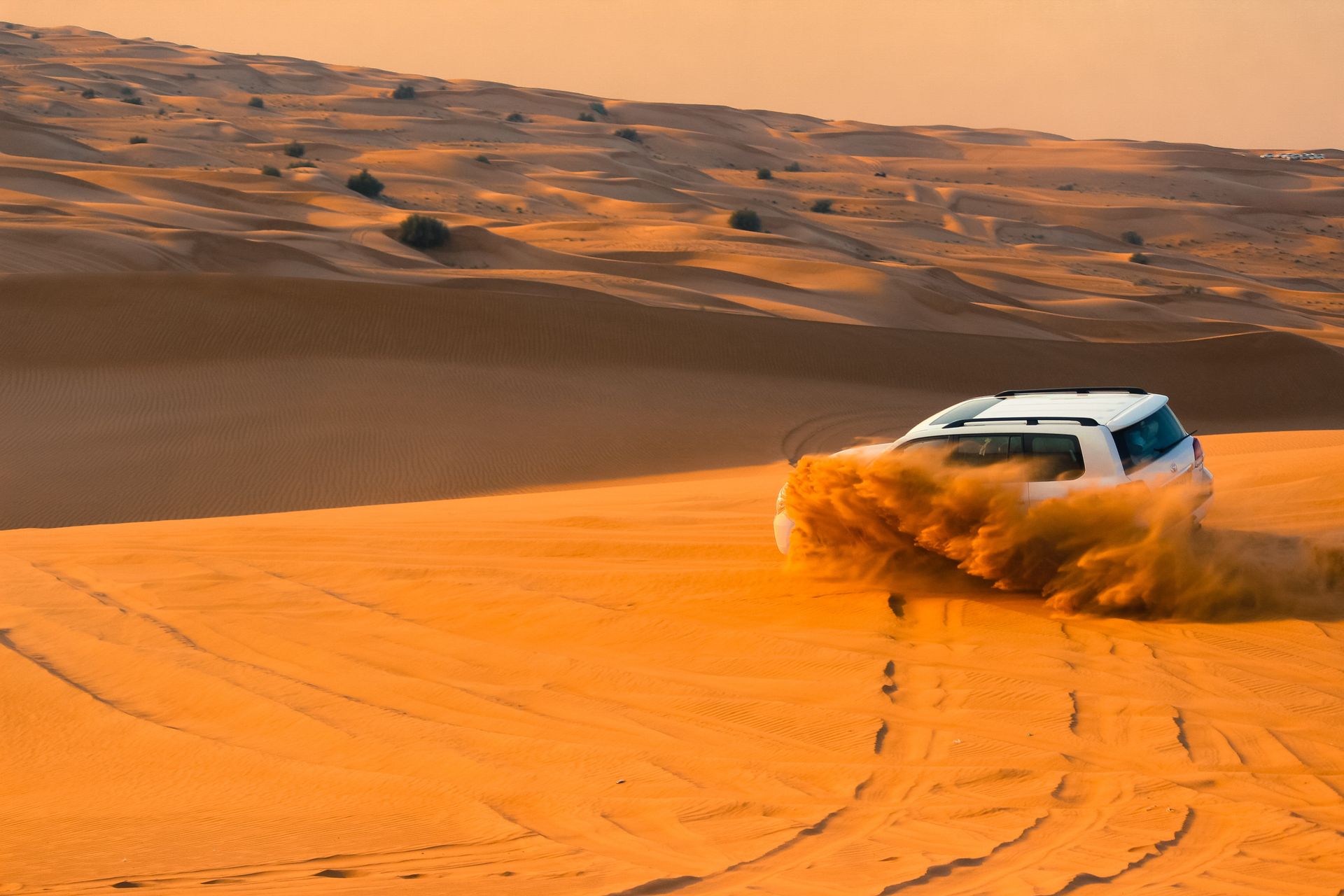
Into the desert at sunset
A drive through the dunes of Liwa or the Al Wathba area, timed for when the light sits low and the colours of the sand shift.
An introduction to falconry
A visit to a falconer or the Falcon Hospital in Abu Dhabi, where the bond between hunter and bird is explained as it has existed for centuries.
Walking a wadi
A route through Wadi Shawka or Wadi Bih, with rest stops at natural pools and views of mountain villages that have barely changed.
Watching dhow builders at work
In Fujairah and Ajman, wooden dhows are still built by hand, a craft that predates the oil industry.
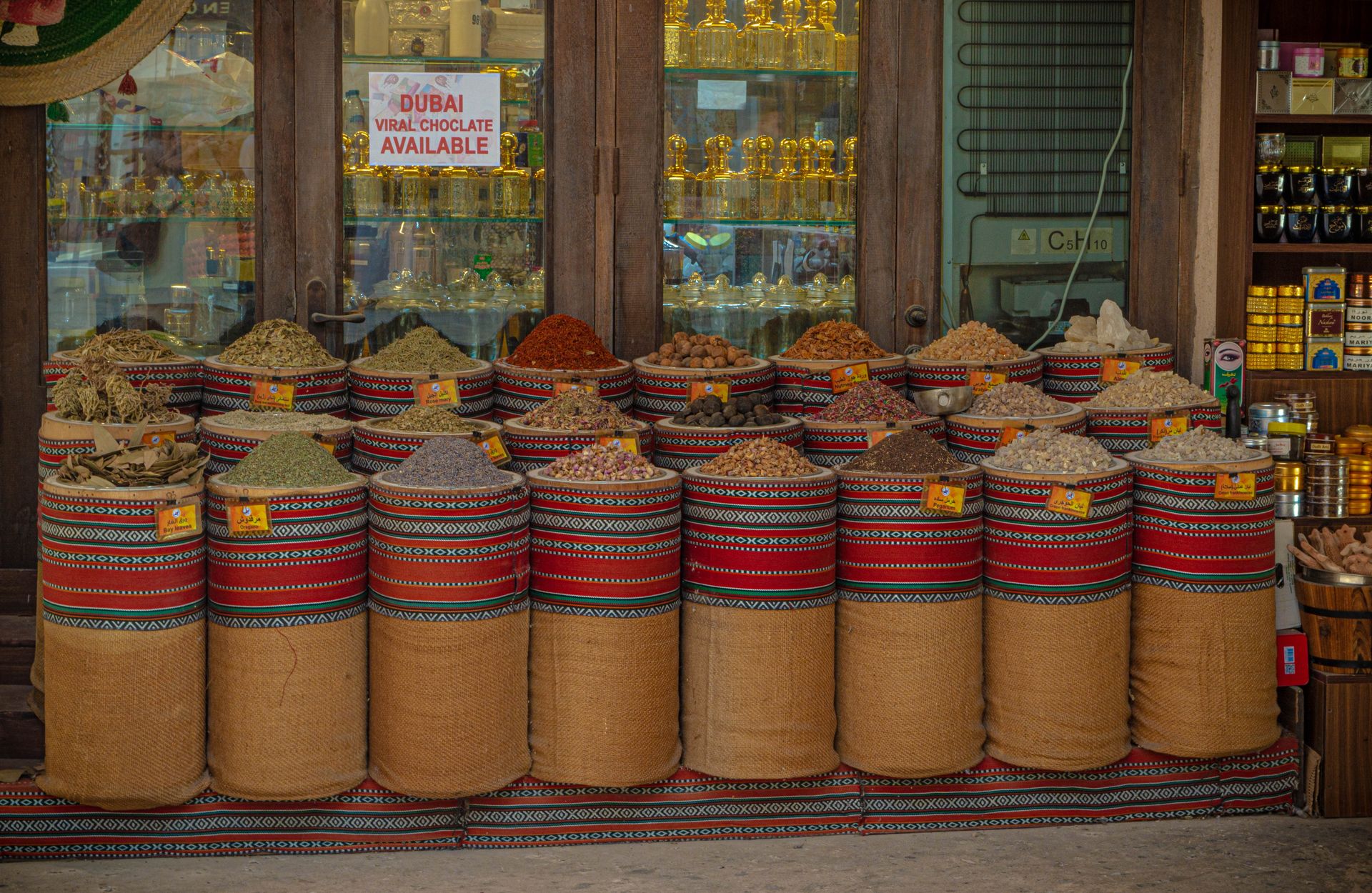
Wandering through a souk
The souks of Sharjah and Al Ain, where spices, textiles and gold are still traded as they have been for generations.
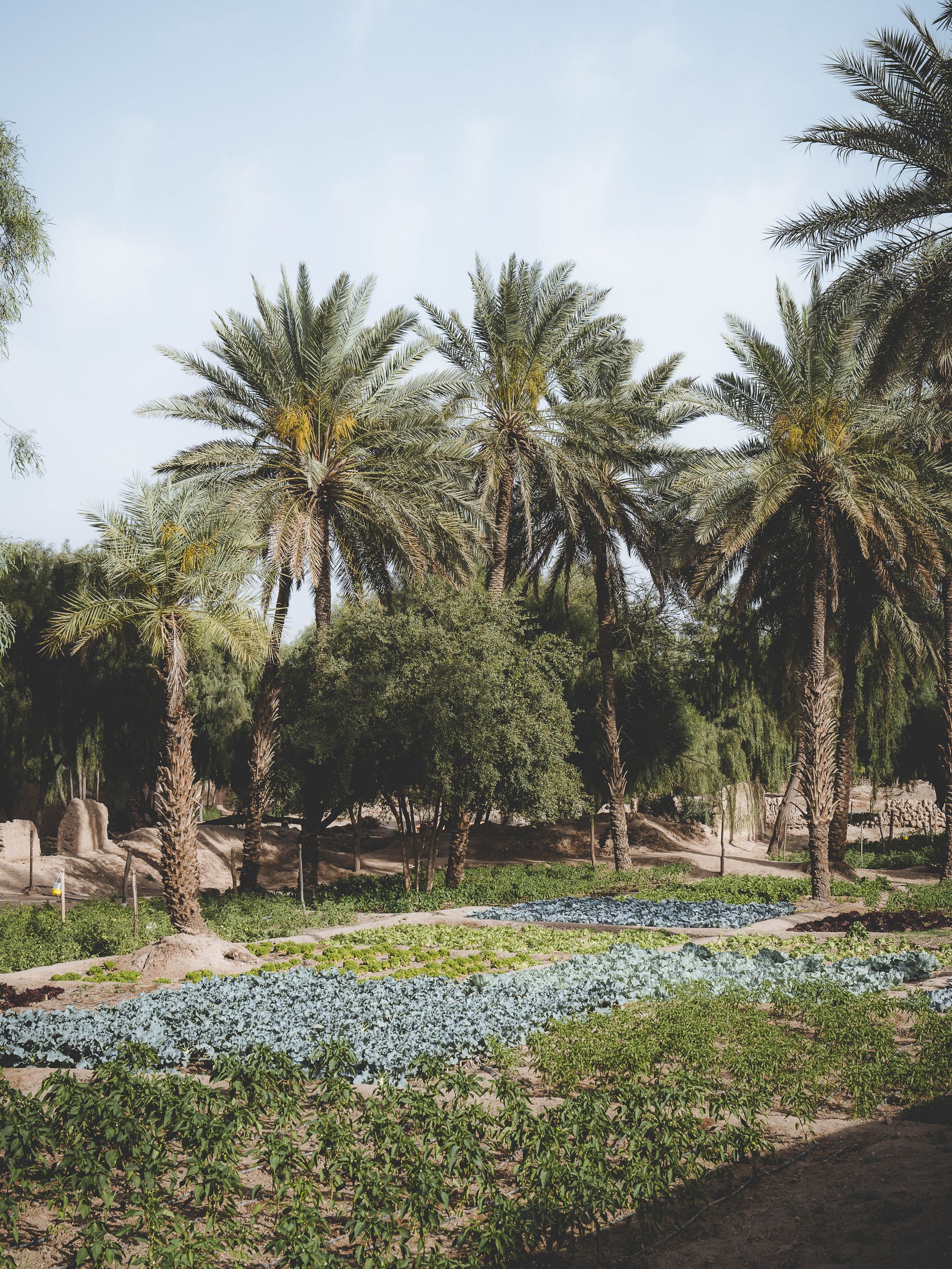
Learning to read an oasis
At Al Ain Oasis, local guides explain how the falaj system distributes water over kilometres, a technique older than the city itself.
These are possibilities.
Not your journey.
When would you travel?
When the Emirates show their best side.
Between November and March, daytime temperatures fall back to a pleasant twenty-five to thirty degrees and the evenings genuinely cool down, which suddenly makes the mountains and desert easy to explore. April and October are transition months: warm, but still manageable for early starters.
Summer, from June to August, is another story: temperatures around or above forty degrees, with peaks above 45, and suffocating humidity on the coast make outdoor activities unappealing. Anyone travelling during that period does so mostly early in the morning or after sunset.
Best time to visit United Arab Emirates
Jan
Feb
Mar
Apr
May
Jun
Jul
Aug
Sep
Oct
Nov
Dec
Top: pleasant daytime temperatures, cool evenings, ideal for desert and mountains.
Good: still warm, but manageable if you set out early.
Fair: high to extreme temperatures, activities mostly early or late in the day.
Same months, other destinations
Who else is at their best in these months?
Not ready to ask yet?
Leave your email address. A month before the good time begins, we send you one reminder. Nothing more.
You will first get an email to confirm. You can unsubscribe at any time, with one click.
Rather talk it over?
Leave your name and number. We will call you at a time that suits you.
Looking past the highlights
Why QualiMundi looks at the Emirates differently.
Beyond the two well-known cities. Dubai and Abu Dhabi are the starting point, not the destination. We build trips that run just as naturally through Ras Al Khaimah, Fujairah or Al Ain.
Bedouin heritage is still genuinely lived. Falconry, dhow building and the majlis tradition are not shows staged for visitors, but customs we show through local contacts exactly as they are practised.
Mountains beside desert beside coast. Few people realise the Emirates have a mountain range rising to almost two thousand metres, half a day's drive from the dunes of Liwa.
A pace you set yourself. No fixed route with mandatory stops. We match the sequence of cities, nature and rest to what you're looking for, not to what a programme dictates.
Worth knowing
Practical, without the noise.
A few things that make travelling through the Emirates concrete.
- Getting there
- Direct flights from Brussels to Dubai or Abu Dhabi, with a well-developed road network linking the emirates.
- Documents
- Which travel documents you need depends on your nationality, and entry rules change regularly. We go through the current requirements with you before you leave.
- Health
- No mandatory vaccinations; the main things to watch are sun protection and drinking enough water, especially outside winter.
- Dress code
- Outside beaches and hotels, modest clothing is appreciated, particularly when visiting mosques, souks and mountain villages.
- Pace
- Distances are short: from the coast to the mountains or the desert, journeys rarely take more than two to three hours.
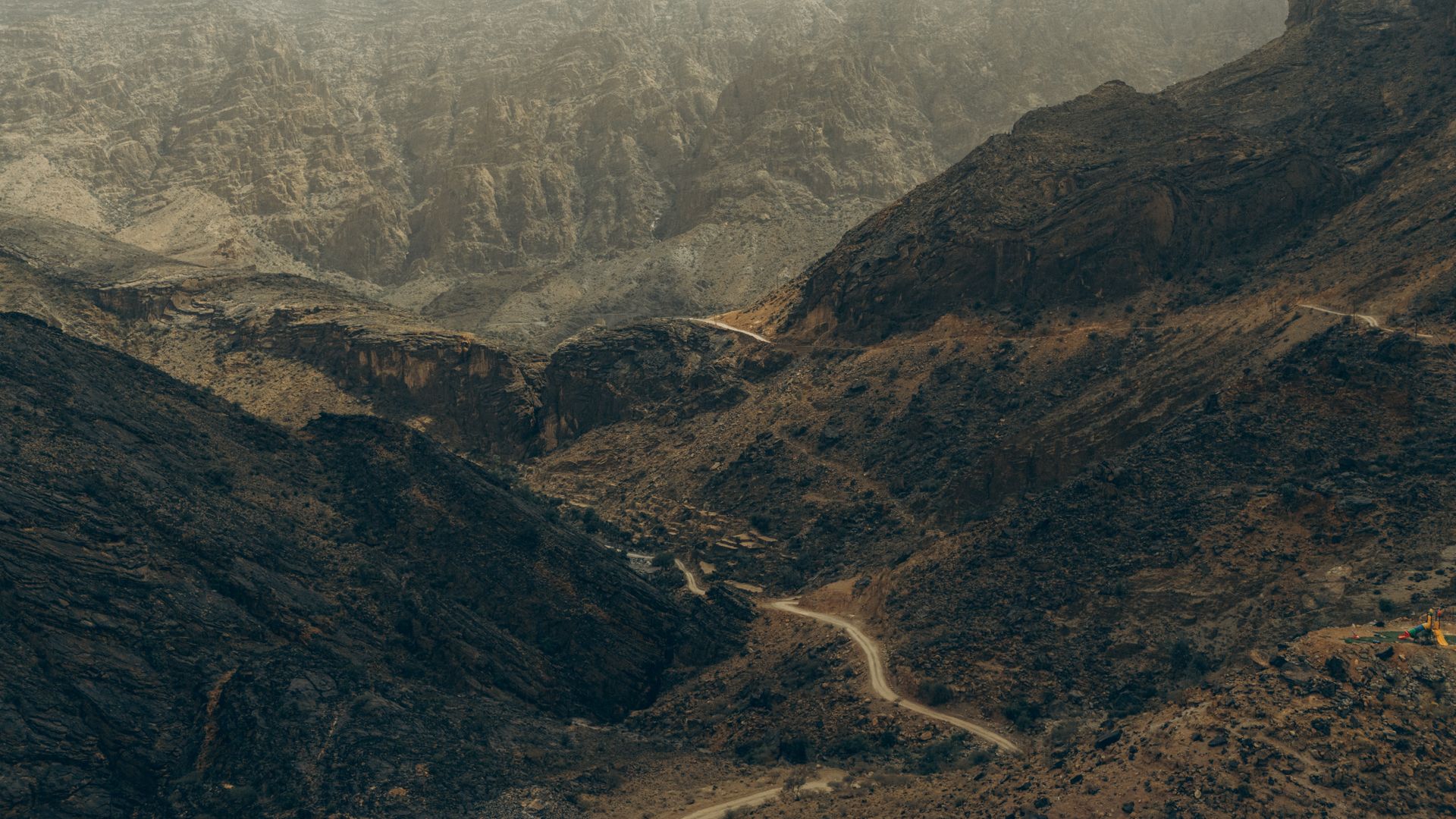
From Jebel Jais, home to the country's highest point, the view reaches deep into the gorges of the Hajar Mountains.
A country that doesn't sell its dunes as backdrop,
but as a place where people still live.
Frequently asked questions
Does Dubai stay out of the picture in a trip you put together?
Not necessarily. Dubai can be a starting or end point, but we build the trip so the city isn't the only thing you see of the country.
Can you really swim among coral here?
Yes, especially on the east coast near Dibba and Khor Fakkan, where the reefs are less known and less busy than on the west coast.
How hot is it really outside summer?
From November to March, daytime temperatures sit between twenty-four and thirty-one degrees, with evenings that cool down noticeably, especially in the mountains.
Is a combination with Oman possible?
Geographically yes, the Hajar Mountains run into Oman, but we put that together per trip depending on what you're looking for.
Or perhaps this
Other destinations
Still weighing it up? That is no problem at all. The right country often only becomes clear once the conversation starts.
Arabian Gulf
Qatar
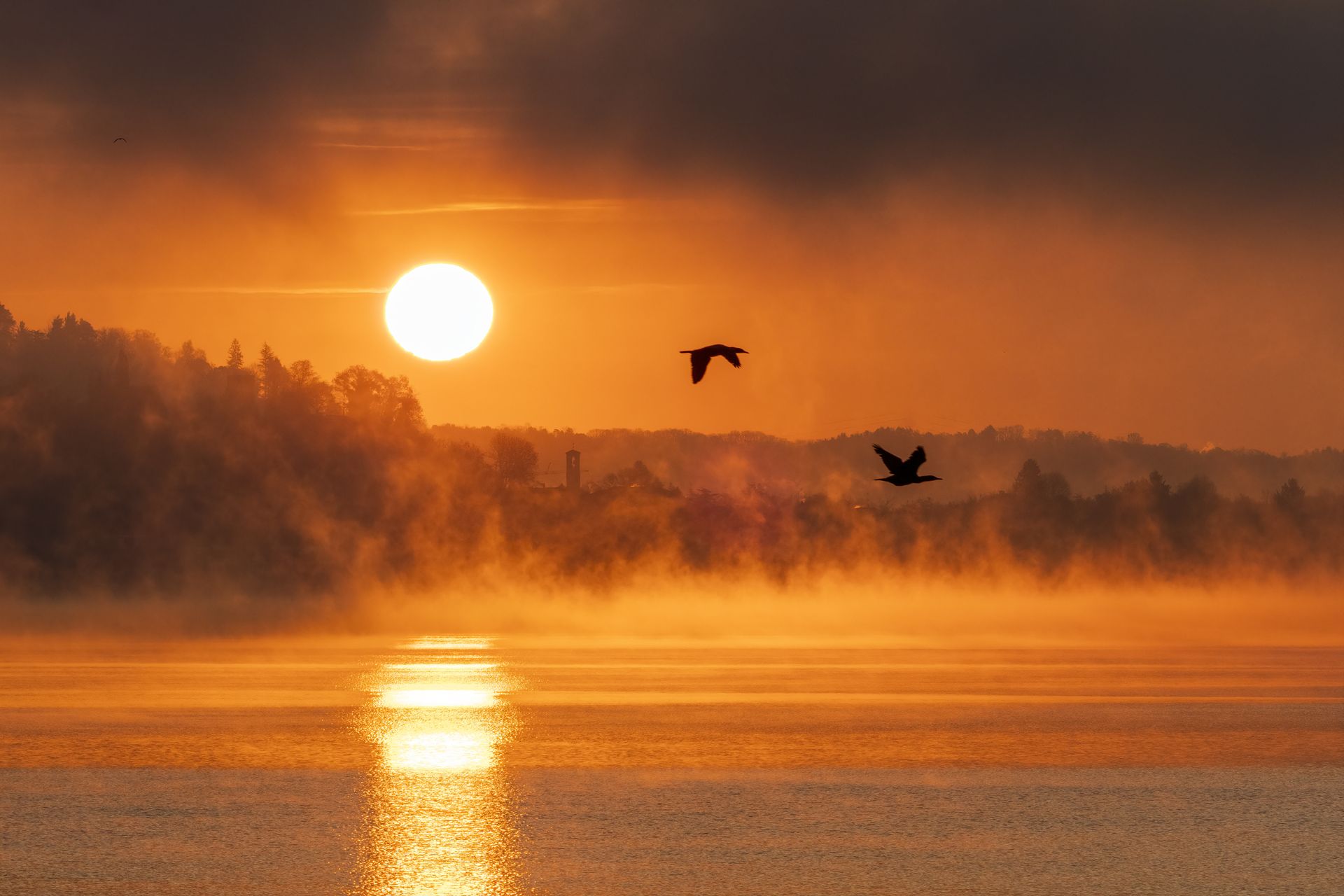
A peninsula that rebuilt itself within a few decades, yet just beyond the new skyline remains quiet and bare.
Central Europe
Poland
A country with more landscape than its history suggests, with forests, lakes and towns each rebuilt with real character.
Carpathians and Black Sea
Romania
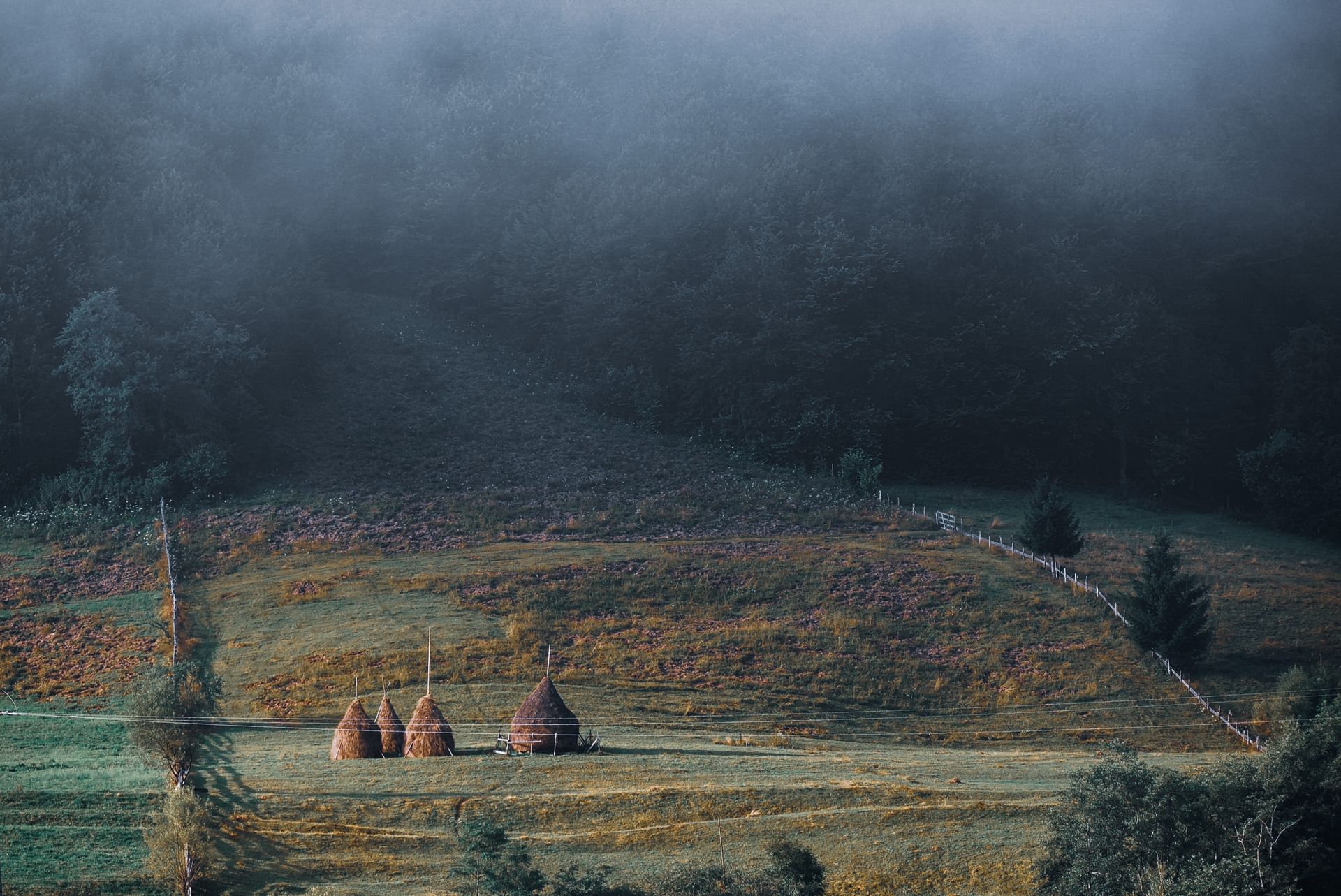
Mountains where bears and wolves still roam freely, villages with a pace of their own, and a capital that keeps reinventing itself.
How it works
This is how your journey to United Arab Emirates takes shape.
Six steps, from your first story to your homecoming. The conversation and the feasibility check cost you nothing.
-
01
Tell us your story
Fill in the form or give us a call. You do not need a route yet: a country, a period or just an idea is enough.
-
02
The conversation and the check
We call you within two working days. We talk through what you are looking for and check whether it can be done. If it can, we set down together what we will make for you.
-
03
We design your journey
We build your programme up, day by day, together with our own people in the country itself.
-
04
Your proposal
You read your journey day by day, with everything that is included. You say what you would like differently, until it is right.
-
05
Ready to depart
You send us your details, we send you your travel documents. You have one fixed contact who knows your journey.
-
06
Travelling, and after
Your contact stays reachable while you are away. Once you are home, we call one more time.
The next step
How would you like to experience the Emirates?
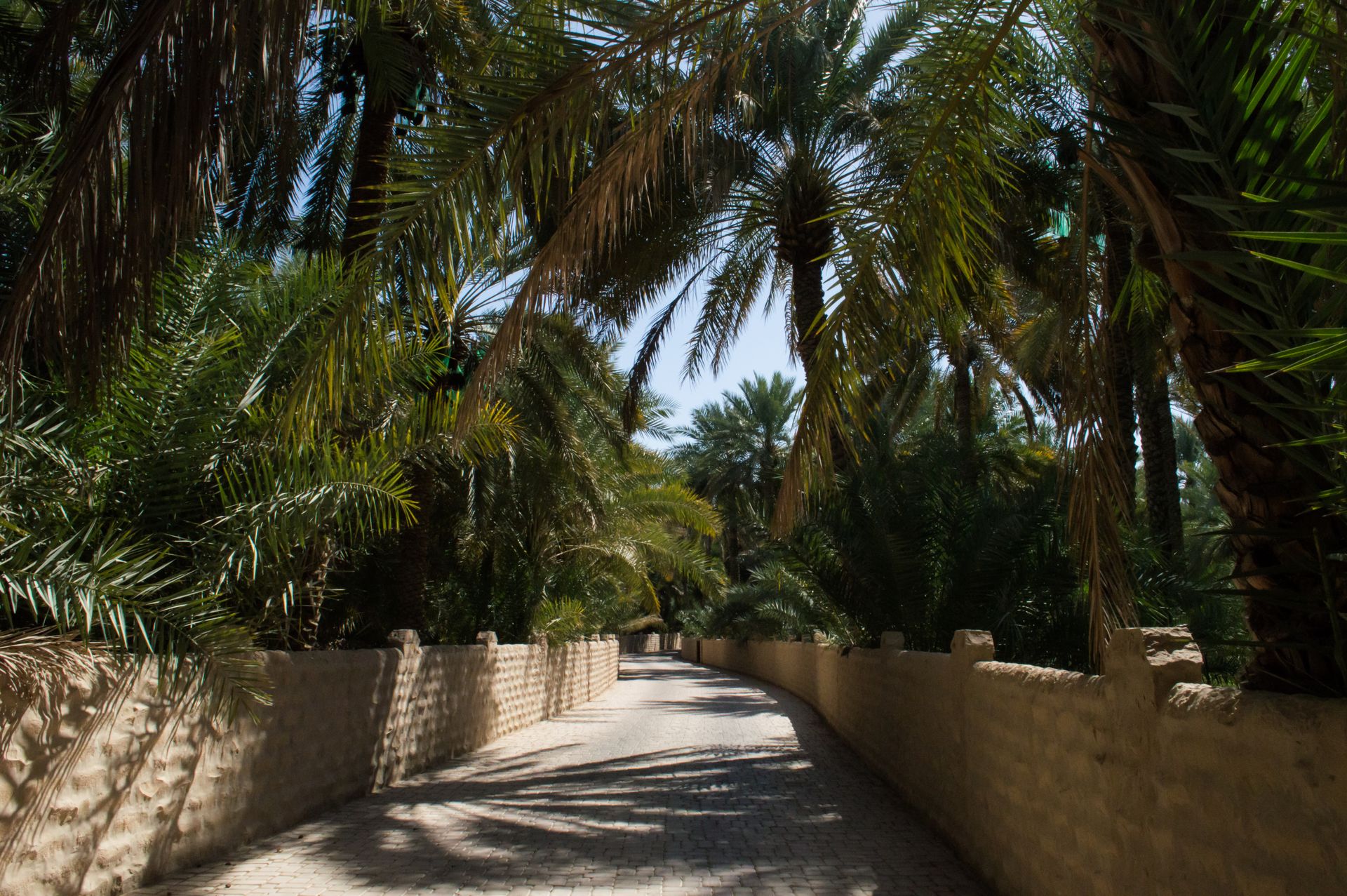
Tell us what draws you: the stillness of the dunes, the gorges of the Hajar Mountains, an oasis village near Al Ain, or a mix of it all. We put together a trip around that.
Updated in October 2026