Silk Road, Central Asia
Uzbekistan
Where the Silk Road never stopped coming together.
This is Uzbekistan
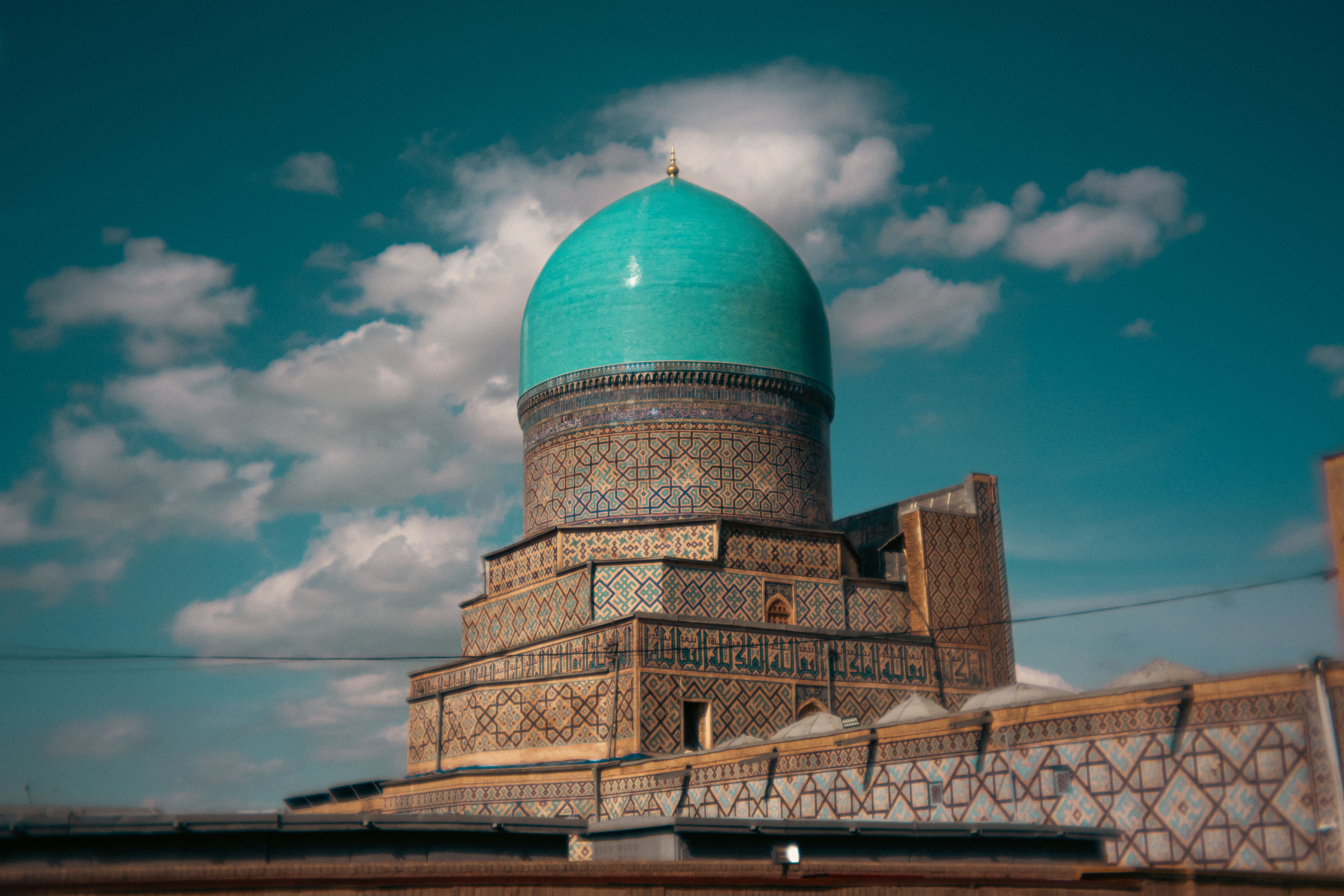
Turquoise domes and quiet caravanserais that still tell the story of where the Silk Road once converged.
A route that never really stopped moving.
For centuries, caravans carrying silk, paper, spices and ideas crossed here, not by accident, but because Samarkand, Bukhara and Khiva sat exactly where east and west were bound to meet. What was once a trade route is now a country that refuses to be reduced to three cities and a list of monuments.
The domes are still there, their tilework giving off that particular turquoise-and-cobalt glow from a hundred metres away. But stay a few days longer and the story keeps going: in an ikat weaver's workshop in Margilan, at Bukhara's morning market before the first coach arrives, in the silence of the Kyzylkum desert where the caravans once camped for the night.
In short
- Best time to go
- April and May, September and October, with mild days for cities and desert. In July and August Samarkand averages highs of 34 degrees and Bukhara even more, and winters are cold.
- How long
- Ten days to two weeks for Tashkent, Samarkand, Bukhara and Khiva, a little longer with the Fergana Valley or a night in the desert. Allow for train journeys and travel days.
- Who it suits
- For travellers who love architecture, craft and history and want to take the Silk Road cities slowly, with room for a host family in the Fergana Valley or a yurt camp by Lake Aydarkul.
- What sets it apart
- Four historic cities are on the World Heritage List: Khiva, Bukhara, Shakhrisabz and Samarkand. A high-speed train links Tashkent with Samarkand and Bukhara.
The regions
Five faces of the same route.
Each city carried a different part of the trade, and each kept a different character because of it.
Central, at the crossroads of the old route
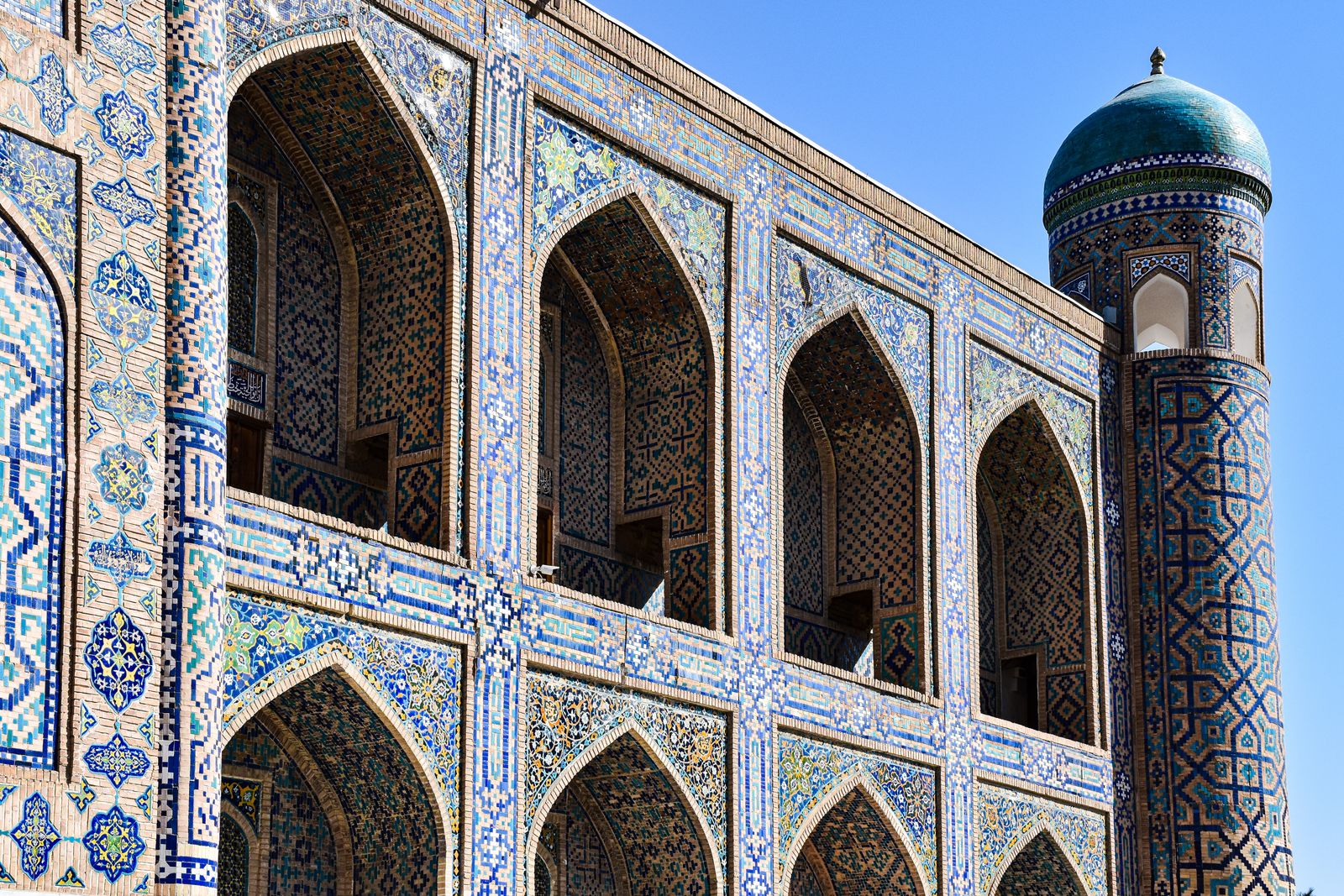
Samarkand
Amir Timur's city looks monumental, yet it still works as an ordinary city: a market, washing lines strung between the madrasas, children playing football on a square that was once a caravanserai.
Central-west, the oldest of the caravan cities
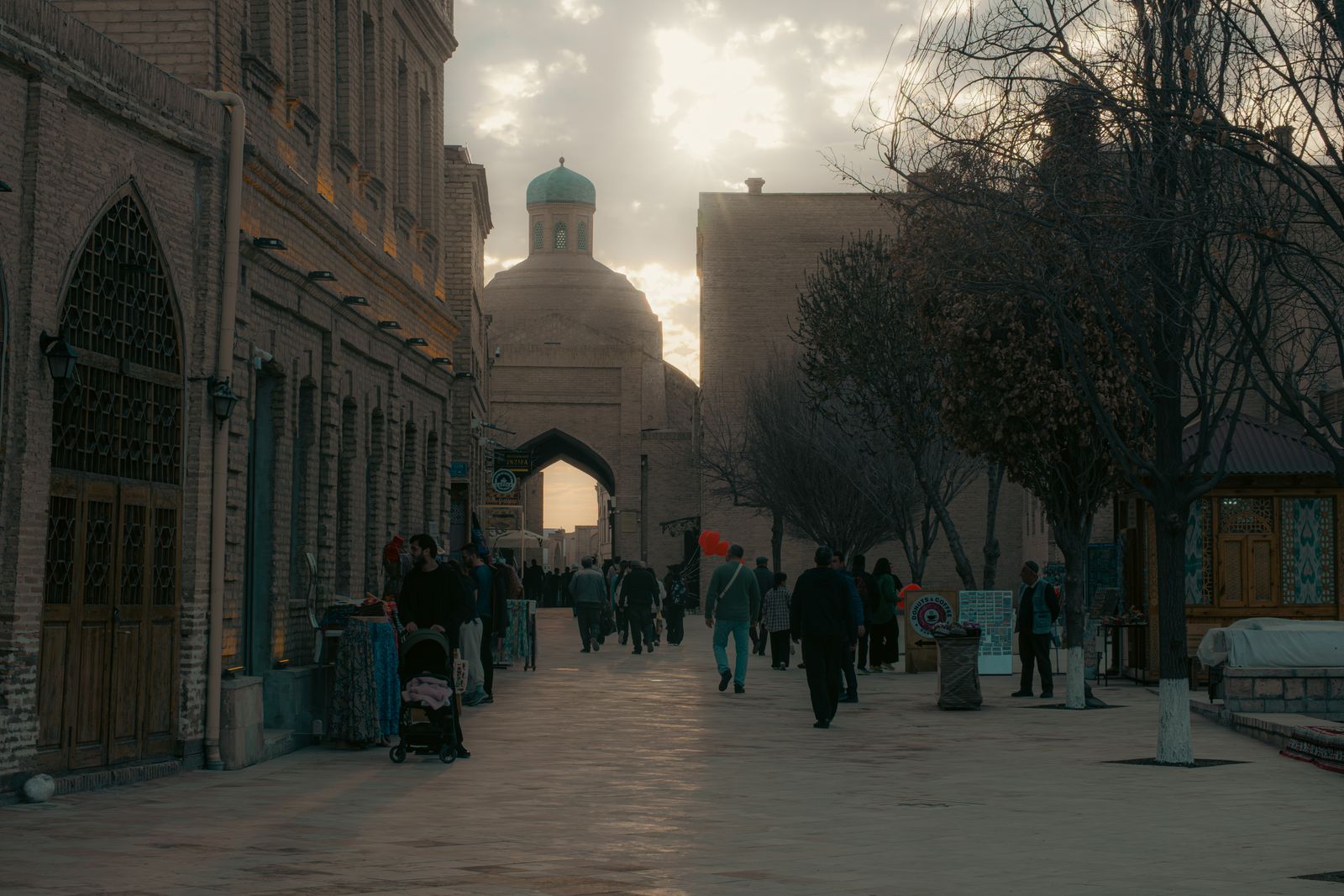
Bukhara
Smaller and more intimate than Samarkand, with an old town you can cover on foot. Behind the facades sit workshops where silversmiths and woodcarvers still work the way their grandfathers did.
Far west, on the edge of the Kyzylkum
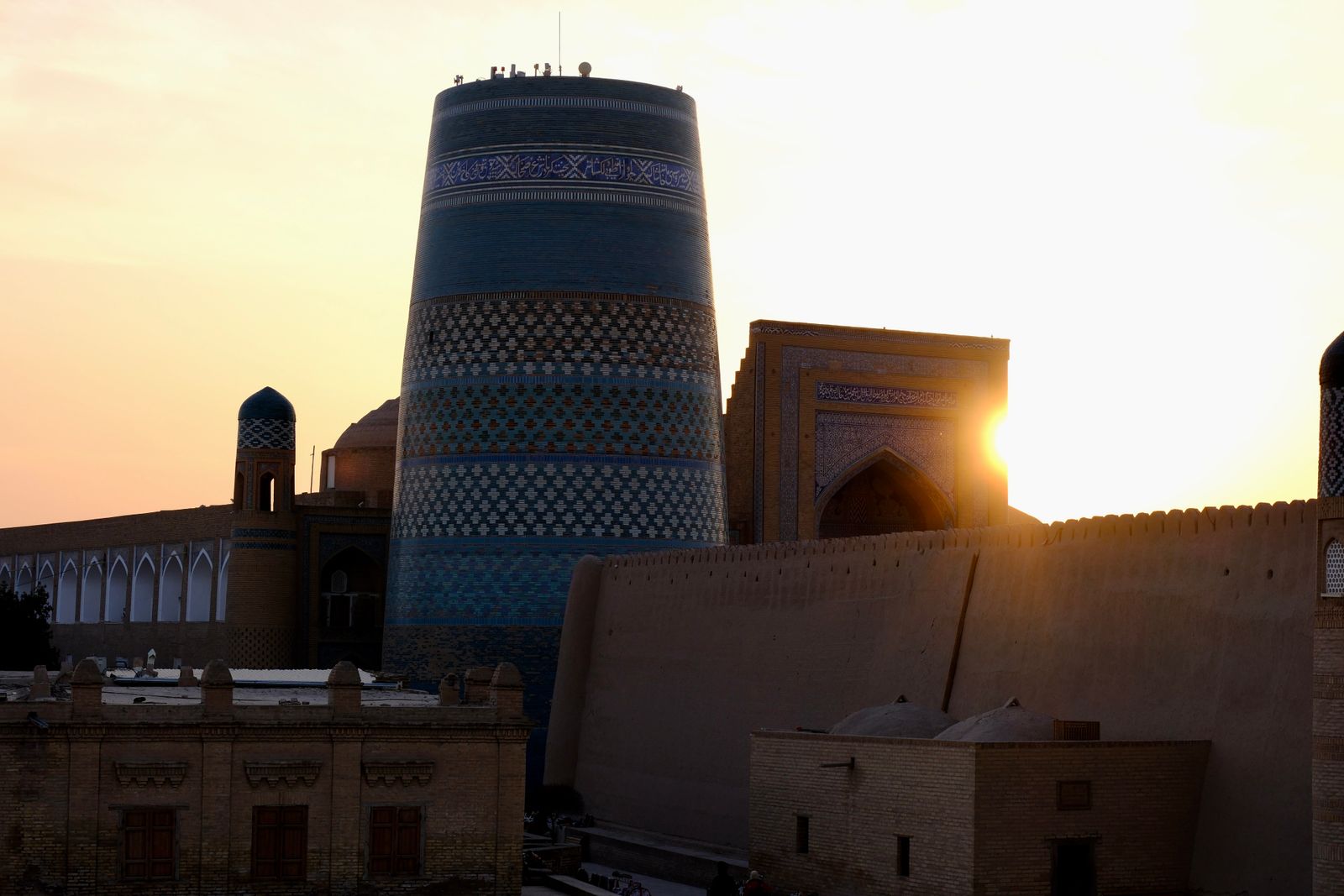
Khiva
The walled Itchan Kala is compact enough to see in a day trip. But stay the night and you'll see the city settle back into its true, quiet pace after sunset.
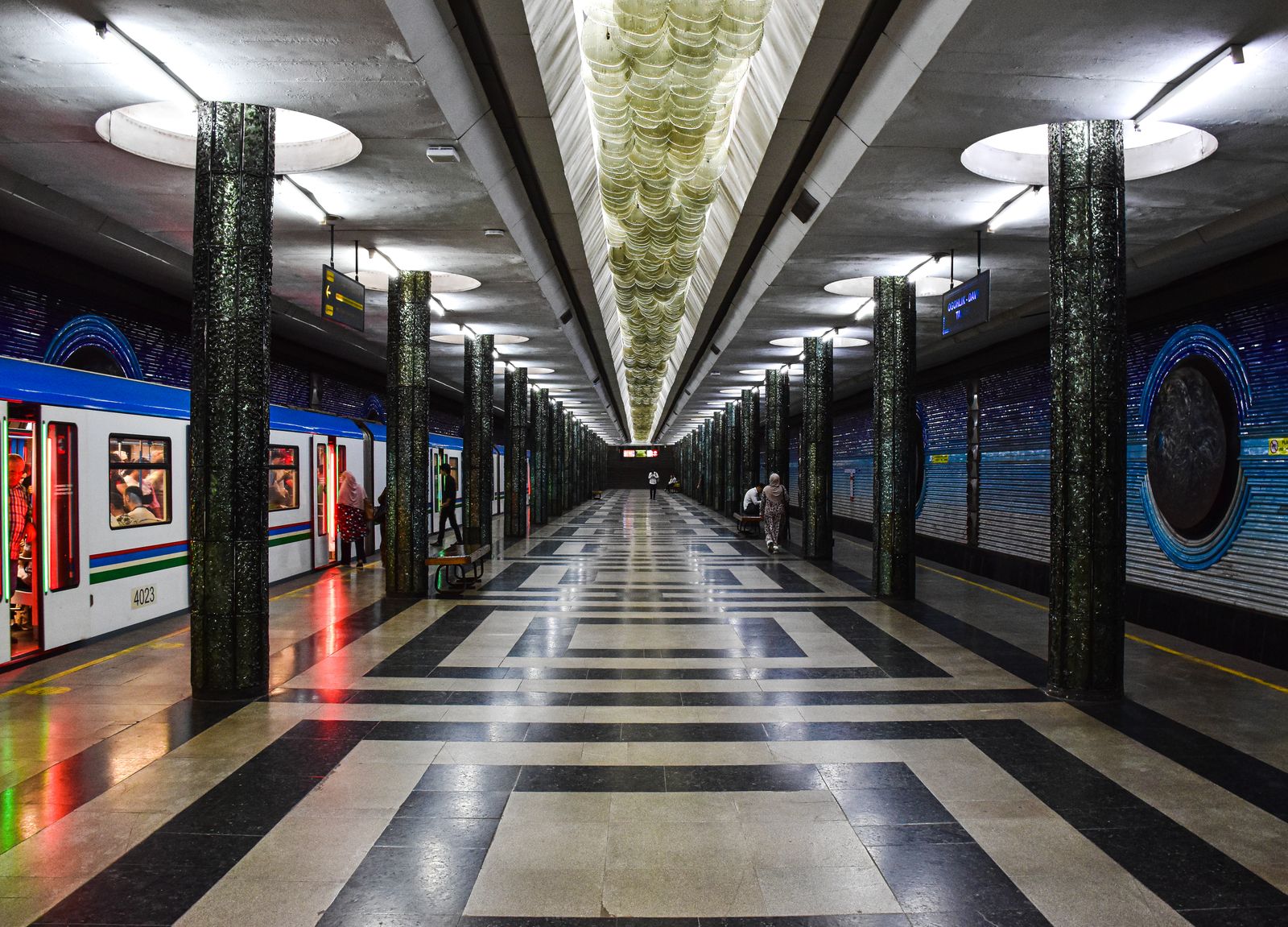
North-east, the modern capital
Tashkent
Rebuilt after the 1966 earthquake, with broad Soviet-era avenues and a metro where every station was given its own theme. Right beside it, the Chorsu Bazaar keeps the older rhythms alive.
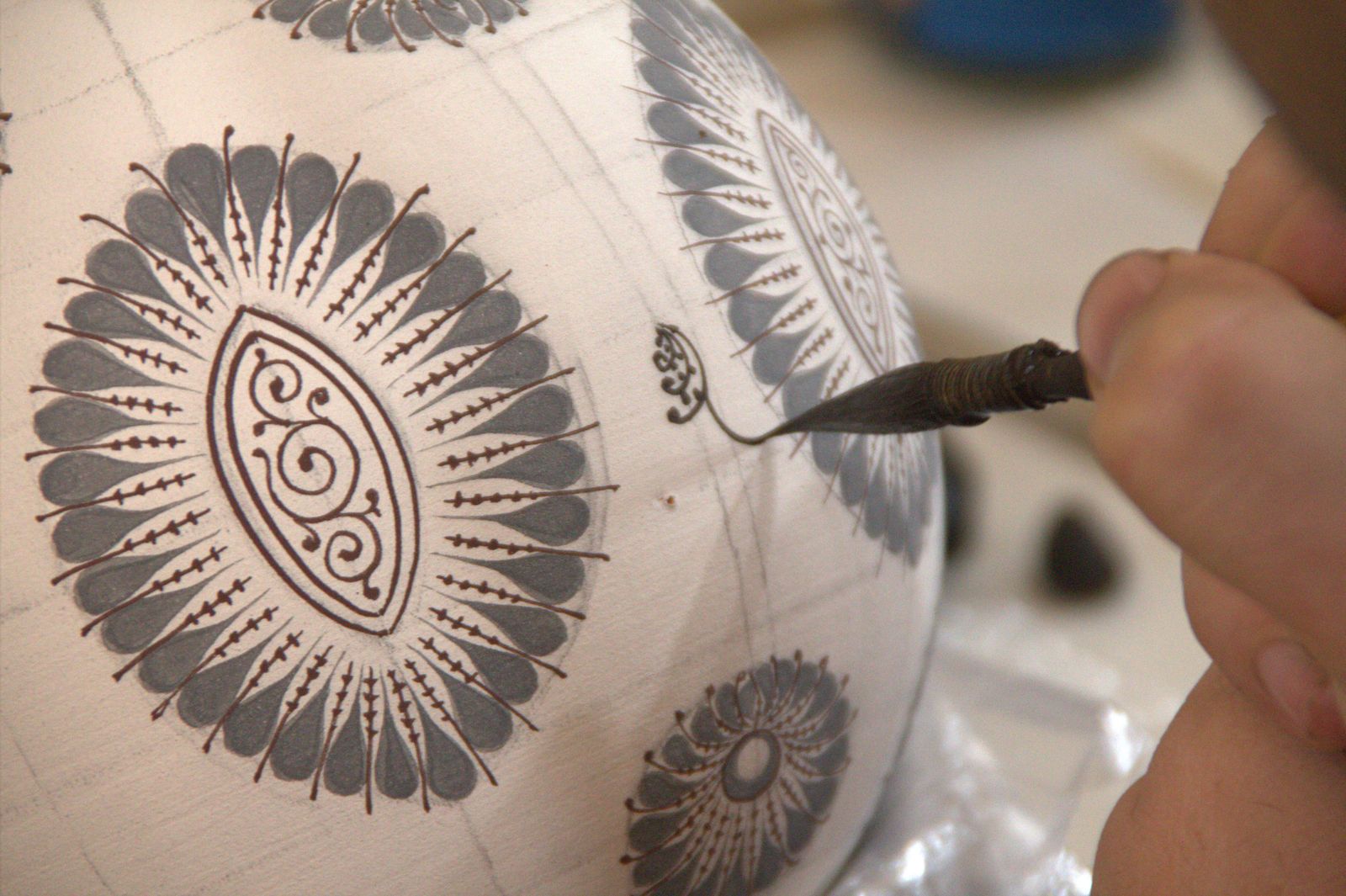
East, beyond the mountain pass
Fergana Valley
Reached over a mountain pass or by a short flight, and instantly a different country: fertile, densely populated, with Margilan and Rishtan as its centres of silk and ceramics.
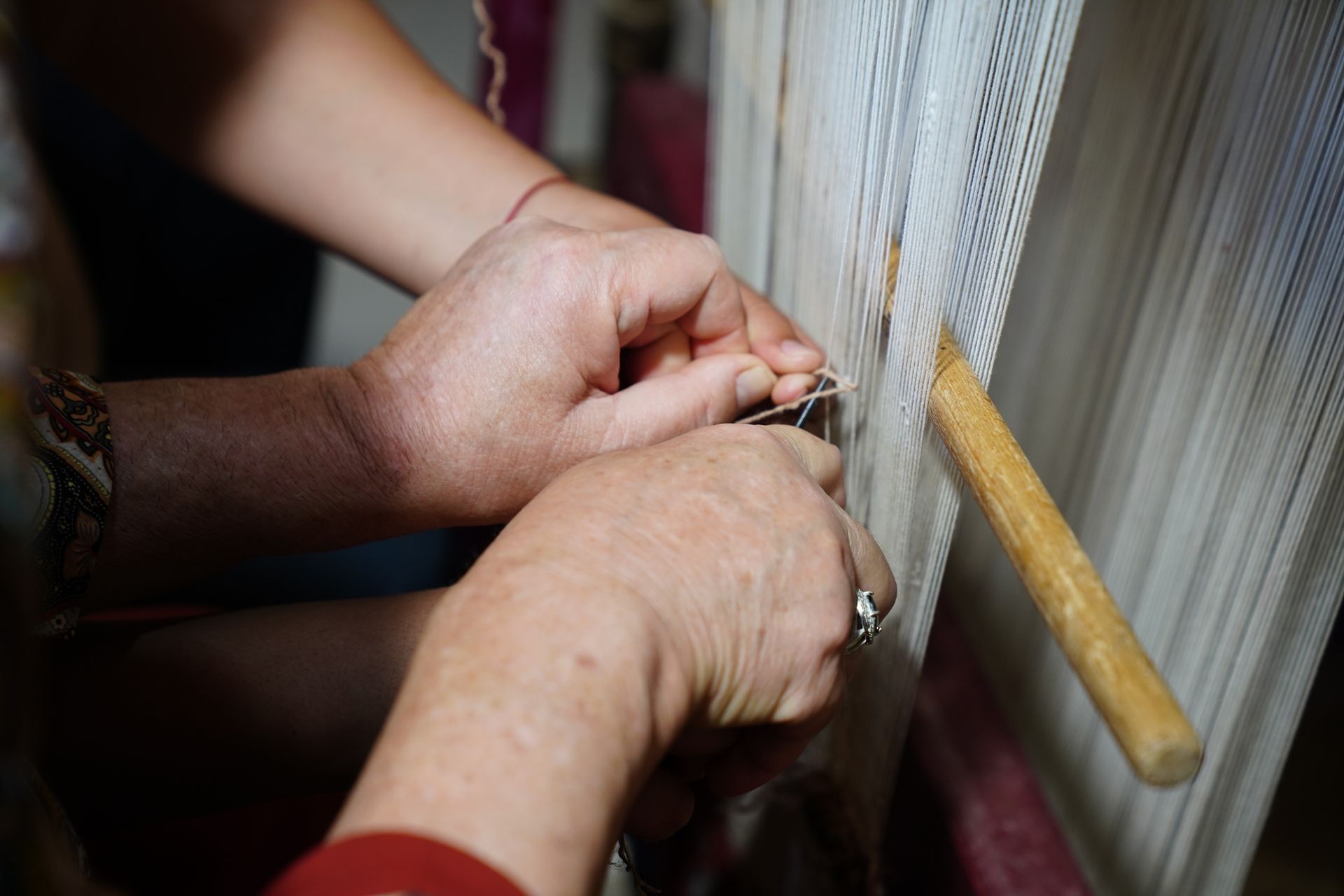
Craftsmanship
Hands passing a technique down through generations.
In Margilan, silk is still dyed using the ikat technique: threads are bound, dipped and bound again before weaving, so the pattern only takes its final form on the loom. It's precision work that tends to stay within the same family for generations.
A day's journey on, in Rishtan, local clay combined with a cobalt glaze gives the ceramics their recognisable blue-green colour, a shade that shifts slightly from village to village depending on the kiln and the clay dug locally.
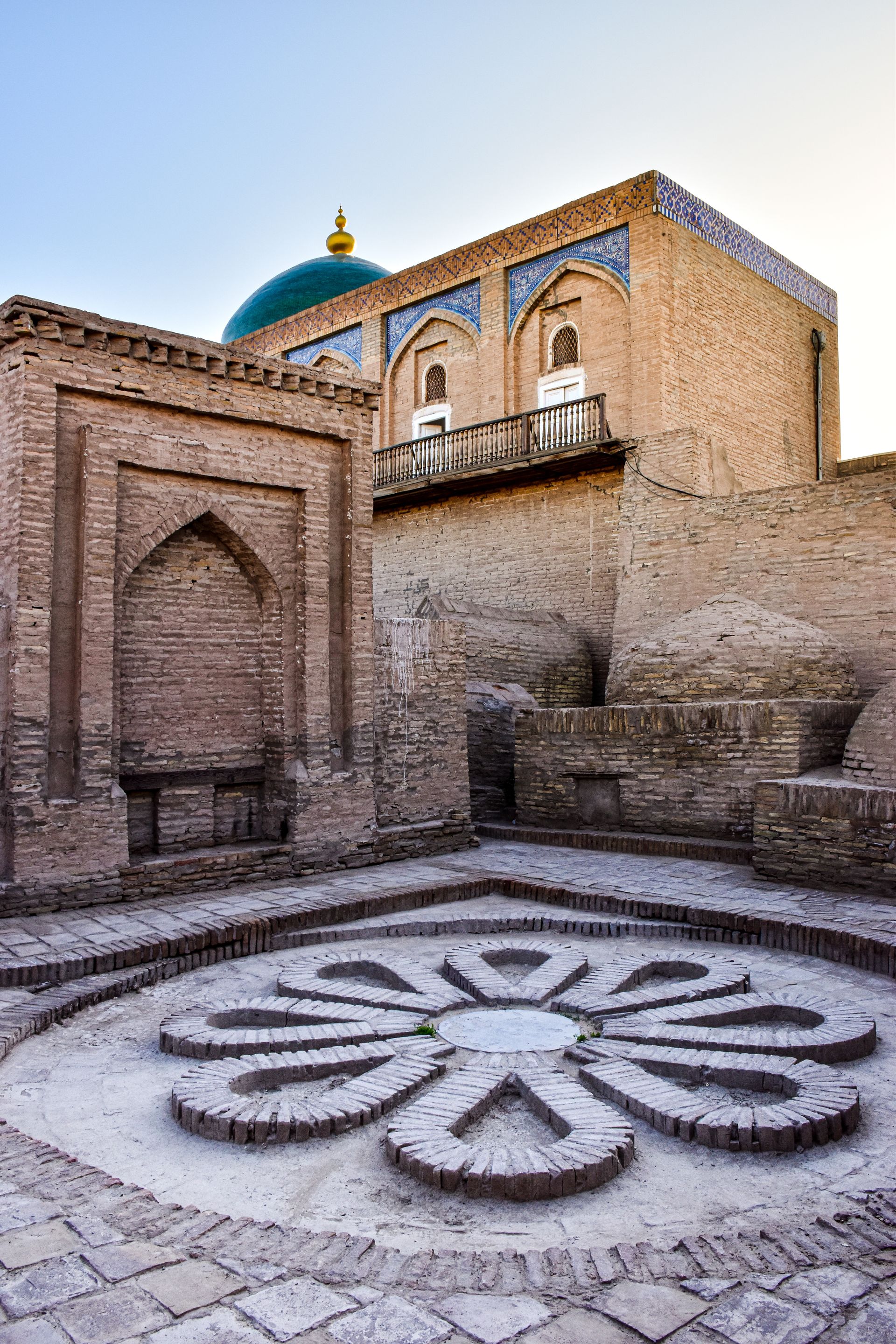
A caravanserai in the evening light, somewhere between Bukhara and Khiva. Once a resting place for merchants, now a quiet stop along a road that has changed little.
Desert and mountains
Beyond the domed cities, the land opens up and grows quieter.
The Silk Road didn't run through cities alone. Between Bukhara and Khiva, hundreds of kilometres of desert stretch out, and north of Samarkand the first mountain ranges begin.
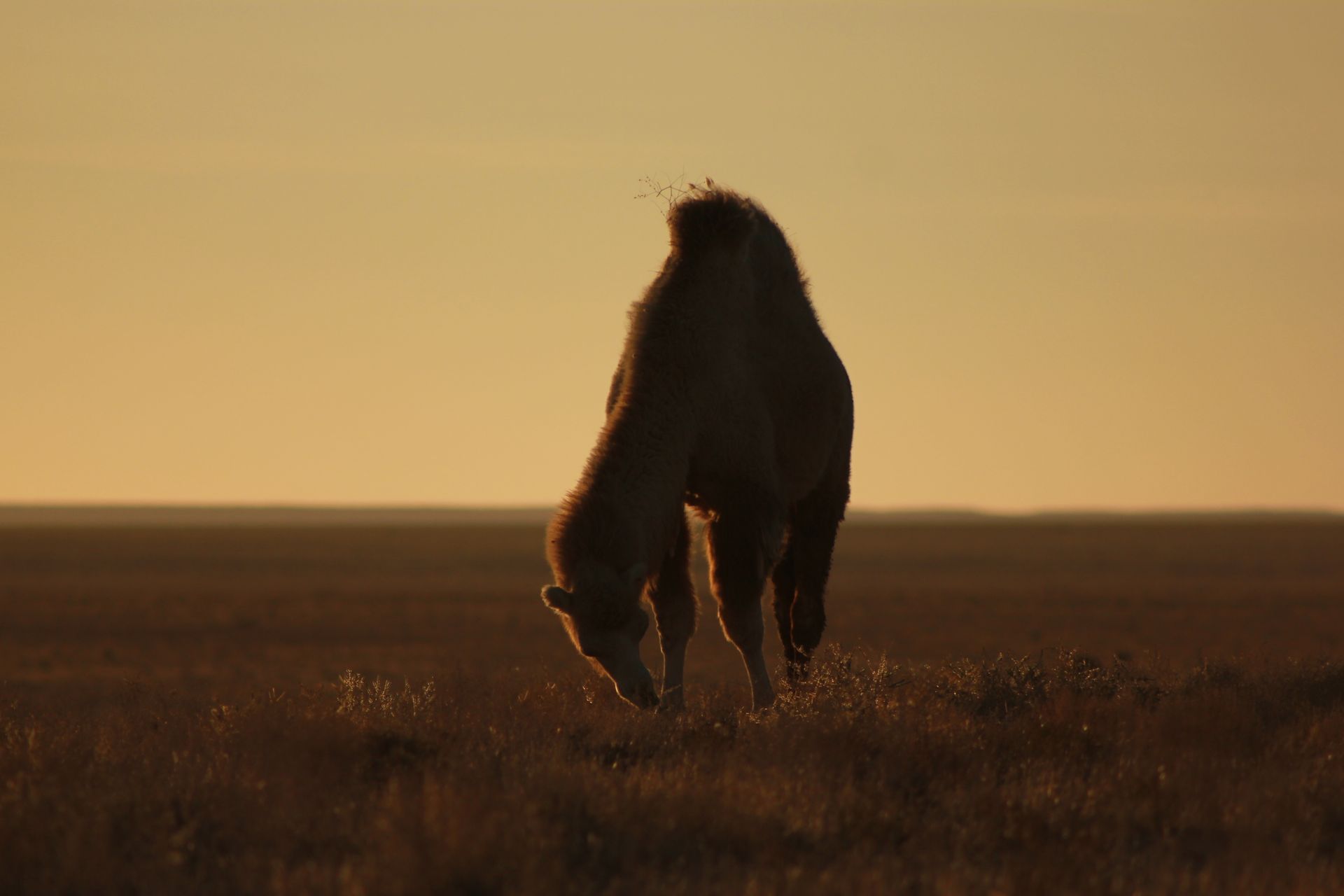
Kyzylkum Desert
At Lake Aydarkul you sleep in a yurt camp with a community of camel herders, far from any city light. The night sky alone is reason enough to stay.
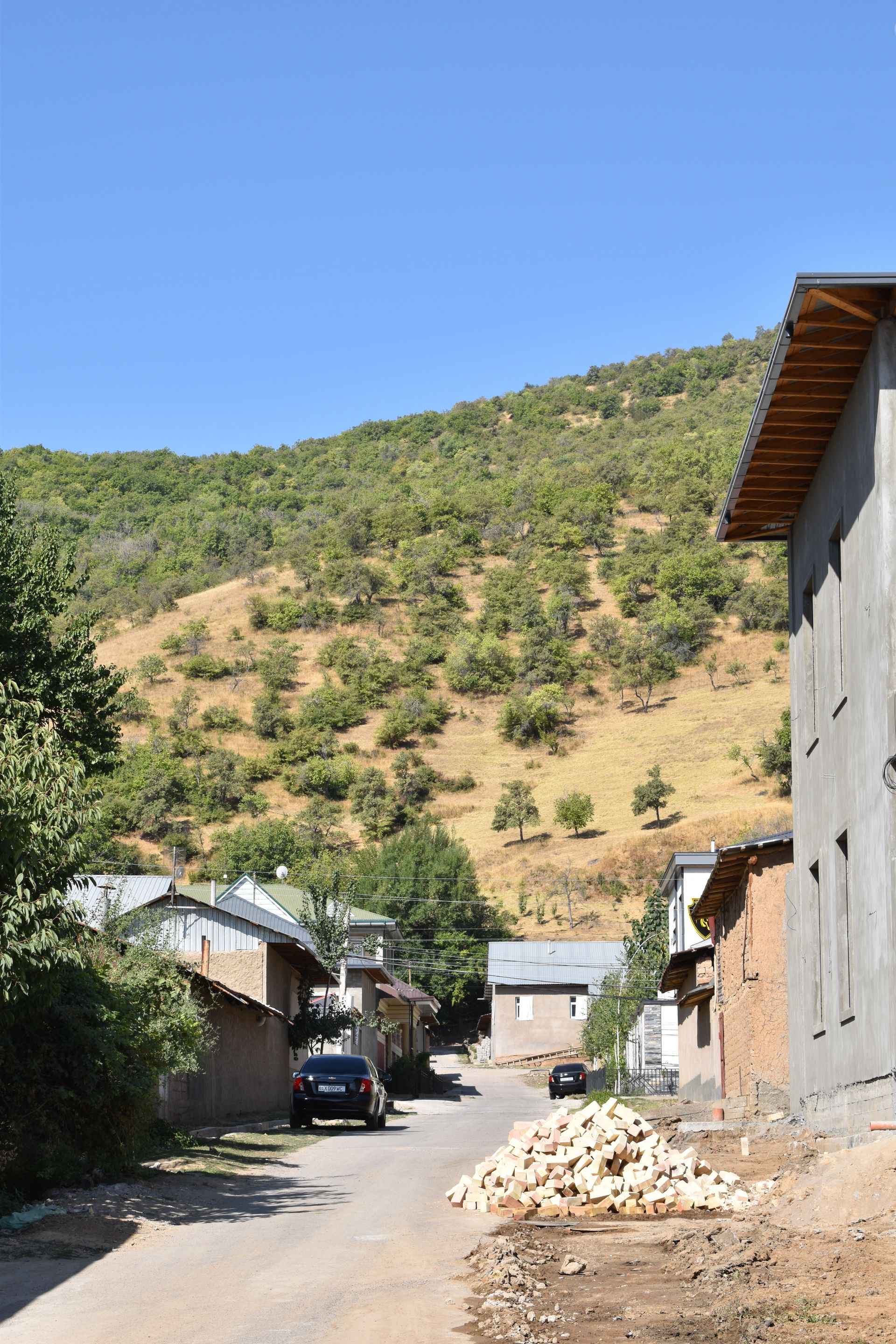
Nuratau Mountains
Small villages here live off sheep and apricot orchards. Walking routes between the hamlets pass host families who have welcomed travellers for years, without it ever turning into an attraction.
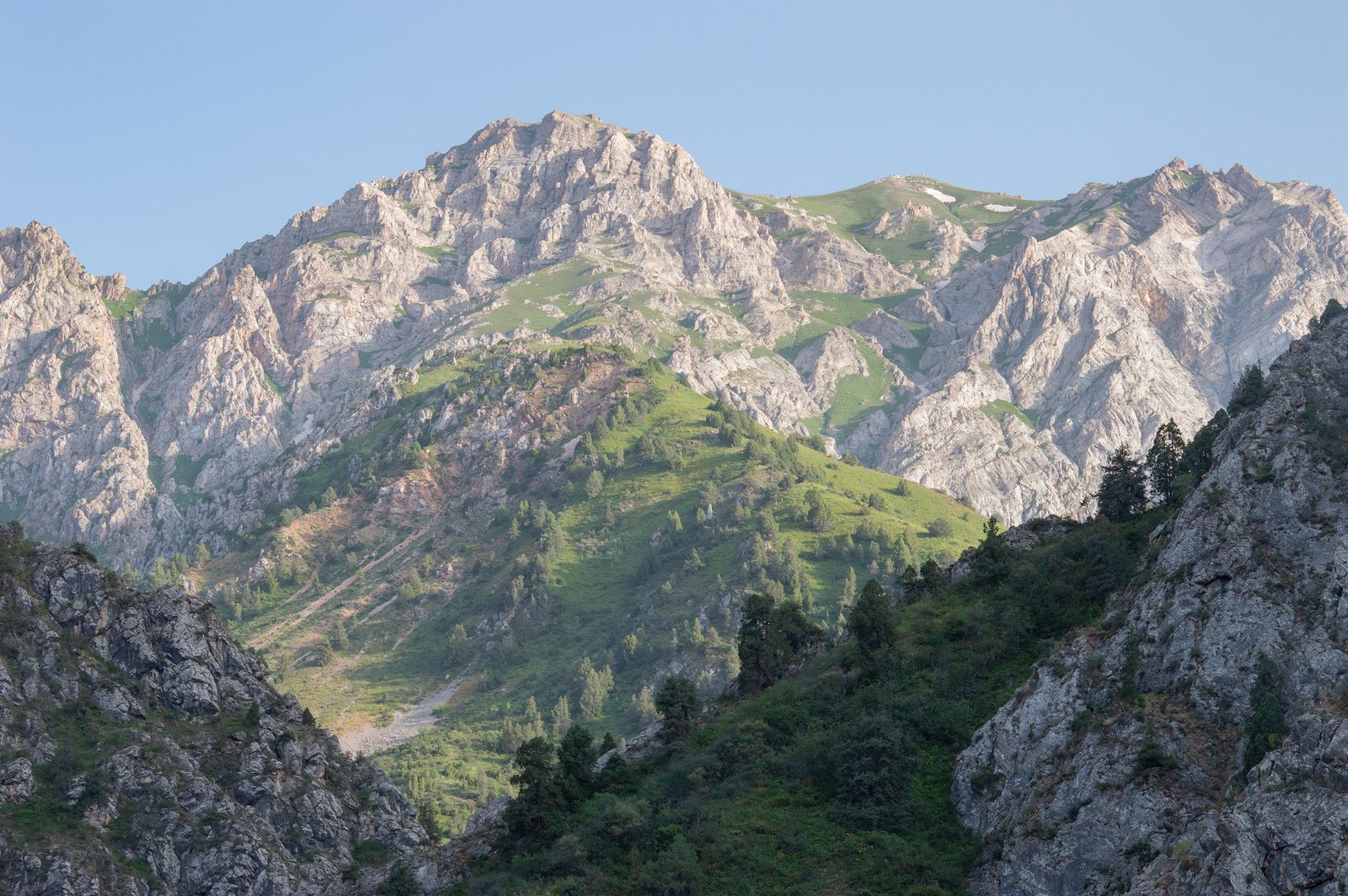
Chimgan and surroundings
Barely two hours from Tashkent the scenery changes completely: green slopes, cooler air and villages where the capital suddenly feels far away.
Looking past the highlights
Why we look at Uzbekistan differently
More than the golden triangle Most trips show Samarkand, Bukhara and Khiva in a week there and back. We deliberately build in room for the Fergana Valley or the desert, depending on what a traveller is really after.
Craftsmanship over souvenirs Not every workshop along the tourist trail is still what it claims to be. We know the difference between a studio where weaving actually happens and a shop that only sells.
Room for the distance Uzbekistan is bigger than the map suggests. A night train or a long drive isn't an obstacle we plan away, it's part of how the country feels.
Hospitality without a stage Mehmondo'stlik, hospitality, isn't a show staged for visitors. It's how families here have treated anyone who knocks for generations. We look for the places where that's still true.
What you can do here
Possibilities, not a fixed programme
These aren't days lifted from an itinerary, but the building blocks we use to put together your route.
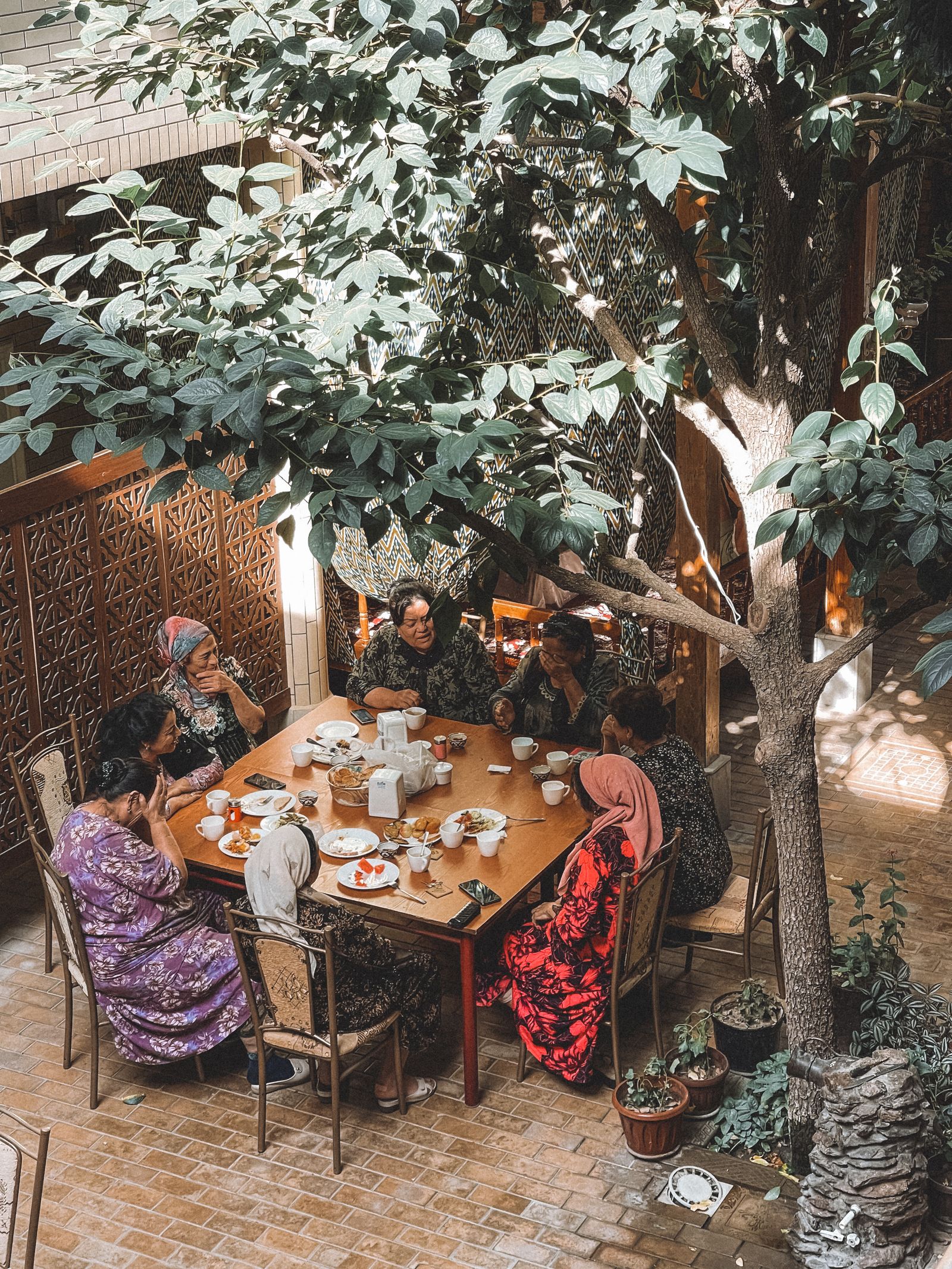
A night with a host family in the Fergana Valley
Eating whatever lands on the table that day, helping bake bread in the tandoor, and simply staying at the table come evening.
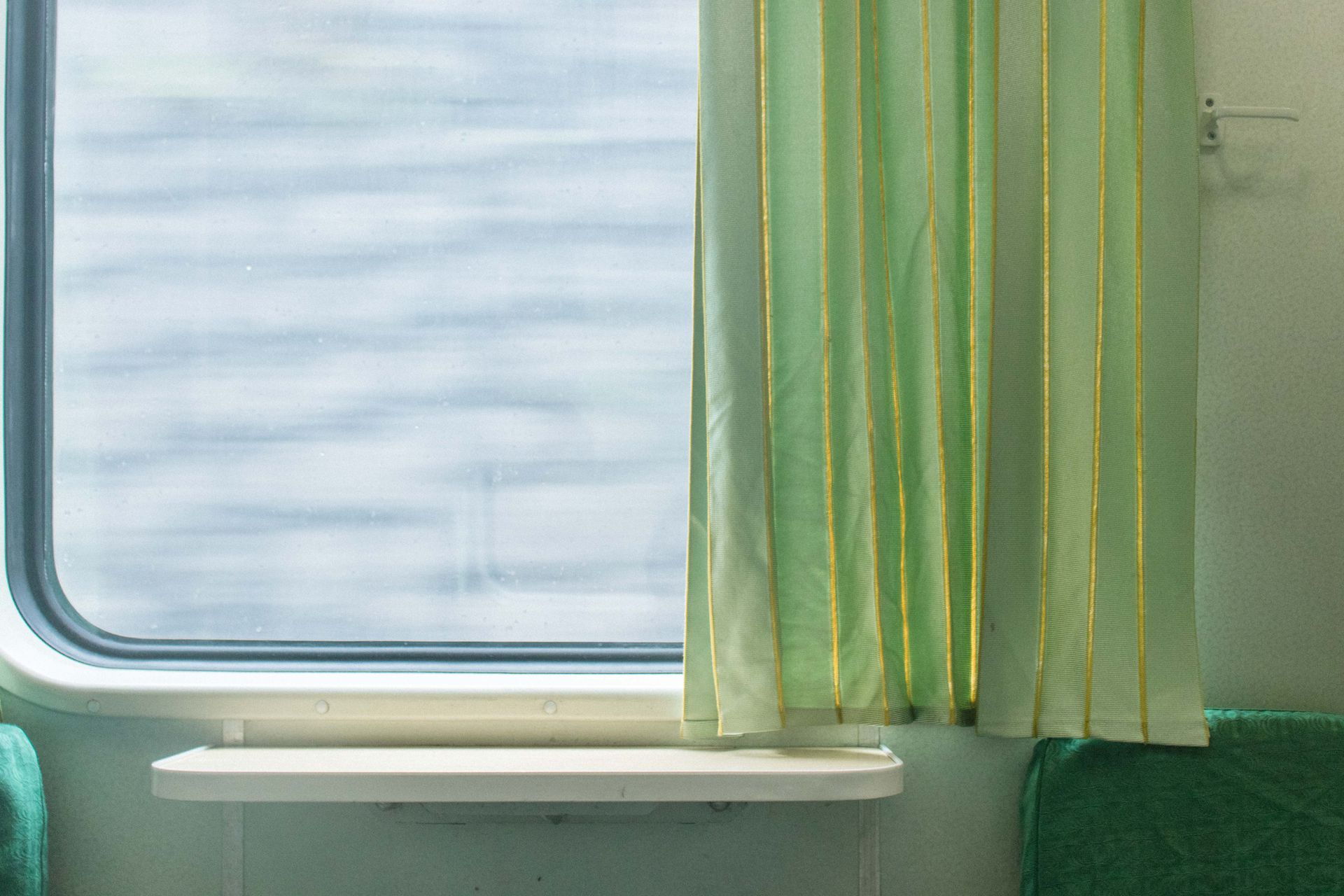
Riding the night train between the cities
Covering the distance between Samarkand and Bukhara while you sleep, and waking up on a new platform instead of a motorway.

A morning with an ikat weaver in Margilan
Watching thread being bound and dyed before a single thing has been woven. At that point, the pattern still exists only in the weaver's head.
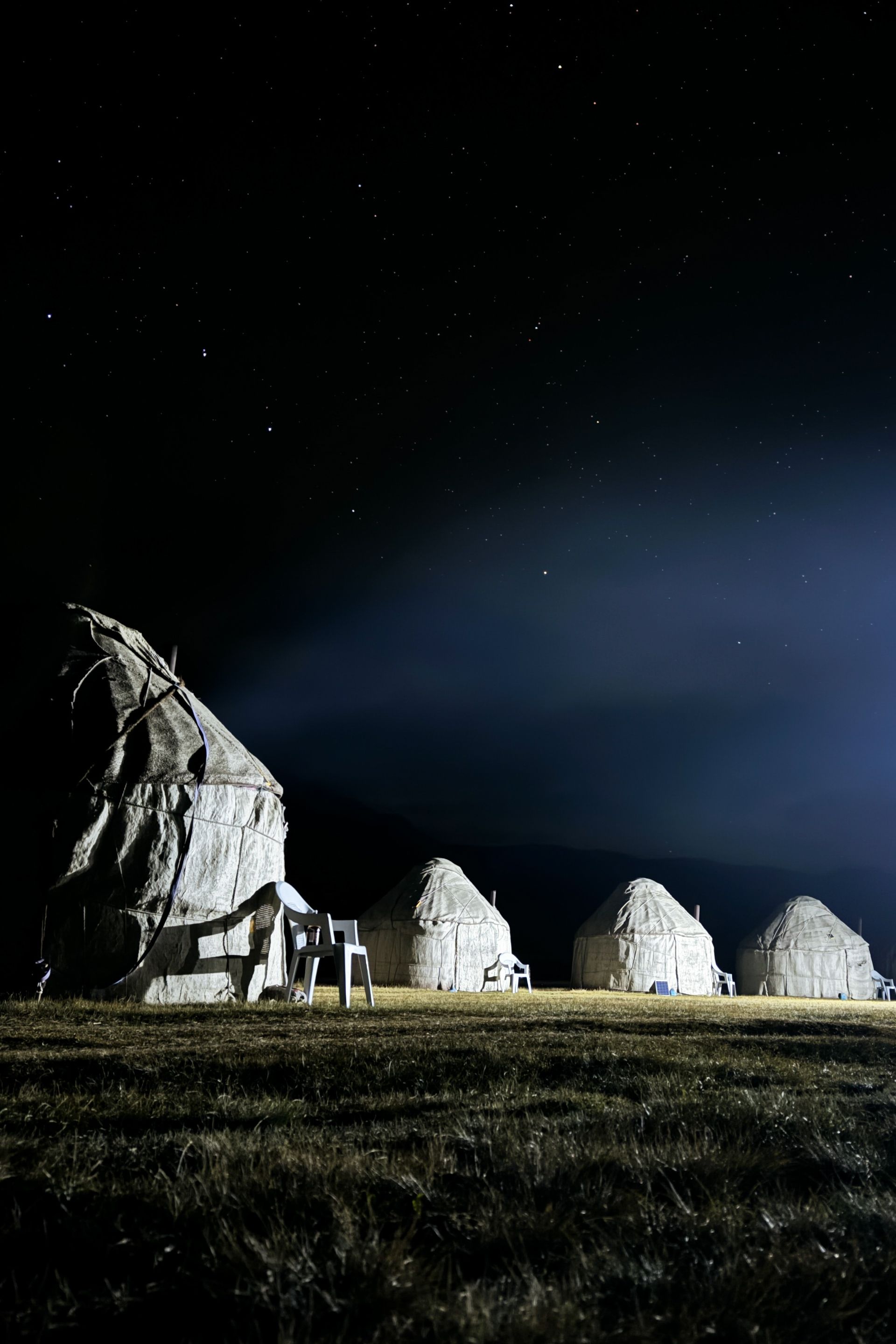
A night in a yurt at Lake Aydarkul
An evening off the grid, with a family of camel herders who knew the lake long before it became a destination.
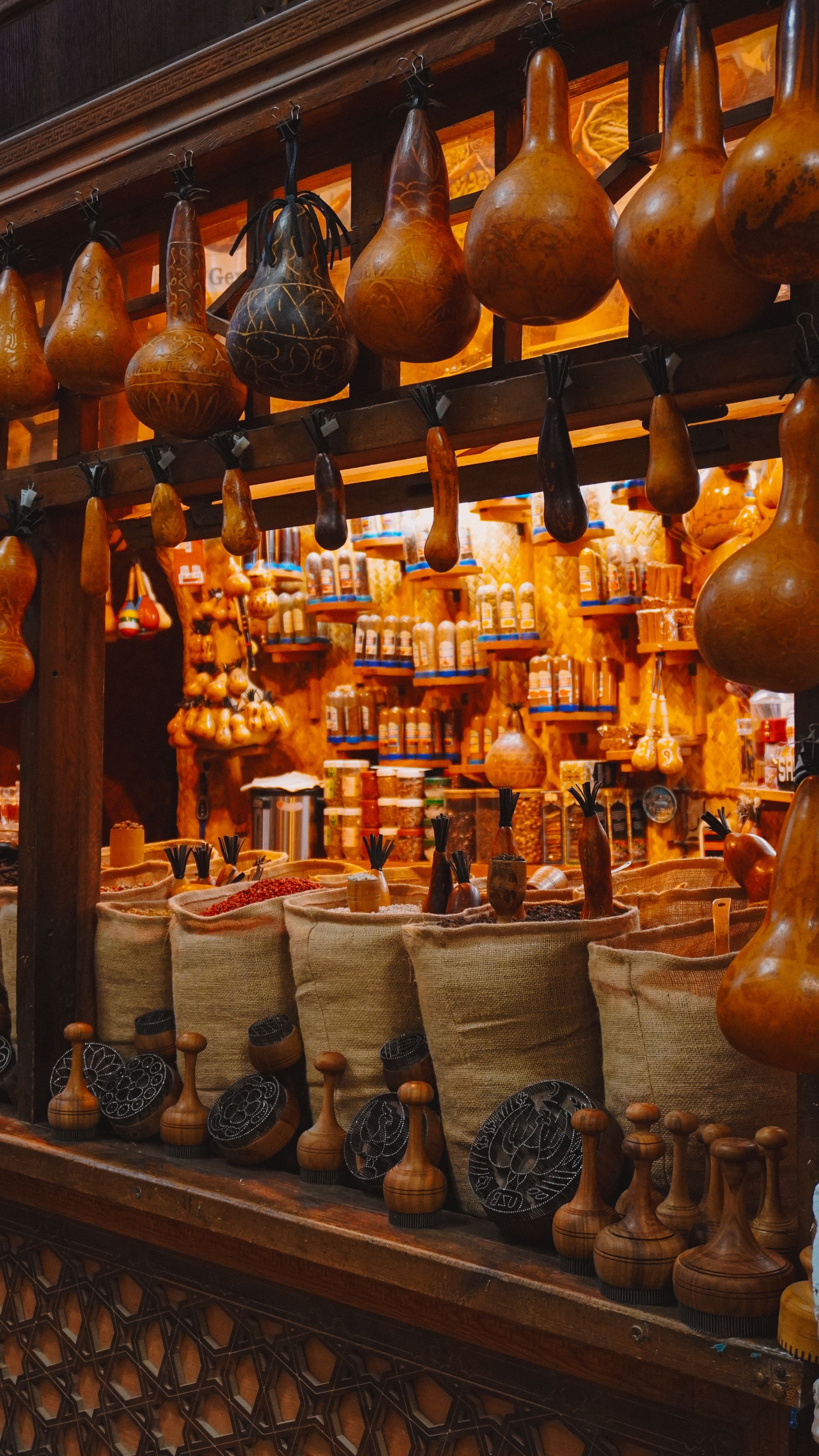
Early at the bazaar, before the city wakes
An hour when traders set up their stalls and the bazaar still belongs to the neighbourhood, not to the coaches that arrive later.
Combine, reorder or leave something out. It's your route, not ours.
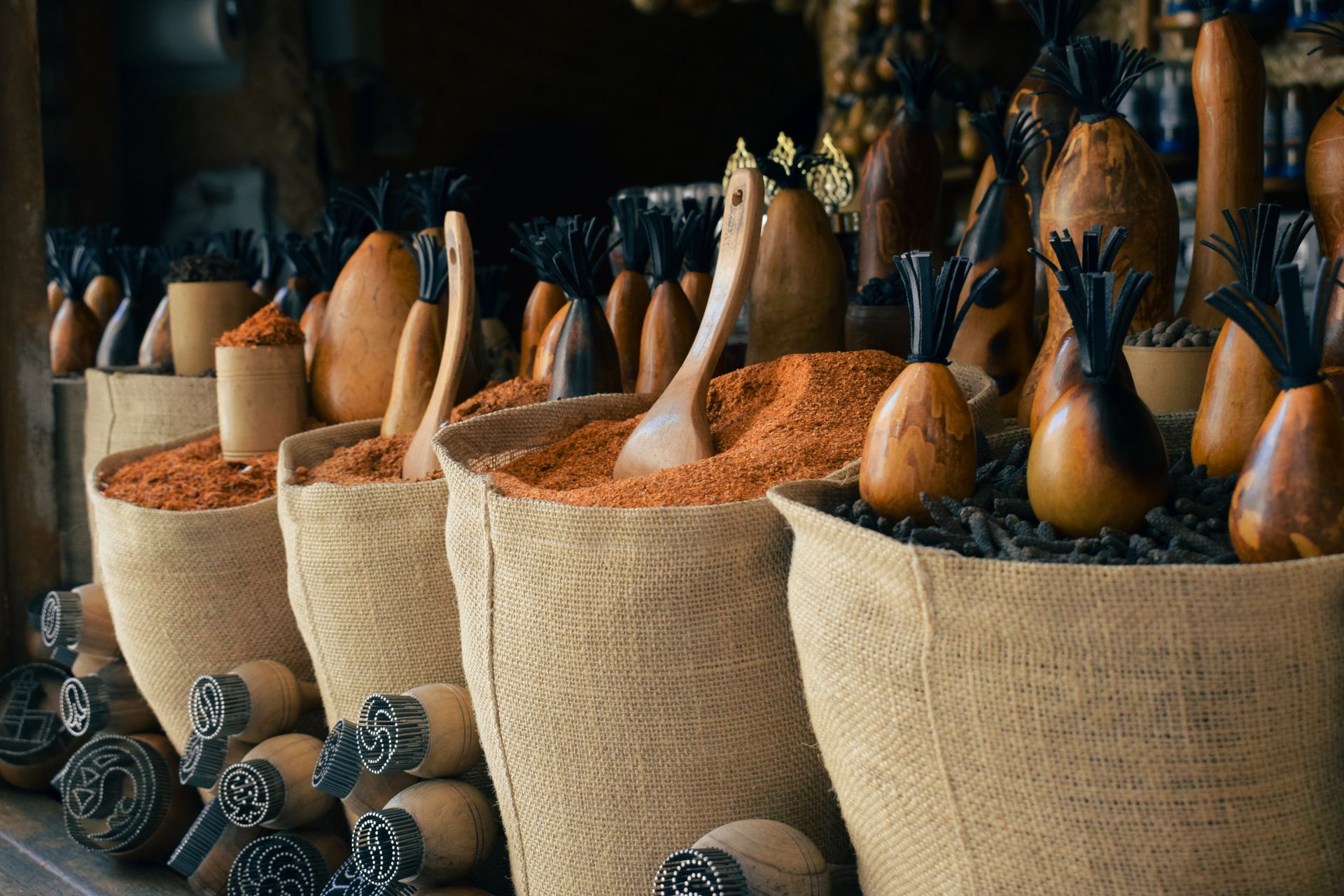
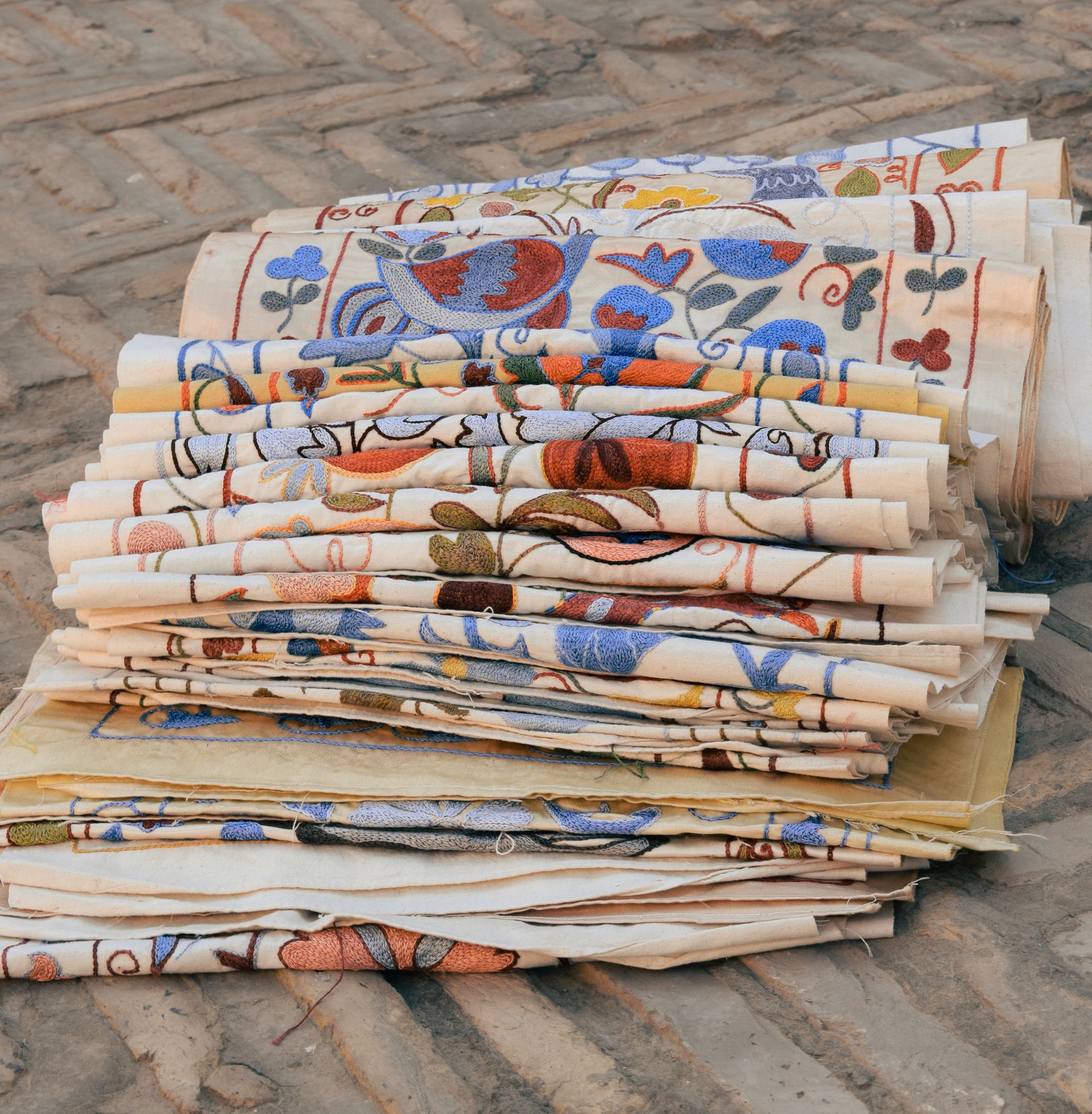
Colour made not for the photograph, but for the winter after.
Worth knowing
Practical, without the noise.
Practical matters that make travelling easier.
- Visa
- Which travel documents you need depends on your nationality, and entry rules change regularly. We go through the current requirements with you before you leave
- Arrival
- Usually via Tashkent, with a domestic flight or train onward into the country
- Distances
- Tashkent, Samarkand, Bukhara, Khiva and the Fergana Valley are spread across a large country. Factor in travel days, not just sightseeing days
- Health
- No mandatory vaccinations, though the usual caution with tap water and street food applies
- Pace
- Alternate cities with days that have no programme. The distance itself is part of the journey, not just the arrival
When would you travel?
When to go
Summer is unforgiving in Bukhara and Khiva: temperatures above 40 degrees are no exception in July and August. Spring and autumn are more pleasant, and spring also coincides with Nowruz, the New Year festival celebrated across the country in late March.
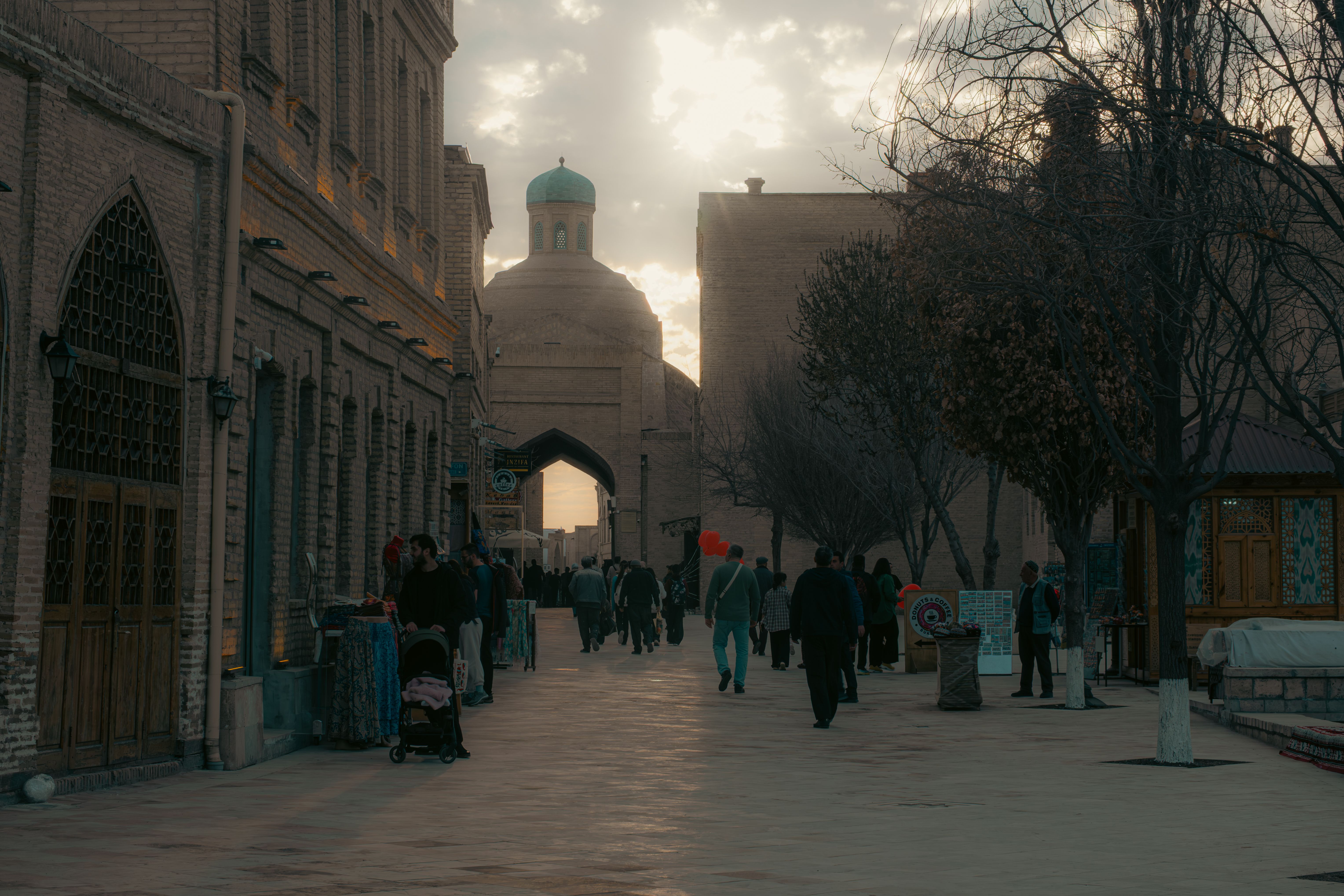
Winter is cold, especially in Tashkent where it can snow, but travel then and you get the domed cities almost to yourself, in a low winter light that gives the tilework an entirely different tone.
Best time to visit Uzbekistan
Jan
Feb
Mar
Apr
May
Jun
Jul
Aug
Sep
Oct
Nov
Dec
Top: pleasant daytime temperatures, clear skies, ideal for both the cities and the desert.
Good: still pleasant travelling, with a slightly higher chance of unsettled weather or cool evenings.
Fair: extreme summer heat or harsh winter cold, travel is possible but takes some adjusting to.
Same months, other destinations
Who else is at their best in these months?
Not ready to ask yet?
Leave your email address. A month before the good time begins, we send you one reminder. Nothing more.
You will first get an email to confirm. You can unsubscribe at any time, with one click.
Rather talk it over?
Leave your name and number. We will call you at a time that suits you.
A country you don't visit
but cross.
Questions we often get
Is Uzbekistan safe to travel in?
Yes. Crime against travellers is low and the major cities are well set up for visitors, without the country having lost its own character in the process.
Do I need to speak Uzbek or Russian?
Not necessarily. Russian is widely understood, English is usually spoken in the tourist centres too, and where it isn't, a local guide or driver is on hand.
Is it warm all year round?
No, quite the opposite. Uzbekistan has a strongly continental climate with hot summers and cold winters. The shoulder seasons are usually the most pleasant to travel in.
Can I combine this with another country in the region?
You can, for example with Kyrgyzstan or Kazakhstan, depending on what you're after: mountains, nomadic culture, or more Silk Road cities. We work that out together based on what interests you.
Or perhaps this
Other destinations
Still weighing it up? That is no problem at all. The right country often only becomes clear once the conversation starts.
Atlantic Ocean
Madeira
A Portuguese island in the Atlantic, with peaks up to 1,862 metres, levadas along the mountainsides and a laurel forest on the north side.
Indian Ocean
Maldives
Rings of coral in the Indian Ocean, with islands to go quiet on and islands where people live.
Highlands and Yucatán
Mexico
A capital built on the ruins of Tenochtitlan, colonial cities and Maya cities in the forests of Yucatán.
How it works
This is how your journey to Uzbekistan takes shape.
Six steps, from your first story to your homecoming. The conversation and the feasibility check cost you nothing.
-
01
Tell us your story
Fill in the form or give us a call. You do not need a route yet: a country, a period or just an idea is enough.
-
02
The conversation and the check
We call you within two working days. We talk through what you are looking for and check whether it can be done. If it can, we set down together what we will make for you.
-
03
We design your journey
We build your programme up, day by day, together with our own people in the country itself.
-
04
Your proposal
You read your journey day by day, with everything that is included. You say what you would like differently, until it is right.
-
05
Ready to depart
You send us your details, we send you your travel documents. You have one fixed contact who knows your journey.
-
06
Travelling, and after
Your contact stays reachable while you are away. Once you are home, we call one more time.
The next step
How would you like to discover Uzbekistan?
Tell us what you're after: the domes of the great cities, a night with a host family in the Fergana Valley, or the stillness of the Kyzylkum desert. We build the trip around your answer, not the other way round.
Updated in October 2026