United Arab Emirates
Dubai
A city that keeps rewriting itself, except at the creek.
This is Dubai
A city that keeps rewriting itself, yet where the old creek and the souks still hold the pace of life before the skyscrapers.
Dubai is usually presented as a city without memory: desert yesterday, a new record tomorrow. That's true of the skyline around Sheikh Zayed Road, but not of the city that stood here before the first cranes arrived. Across Dubai Creek, the natural inlet that splits the city in two, the same wooden abra still crosses that once ferried traders when Dubai was a trading post for pearls, spices and textiles.
Walk through Bur Dubai and Deira, through the narrow lanes of Al Fahidi, past the gold and spice souks, and you notice that the pace there is still set by haggling, drinking tea and waiting for the next crossing. QualiMundi builds trips that take both sides of Dubai seriously: the city looking forward, and the city that has never quite forgotten what came before.
In short
- Best time to go
- From November to March days are pleasant, with afternoons between 24 and 31 degrees, and evenings are cool. April, May and October are already warm, and from June to September daytime temperatures reach 40 degrees or more.
- How long
- Four to five days for the creek, the old districts, Al Quoz and a morning in the desert. To add Hatta, Sharjah or Abu Dhabi, allow a week.
- Who it suits
- Travellers who want to know the trading districts around the creek as well as the modern city, look for galleries in Al Quoz, and want to add the desert and the Hajar Mountains at Hatta.
- What sets it apart
- Unlike spacious Abu Dhabi, Dubai grew up around a trading creek, where wooden abras still cross between Bur Dubai and Deira. Further out stands the Burj Khalifa, at 828 metres the tallest building in the world.
The creek
The water the city was built around
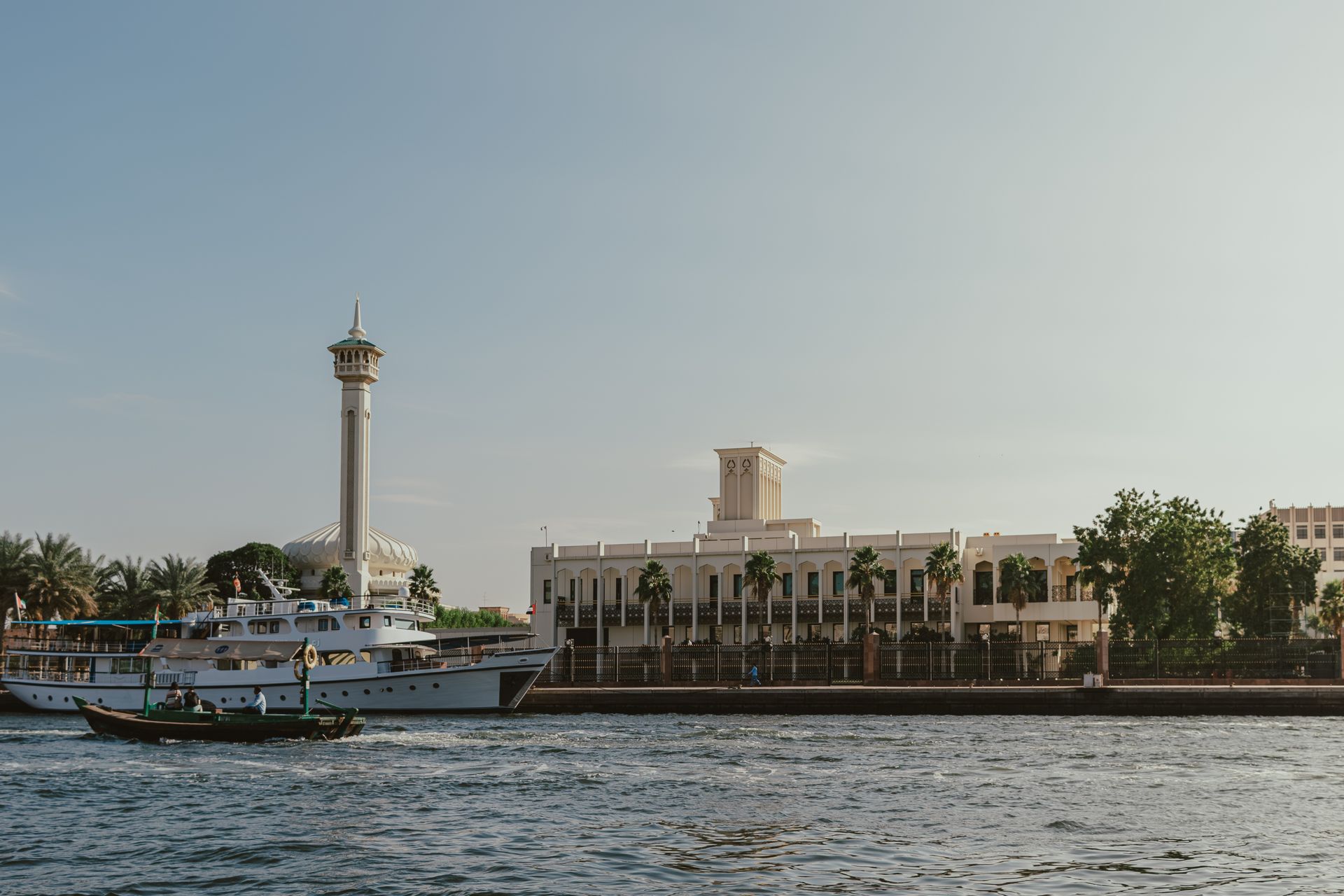
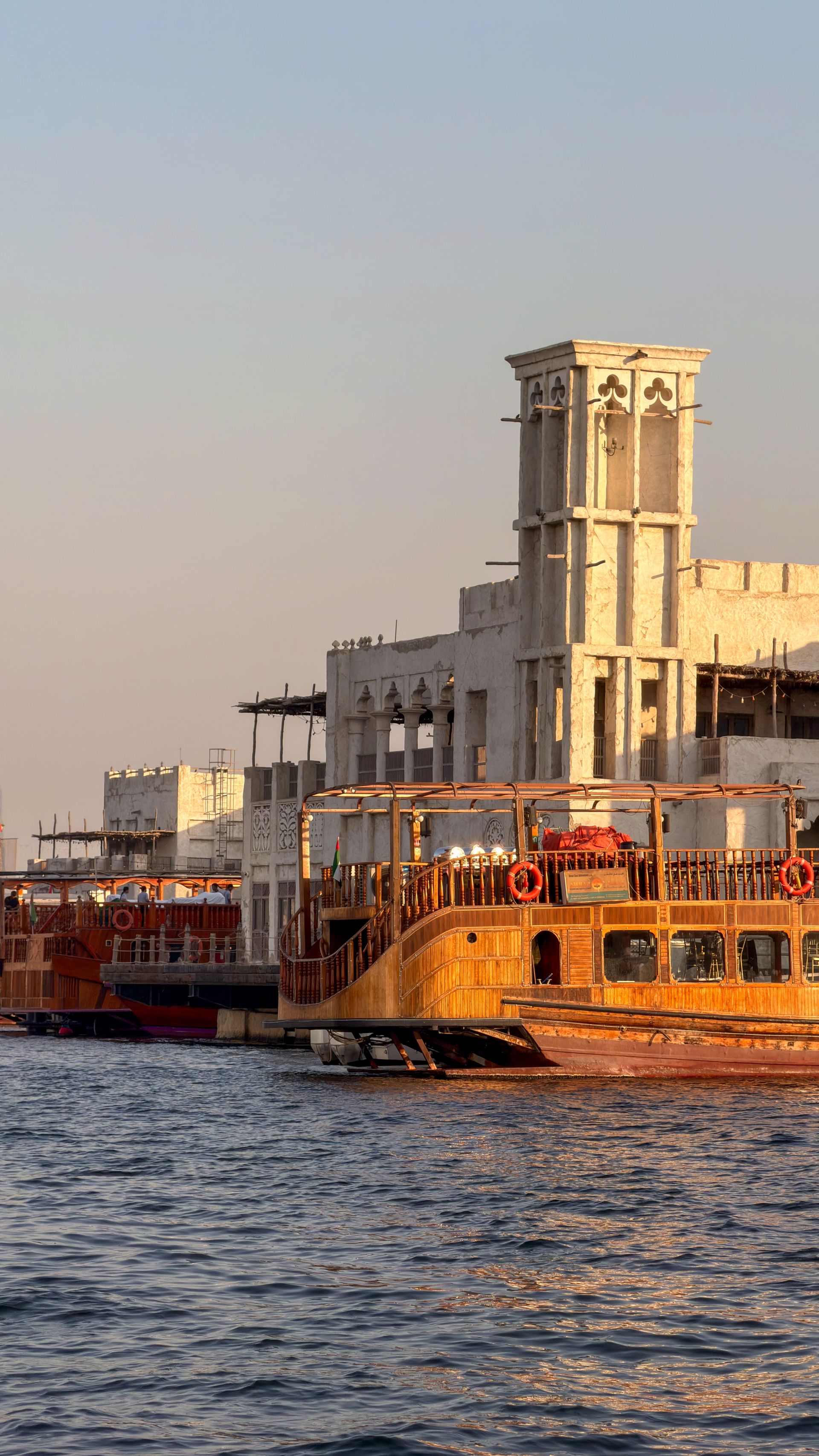
Dubai Creek isn't a backdrop, it's the reason a city grew here in the first place. On the Deira side, dhows still moor and are loaded by hand: cardboard boxes, refrigerators, tyres, bound for ports in Iran and East Africa, exactly as pearls and spices once were a hundred years ago. For next to nothing, an abra carries you across to Bur Dubai, and no one hurries the crossing.
Further along, at the Al Jaddaf shipyard, dhows are still built by hand from keel to deck, with tools that go back generations. It's a different Dubai from the one of the gleaming glass towers nearby, slower, saltier, and just as real.
The faces of Dubai
A city of neighbourhoods, not one skyline
Dubai can't be captured in a single glance. Every district has its own rhythm, from the wind towers of Al Fahidi to the stillness of the dunes half an hour away.
heritage
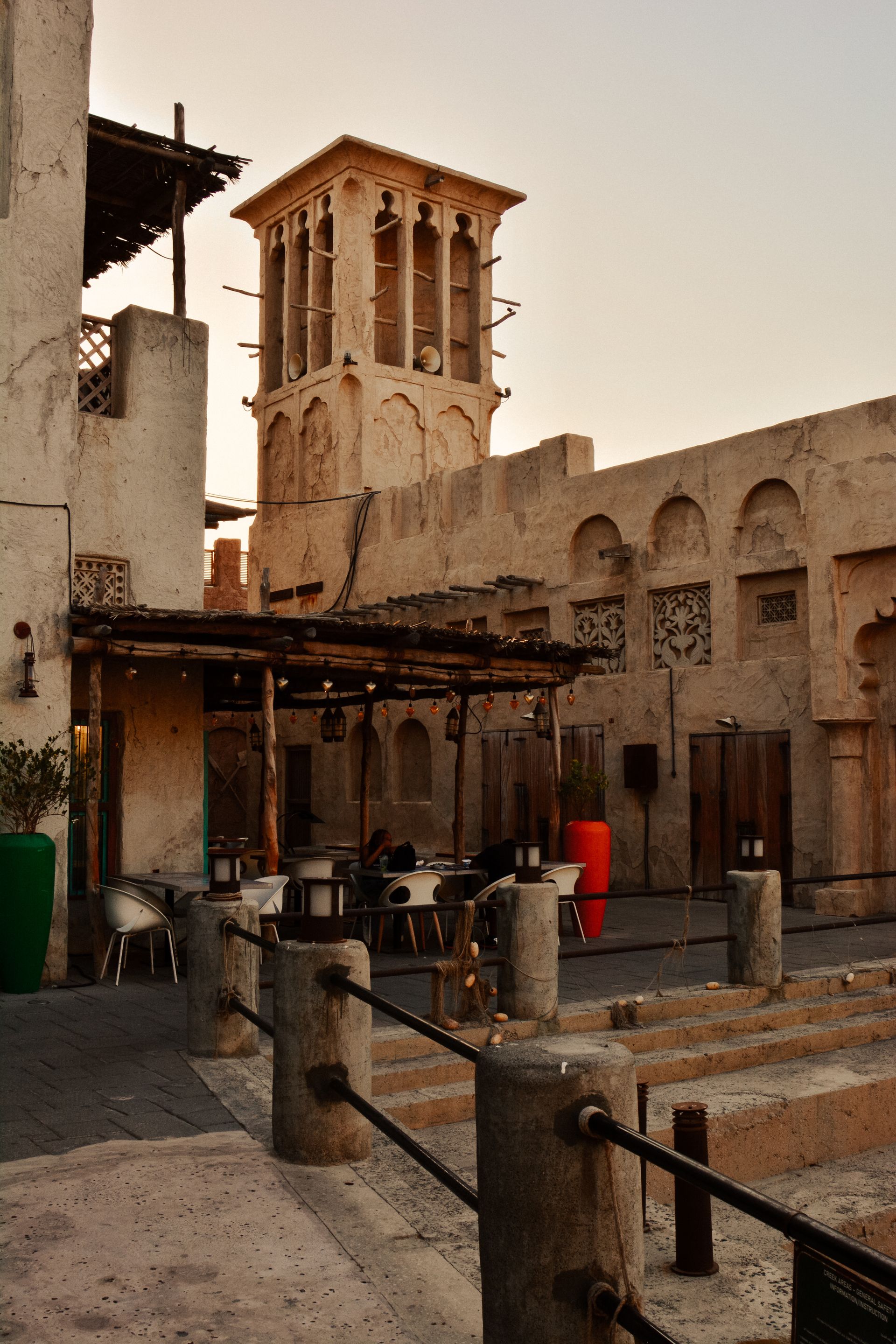
Al Fahidi
Dubai's oldest quarter, with coral-stone houses and wind towers that have provided cooling for centuries. Narrow lanes, small museums, a stillness found nowhere else in the city.
trade
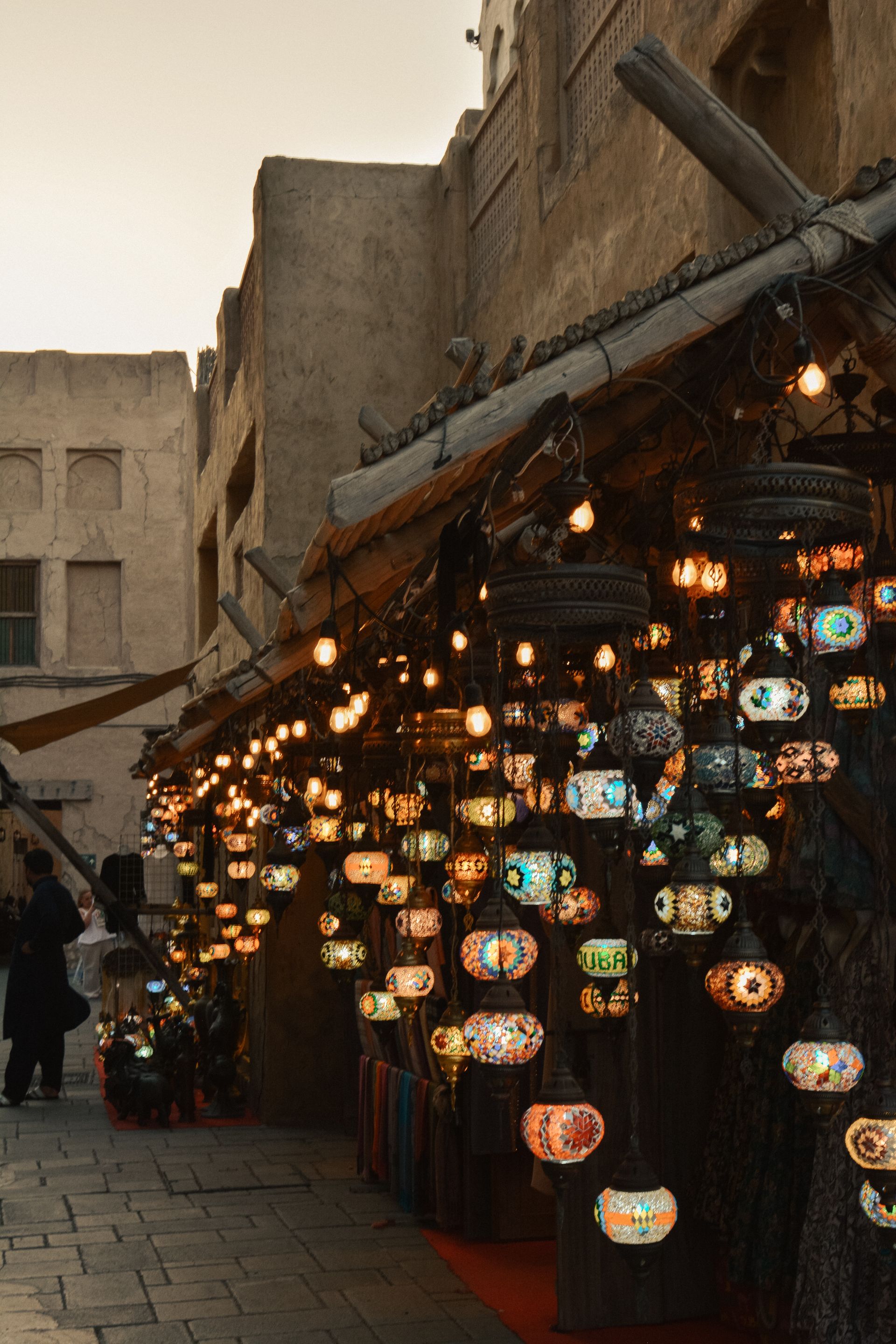
Deira
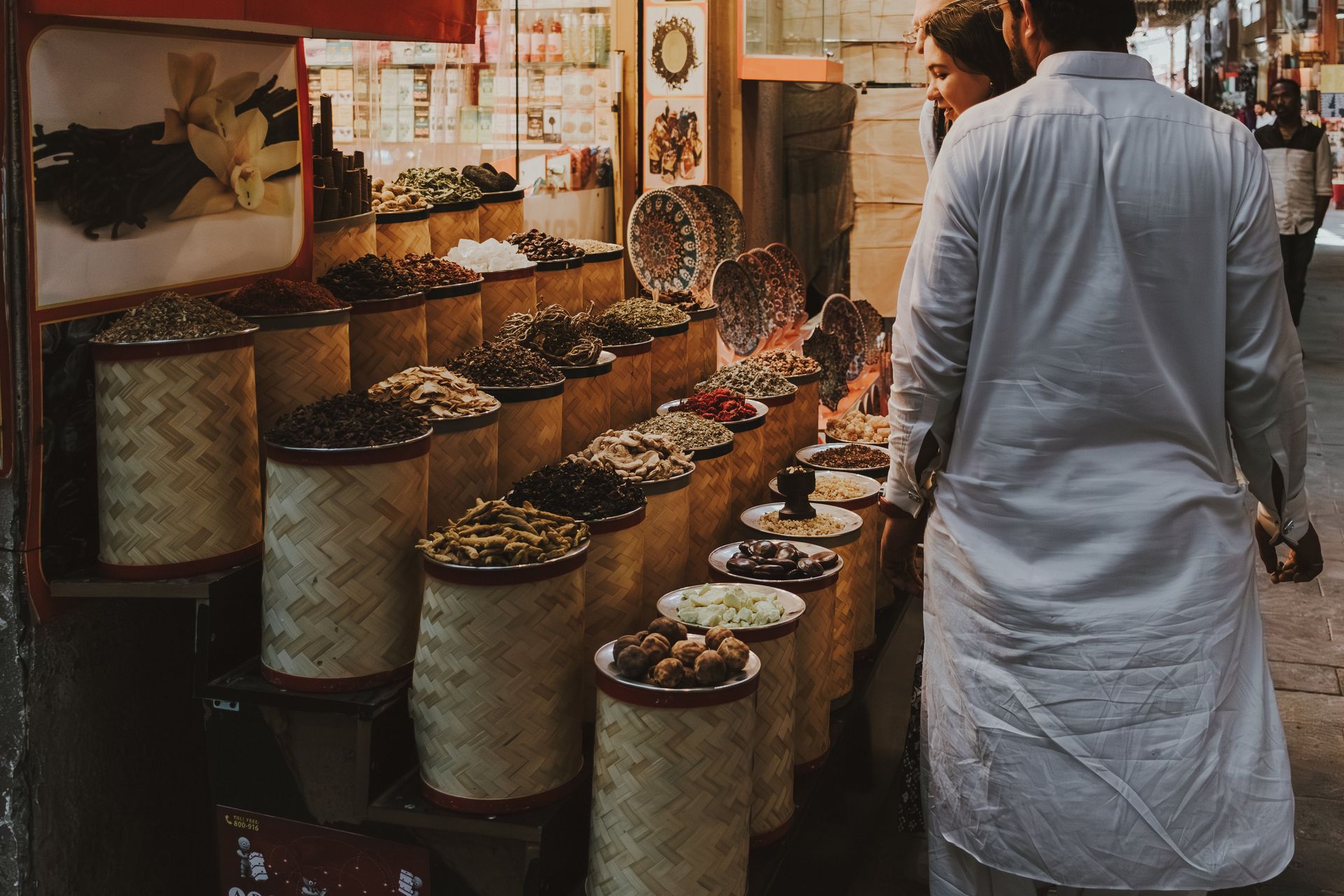
The trading quarter across the creek: gold souk, spice souk, textile streets where prices are still negotiated rather than printed.
coast
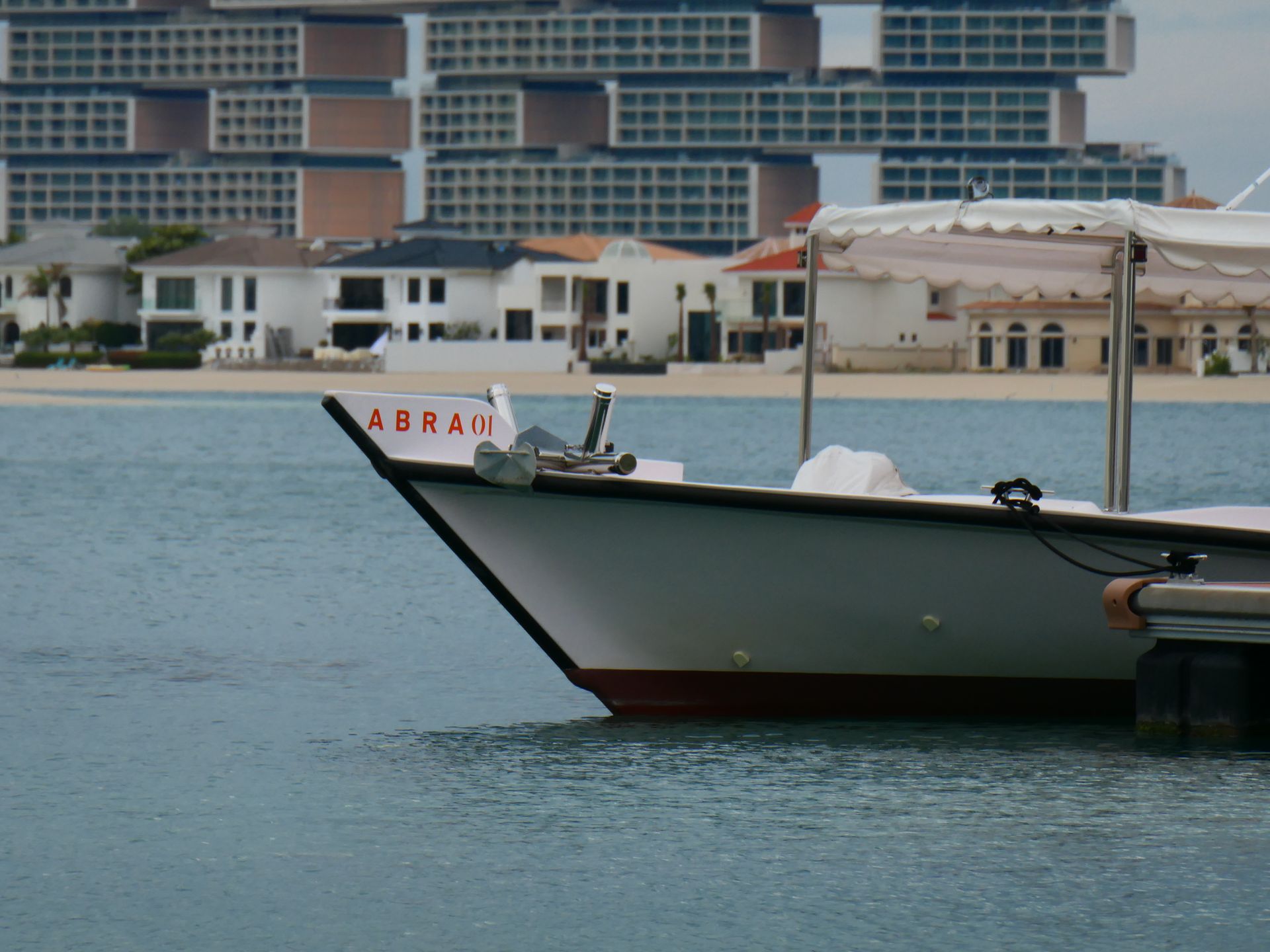
Jumeirah
The coastline south of the creek, where fishing villages gave way to boulevards, but the early morning still belongs to the fishermen.
art
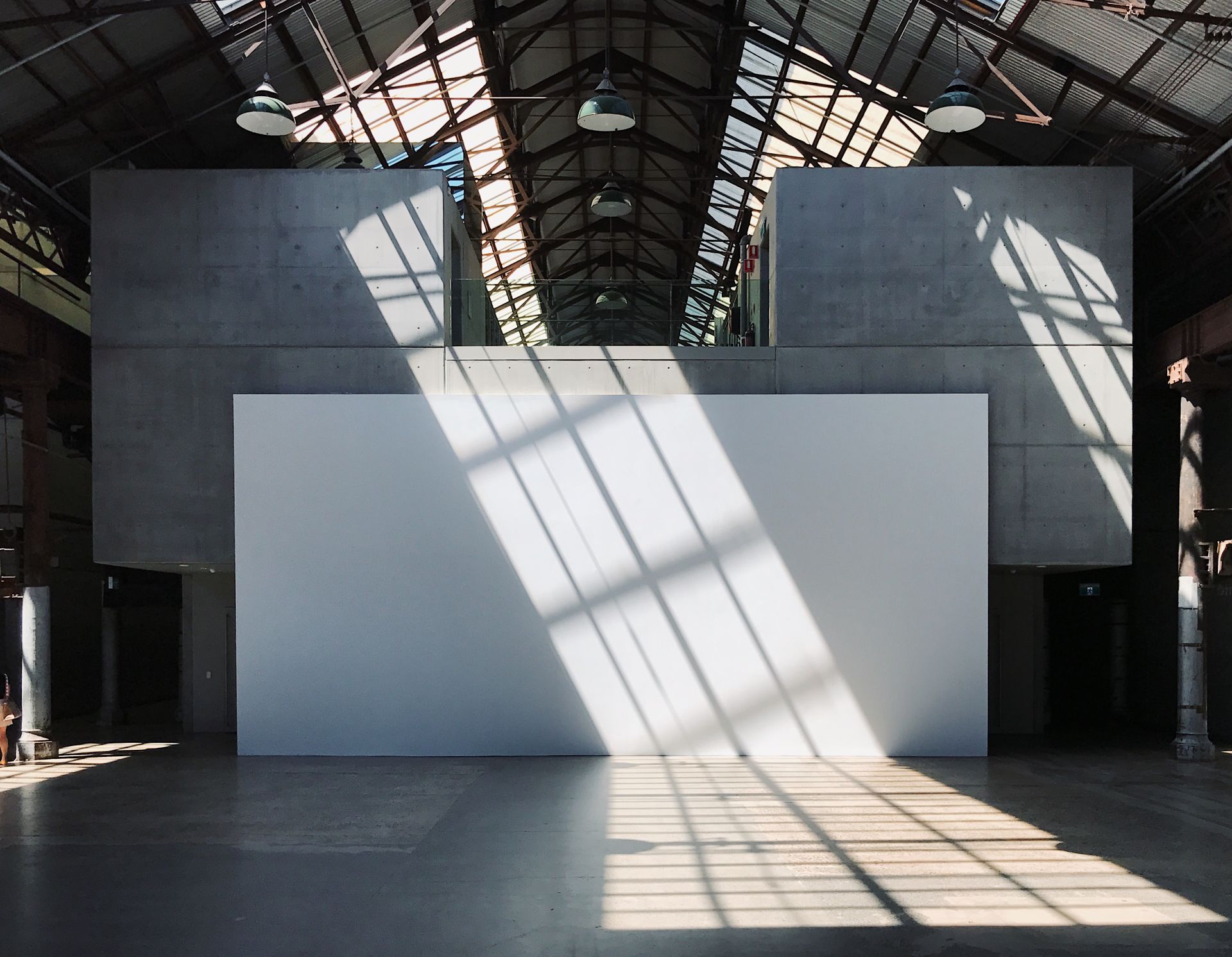
Al Quoz
An industrial district where warehouses have been converted into galleries and studios, the Dubai that measures itself against an exhibition rather than a skyscraper.
desert
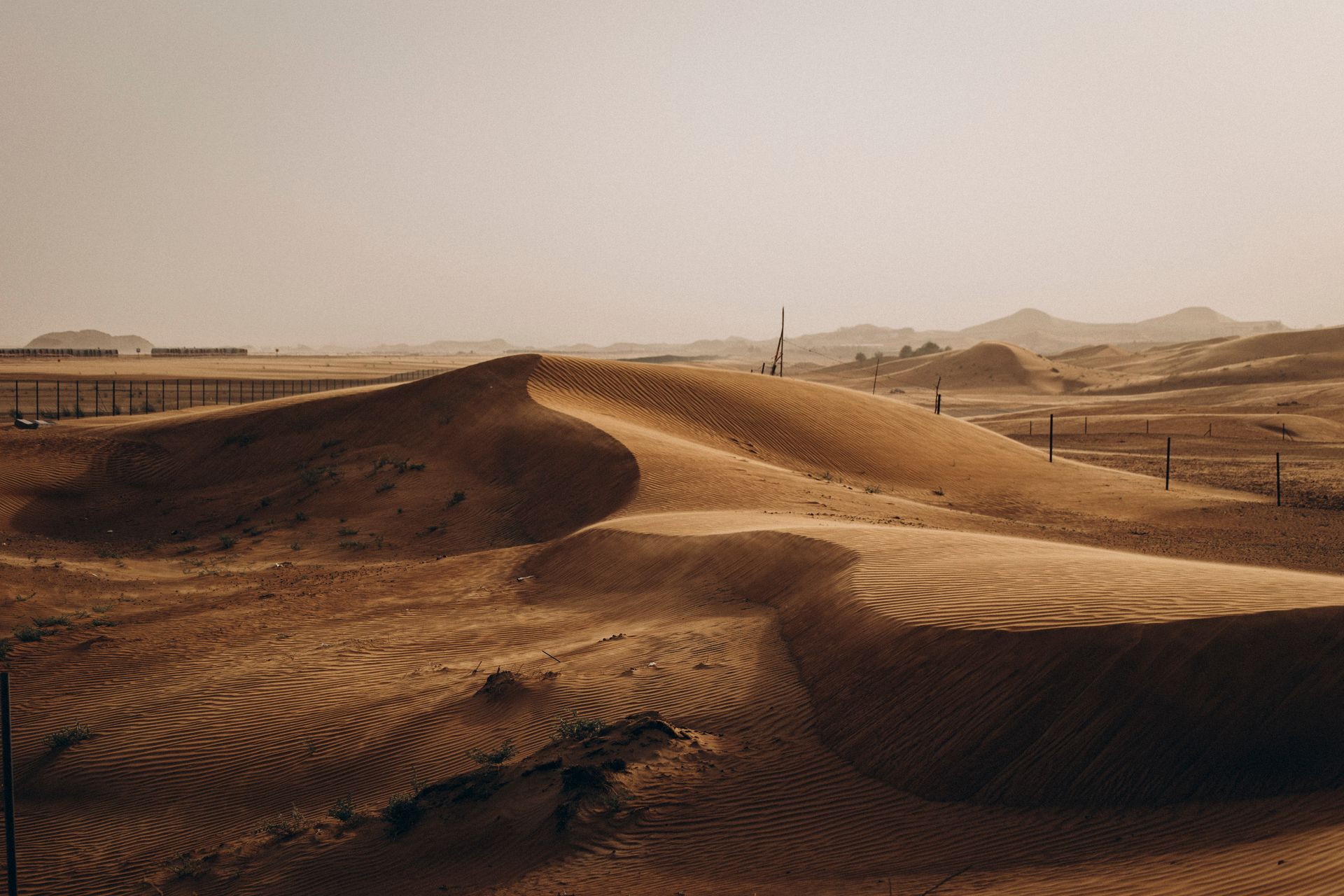
Al Marmoom
A protected desert reserve half an hour from the skyline, where dromedaries are still trained for racing and the night sky stays undisturbed.
mountains
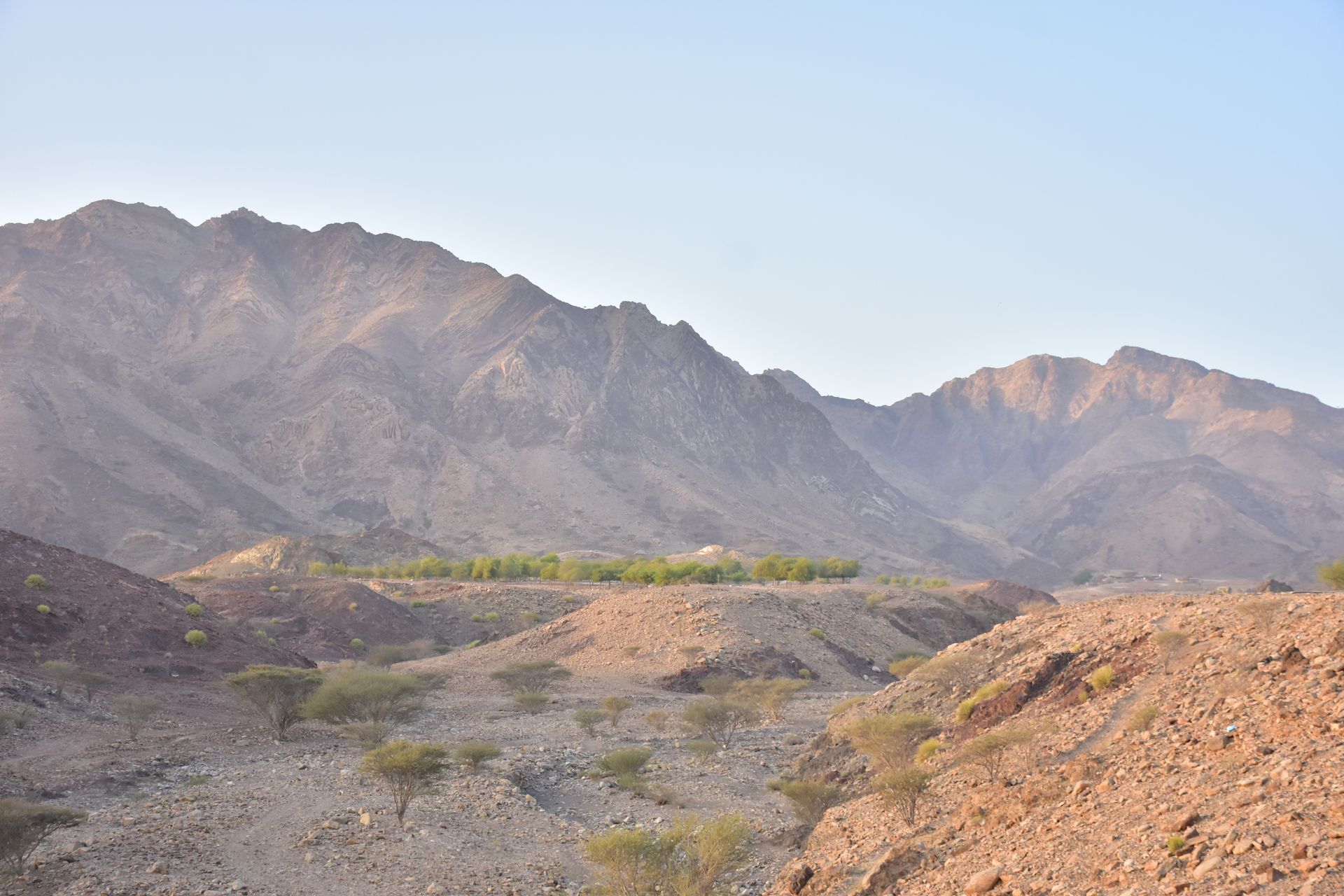
Hatta
On the border with Oman, the Hajar Mountains rise up, cooler, rougher, with wadis and an old mountain village that has little in common with the rest of Dubai.
What Dubai can show you
Beyond the skyline selfie
Dubai offers more than a viewing platform. It's about moments that show the city as it feels, not as it's photographed.
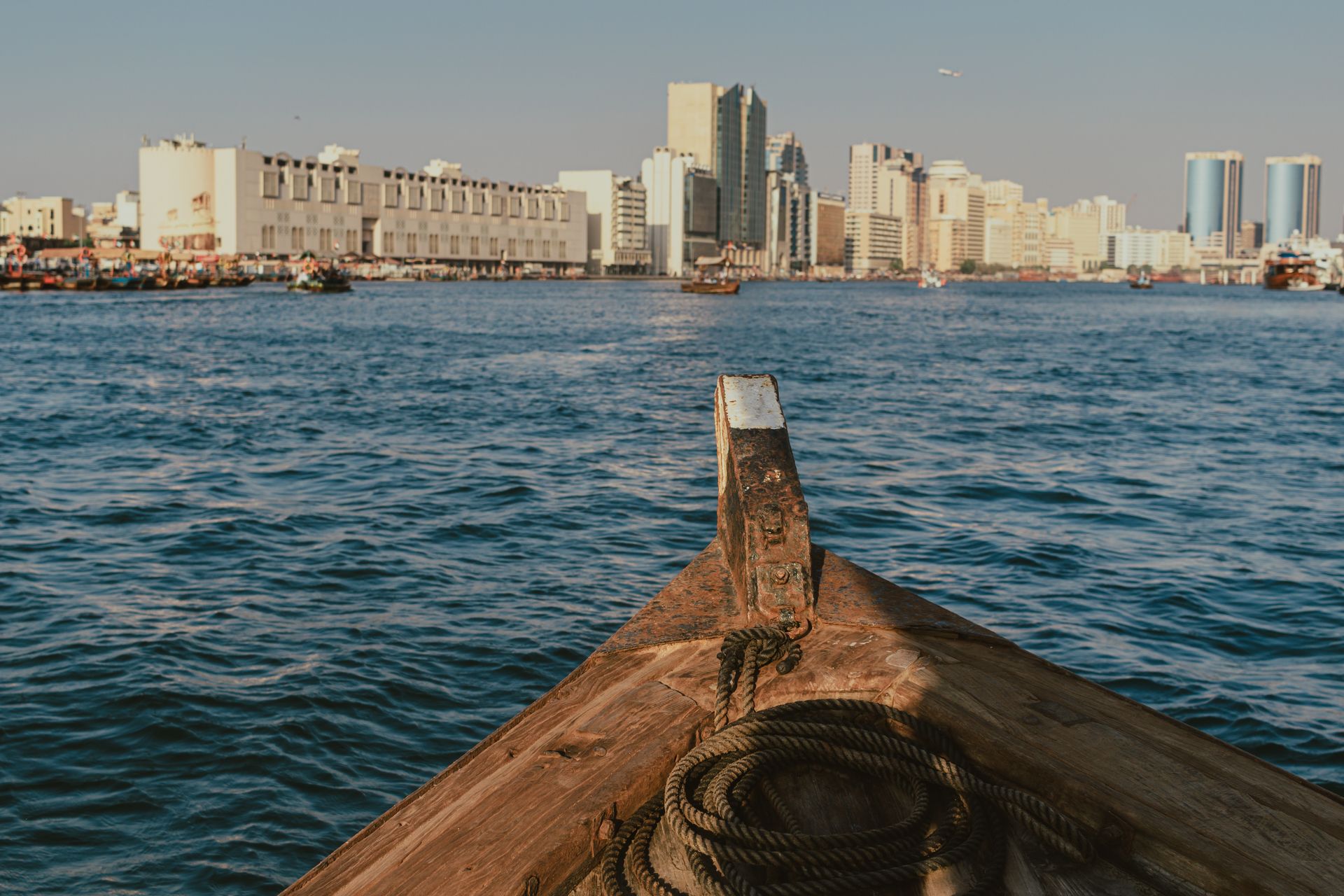
The first crossing of the day
Before the heat and the crowds arrive, the first abra is already sailing. Five minutes that sum up the rhythm of the old city.
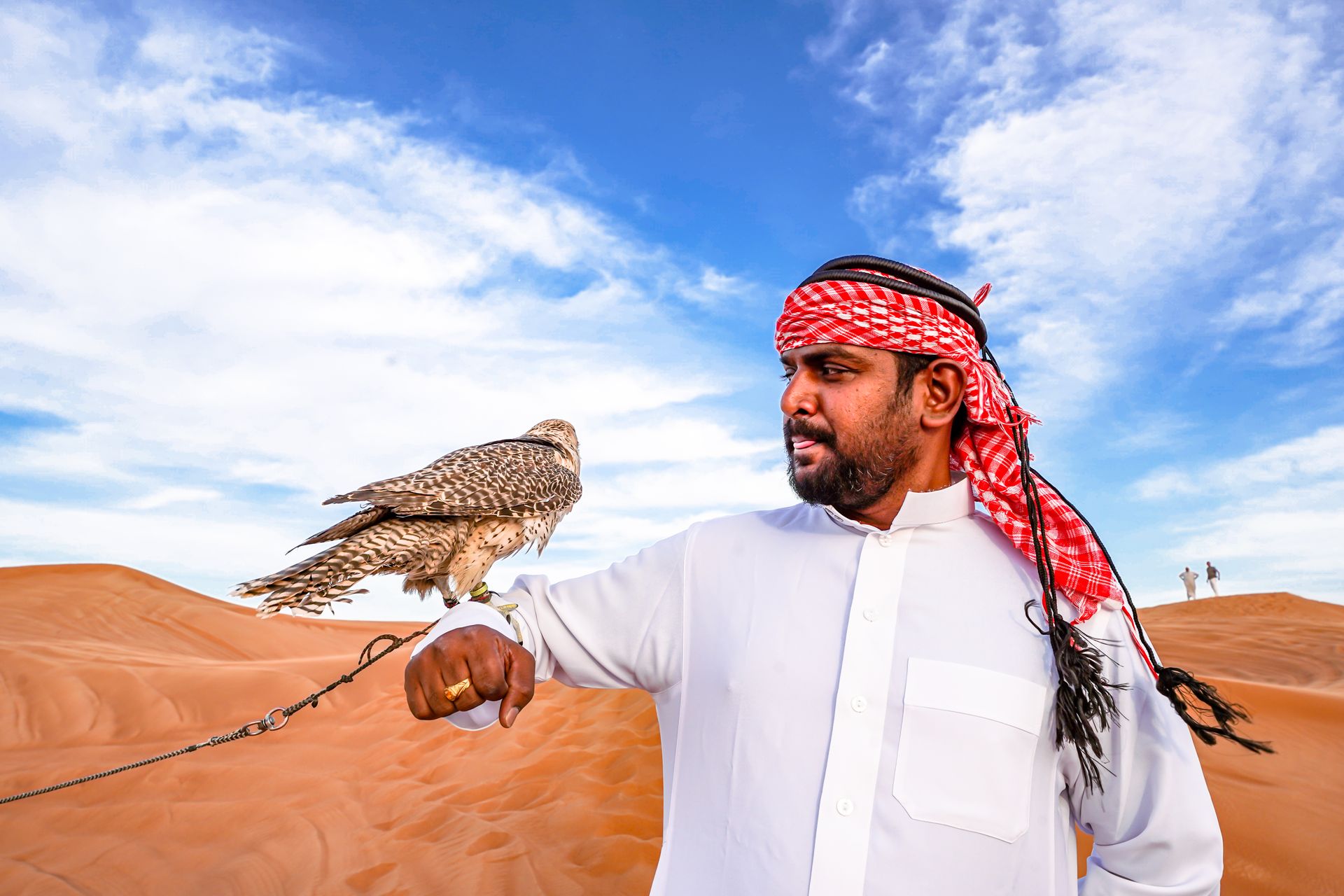
Falconry in the desert
A tradition older than the oil industry: falconers training their birds at sunrise, with Saluki dogs in the background.
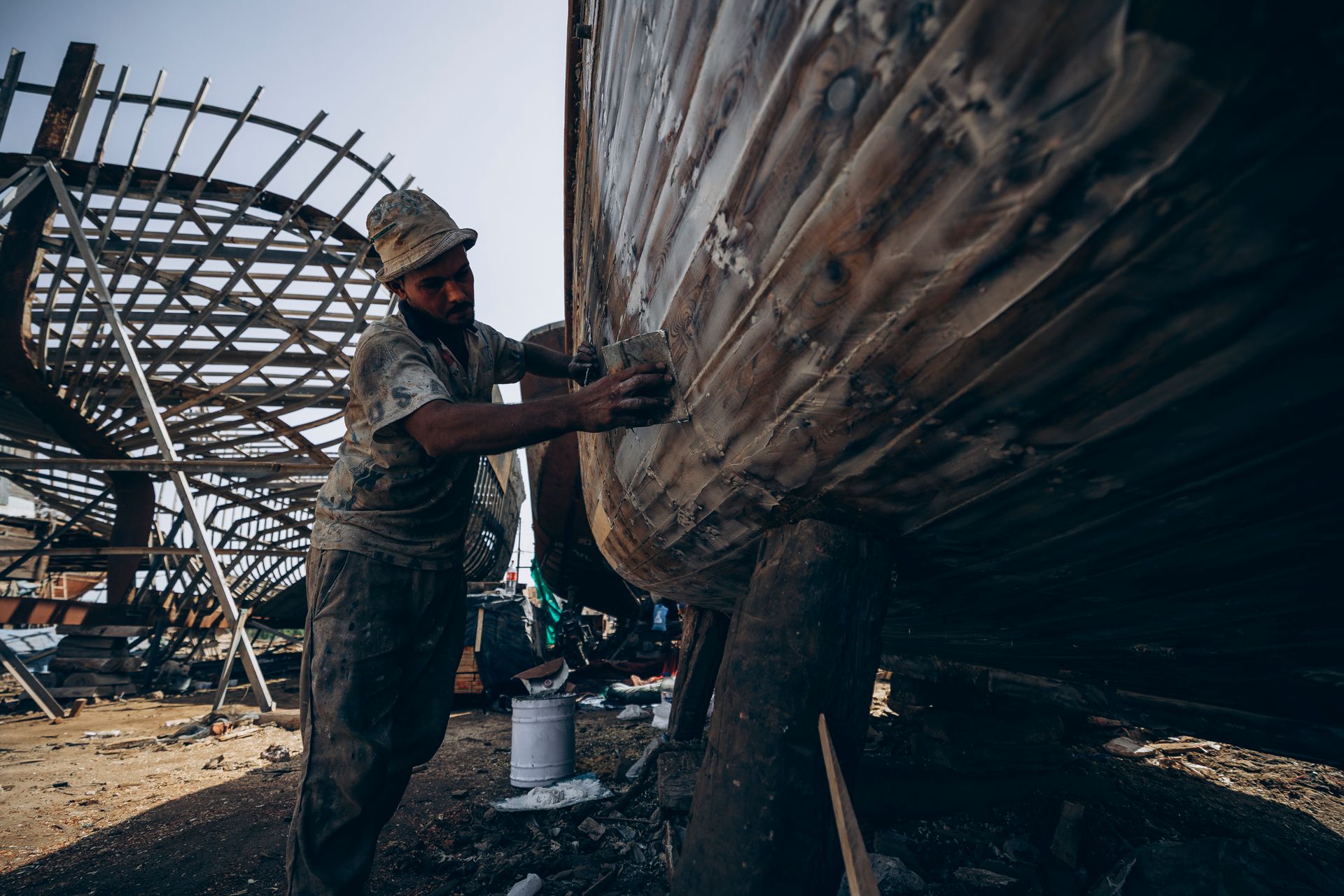
Building dhows in Al Jaddaf
One of the last yards where dhows are still built entirely by hand, plank by plank, as has been done for generations.
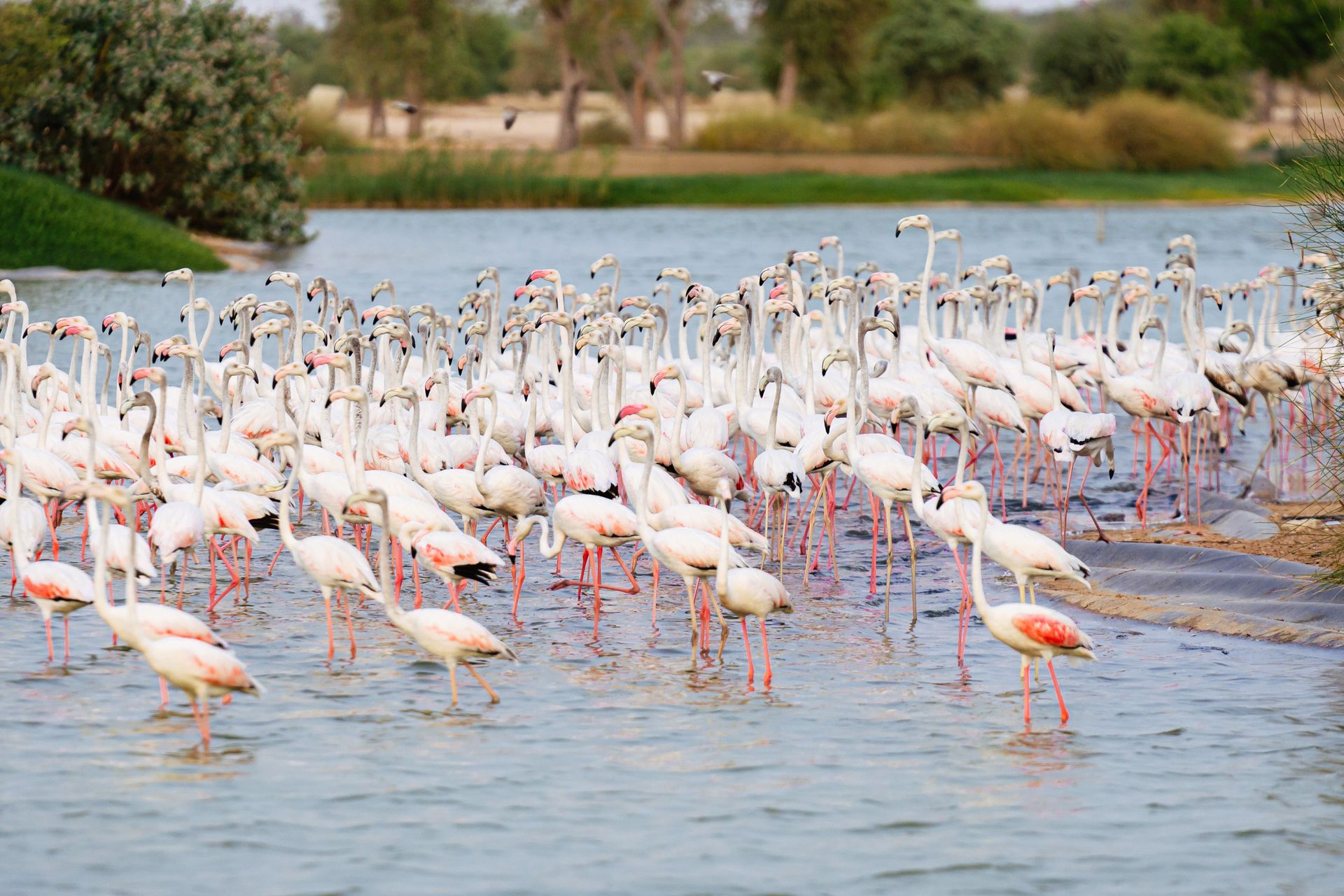
Flamingos in the middle of the city
The Ras Al Khor wildlife sanctuary lies within the city limits, yet feels like an entirely different landscape: thousands of flamingos, within walking distance of the office towers.
None of these moments is fixed in a programme. They're woven into the rhythm that suits you.
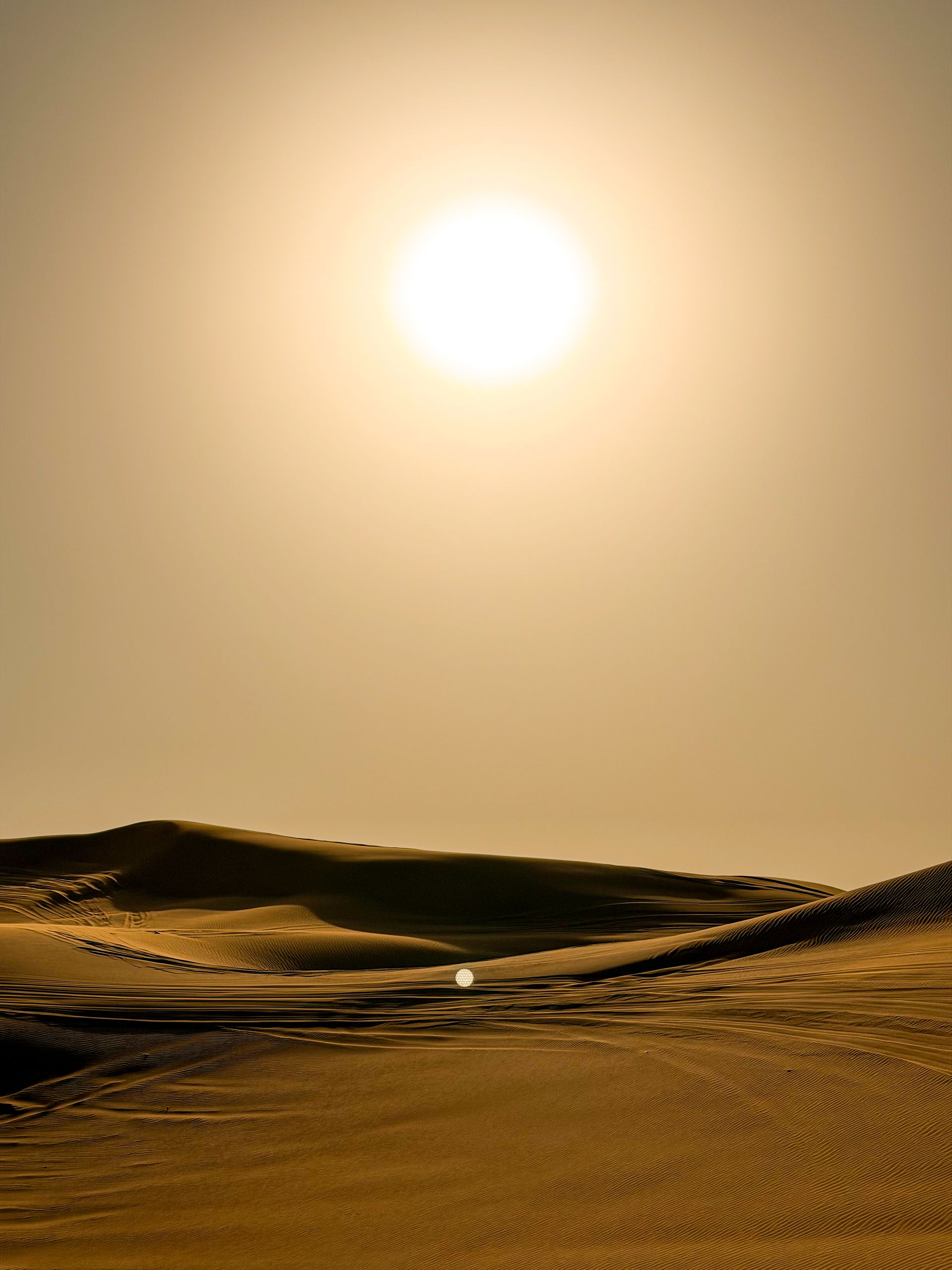
The dunes of Al Marmoom, half an hour from the skyscrapers.
Food and hospitality
A table that speaks more languages than the menu reveals
Emirati cuisine itself stays invisible to many visitors, tucked behind the international restaurants of the malls. Machboos, spiced rice with meat or fish, harees and sweet luqaimat are found mostly with local families or in simple eateries in Deira and Satwa, not on every street corner.
What Dubai's table does let you feel everywhere is its trading history: Keralan fish lunches, Iranian grill restaurants, Levantine mezze, all within walking distance of each other. That layer of the city, where hospitality and trade have coincided for centuries, says as much about Dubai as the skyline does.
Looking past the highlights
How QualiMundi looks at Dubai
Beyond the layer everyone photographs The skyline, the mall, the beach. That's the Dubai you already know before you arrive. We build in time for the trading city that lies beneath it.
Pace as a choice, not chance A morning at the creek follows a different rhythm from an afternoon in Downtown. We plan those transitions deliberately, rather than leaving them to chance.
The desert as a neighbour, not a coach trip Al Marmoom lies closer than most visitors think. We treat the desert as part of the city, not as a separate day trip with fixed stops.
A trading city, not a resort Dubai's cosmopolitan character didn't come from nowhere. It's the legacy of centuries of trade across the creek. That history gives context to everything you see there today.
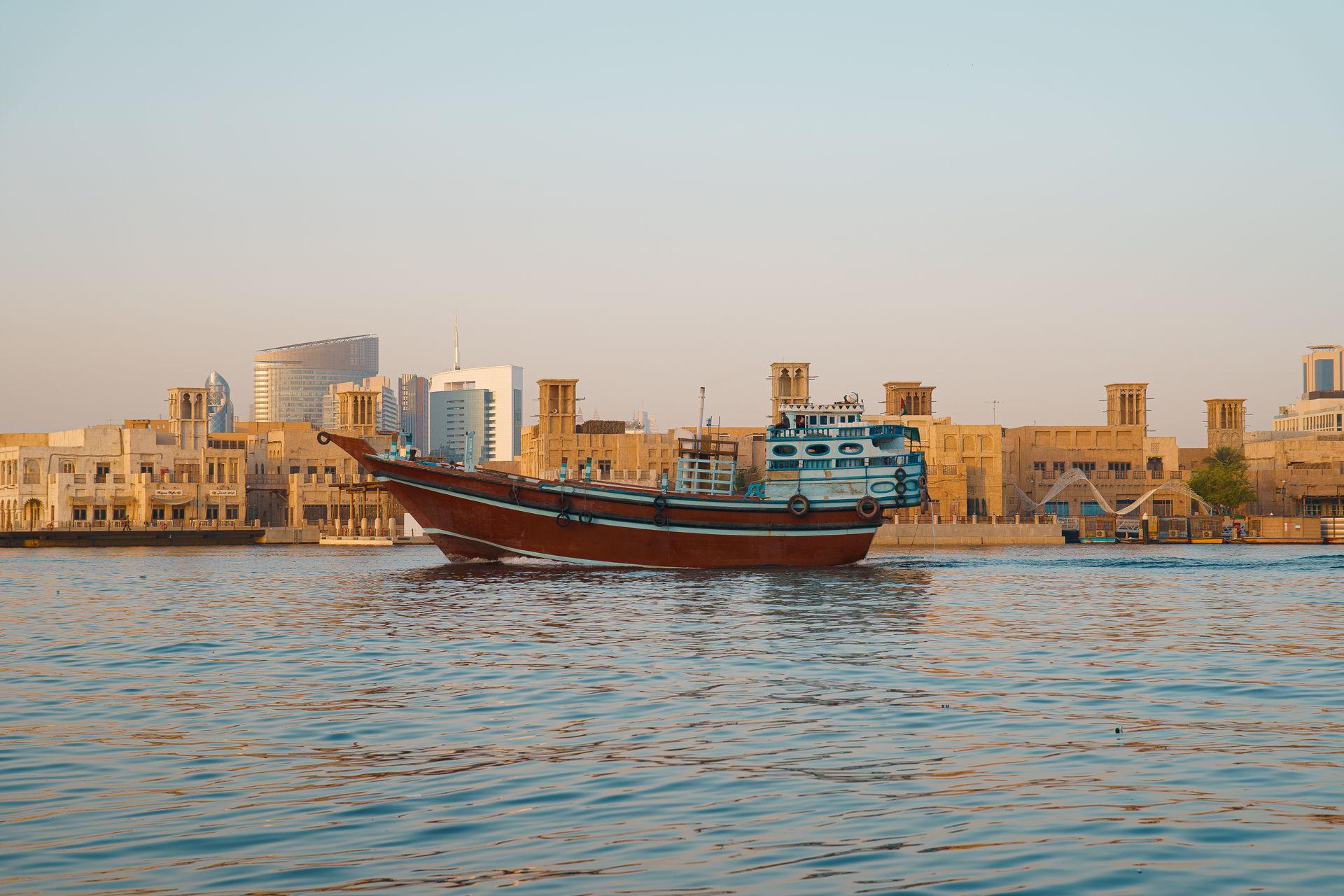
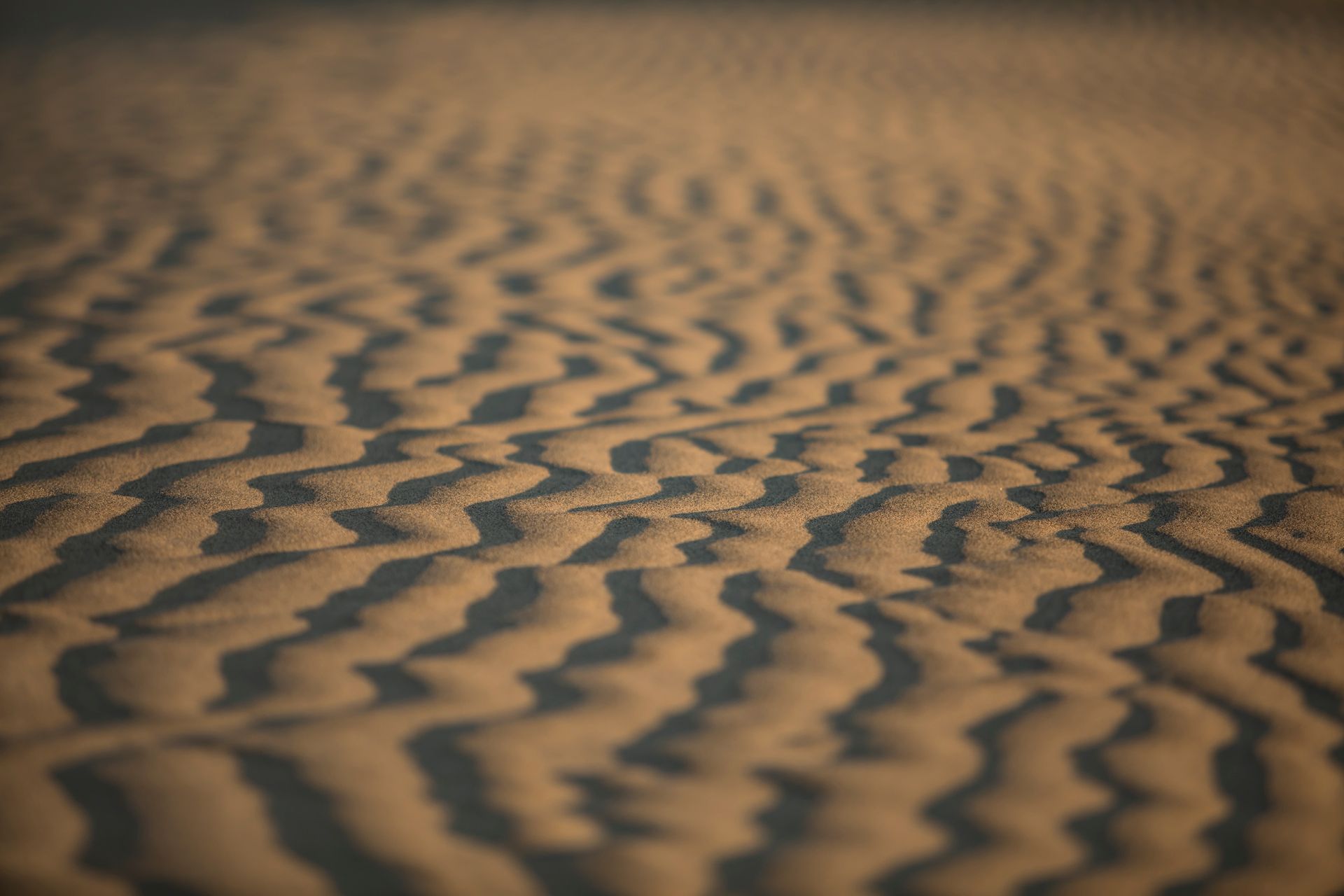
Water and sand, half an hour apart.
When would you travel?
When to travel to Dubai
From June to September, daytime temperatures climb to forty degrees or more and life shifts indoors or to the early morning. That's not the Dubai you want to explore on foot.
November to March is the city at its best: pleasant temperatures by day, cooler evenings, and the right weather to explore both the creek and the dunes of Al Marmoom on foot.
Best time to visit Dubai
Jan
Feb
Mar
Apr
May
Jun
Jul
Aug
Sep
Oct
Nov
Dec
Top: pleasant temperatures, ideal for the city, the coast and the desert.
Good: still bearable, with warm afternoons but mild mornings and evenings.
Fair: extreme heat forces the rhythm indoors and into the early hours.
Same months, other destinations
Who else is at their best in these months?
Not ready to ask yet?
Leave your email address. A month before the good time begins, we send you one reminder. Nothing more.
You will first get an email to confirm. You can unsubscribe at any time, with one click.
Rather talk it over?
Leave your name and number. We will call you at a time that suits you.
Worth knowing
Practical, without the noise.
A few practical details that make the difference between a smooth trip and a frustrating one.
- Visa
- Which travel documents you need depends on your nationality, and entry rules change regularly. We go through the current requirements with you before you leave.
- Dress
- In Al Fahidi, mosques and certain public buildings, modest, covering clothing is expected; elsewhere the dress code is relaxed.
- Ramadan
- During the fasting month, opening hours are adjusted, and eating and drinking in public during the day is avoided.
- Getting there
- Direct flights from Brussels; the metro and taxis cover the rest of the city well.
- Pace
- From April to October, the heat dictates a different daily rhythm: early mornings, quiet afternoons, active evenings.
Dubai builds upward.
We look at what has stayed underneath.
Frequently asked questions about Dubai
What travellers ask us most often before they leave.
Isn't Dubai just a stopover on the way elsewhere?
It doesn't have to be. Between the creek, the old quarters, Al Marmoom and the mountains at Hatta, there's enough to treat Dubai as a destination in its own right, not just a layover.
Can Dubai be combined with other emirates?
Yes. Sharjah, the Hajar Mountains at Hatta and Abu Dhabi are all within reach and give a broader picture of the region.
Isn't it always extremely hot?
Mainly from June to September, though May and October are already hot. From November to March, the climate is mild enough to explore the city and the desert on foot.
Do you need to dress conservatively everywhere?
No, but in Al Fahidi, mosques and religious sites, covering clothing is appreciated. Elsewhere the dress code is relaxed.
Or perhaps this
Other destinations
Still weighing it up? That is no problem at all. The right country often only becomes clear once the conversation starts.
United Arab Emirates
Abu Dhabi
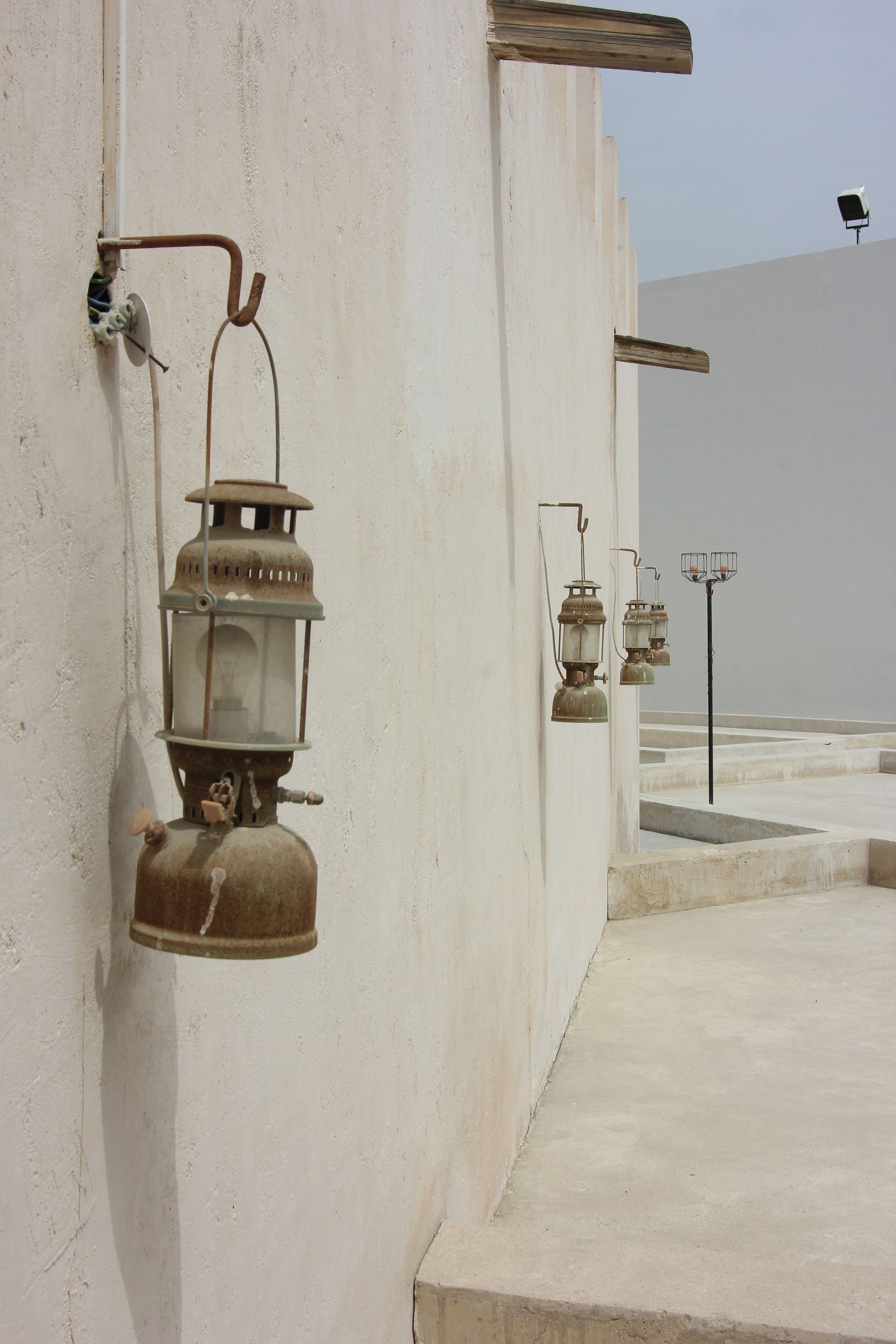
The capital prefers to govern with calm rather than noise, putting its wealth towards culture and space rather than spectacle.
United Arab Emirates
Sharjah
The most understated of the emirates, where culture and heritage matter more than height or gloss.
Arabian Peninsula
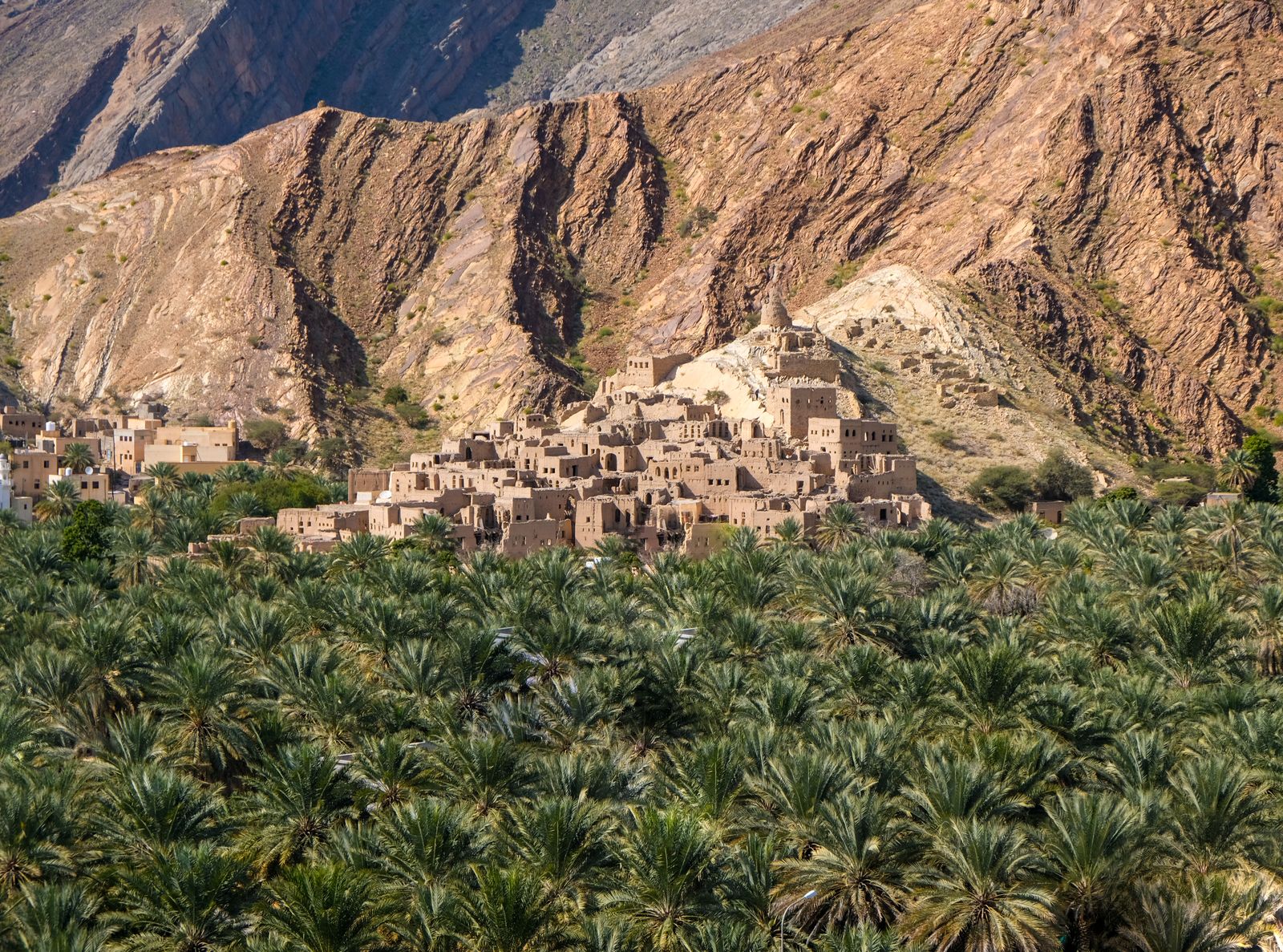
Oman
Mountains, wadis and a quiet coastline: a destination that reveals itself at an unhurried pace.
How it works
This is how your journey to Dubai takes shape.
Six steps, from your first story to your homecoming. The conversation and the feasibility check cost you nothing.
-
01
Tell us your story
Fill in the form or give us a call. You do not need a route yet: a country, a period or just an idea is enough.
-
02
The conversation and the check
We call you within two working days. We talk through what you are looking for and check whether it can be done. If it can, we set down together what we will make for you.
-
03
We design your journey
We build your programme up, day by day, together with our own people in the country itself.
-
04
Your proposal
You read your journey day by day, with everything that is included. You say what you would like differently, until it is right.
-
05
Ready to depart
You send us your details, we send you your travel documents. You have one fixed contact who knows your journey.
-
06
Travelling, and after
Your contact stays reachable while you are away. Once you are home, we call one more time.
The next step
How would you like to discover Dubai?
Are you drawn more to the old creek and the souks than the skyline, or do you want the balance between the two? Tell us what you're looking for, and we'll think through how to shape it.
Updated in October 2026