Southeast Africa, Indian Ocean coast
Mozambique
An Indian Ocean coast that hasn't found itself yet.
This is Mozambique
Two and a half thousand kilometres of coast, and almost nobody is looking.
A coastline tourism hasn't quite found yet, with Swahili and Portuguese traces still there to be read.
While the coasts of Zanzibar or the Seychelles have long sat on every wish list, Mozambique's has barely made it onto one. Not for lack of anything to see, quite the opposite, but because a civil war that ran into the 1990s kept the country off the map for years, and tourism has only slowly been finding its way back since. What remains is a coastline stretching from the Quirimbas Archipelago in the north to Ponta do Ouro in the south, with dhows still out fishing rather than ferrying tourists around.
On Ilha de Moçambique, the streets still run between coral-stone façades carrying centuries of history, Swahili trade routes mixed with Portuguese colonial architecture. Further on, in Gorongosa, a national park is coming back to life after decades of devastation. Mozambique asks for time and a certain indifference to comfort, and gives back a coastline that still belongs to itself.
In short
- Best time to go
- May to October, the dry season, with little rain and pleasant temperatures along the coast. Most rain falls from December to March, when cyclones can also reach the coast.
- How long
- Two weeks or a little more, as the coast and the interior lie far apart and you often travel by domestic flight and boat. Two or three regions are enough for one trip.
- Who it suits
- For travellers happy to go slowly with simple comforts: dhows and coral around Bazaruto, the coral-stone streets of Ilha de Moçambique and Maputo, perhaps with a safari in Gorongosa.
- What sets it apart
- A Portuguese-speaking country on the Indian Ocean: Ilha de Moçambique was the capital of Portuguese East Africa until 1898, and East Africa's last viable dugong population lives around Bazaruto.
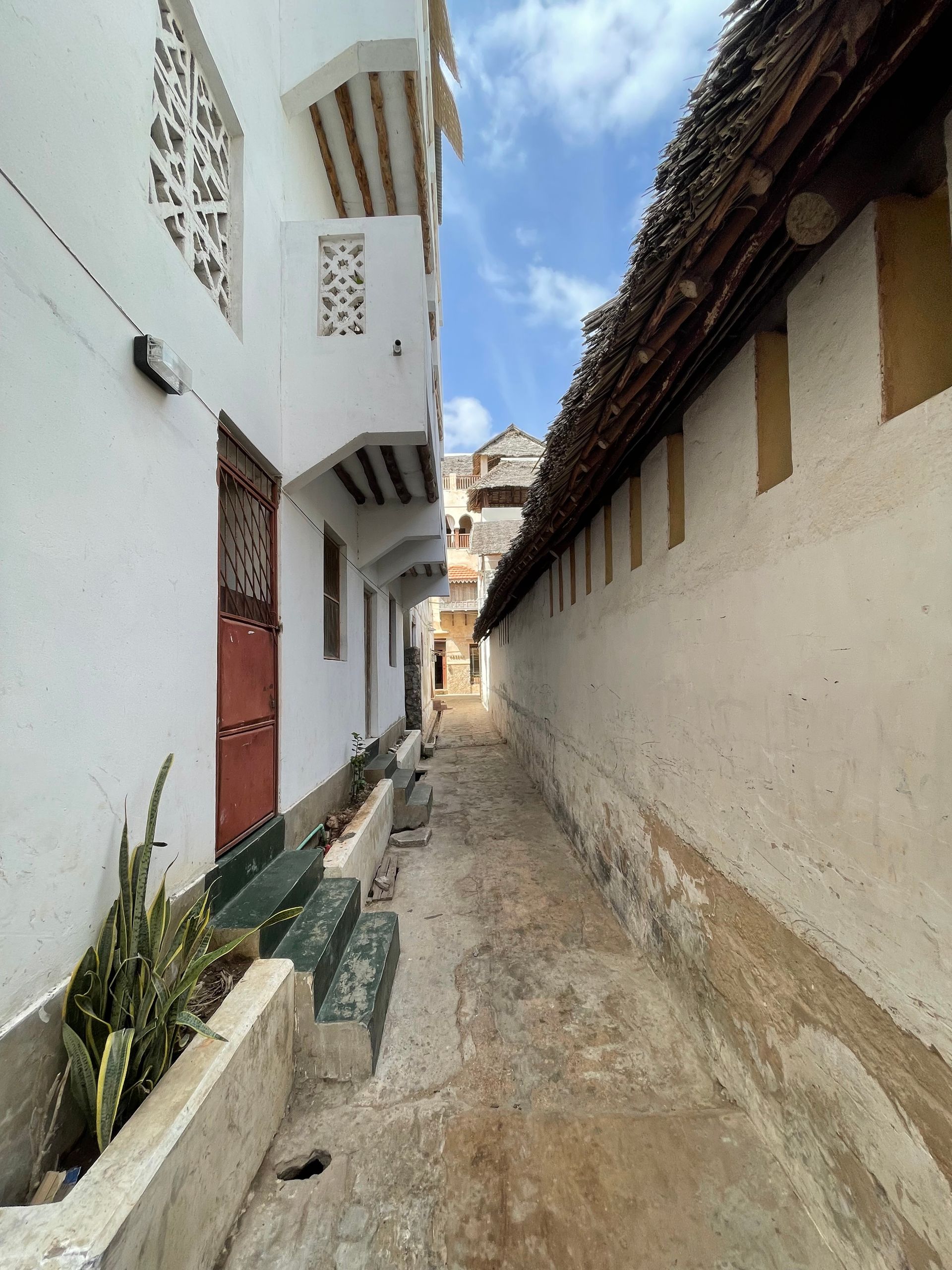
Ilha de Moçambique: an island of under four square kilometres that was the capital of Portuguese East Africa until 1898.
Stone and coral
An island that was the capital for centuries.
Ilha de Moçambique measures under four square kilometres, linked to the mainland by a long concrete bridge built in the 1960s. From 1507 to 1898, this tiny island was the capital of Portuguese East Africa, a stopover for spice ships bound for Goa, and for centuries a Swahili trading post for ivory, slaves and textiles. Fort São Sebastião, the oldest surviving European structure in the southern hemisphere, still looks out over the strait.
The island splits into two halves, and you feel it with every step: Stone Town, with its weathered coral-stone houses, churches and the Misericórdia chapel, and Macuti Town, with its thatched roofs and a denser, noisier daily rhythm. UNESCO listed the whole as a World Heritage Site in 1991, but restoration moves slowly, which keeps the place from becoming an open-air museum and leaves it a town where people simply live among the cracks in the walls.
The coast in pieces
Five faces of the same ocean.
Mozambique's coast is too long to treat as a single destination. Each stretch has its own rhythm, its own history and its own kind of water.
history
Ilha de Moçambique
Coral-stone streets, a Portuguese fort, and a density of history entirely out of proportion to the island's size.
islands
Quirimbas Archipelago & Ibo
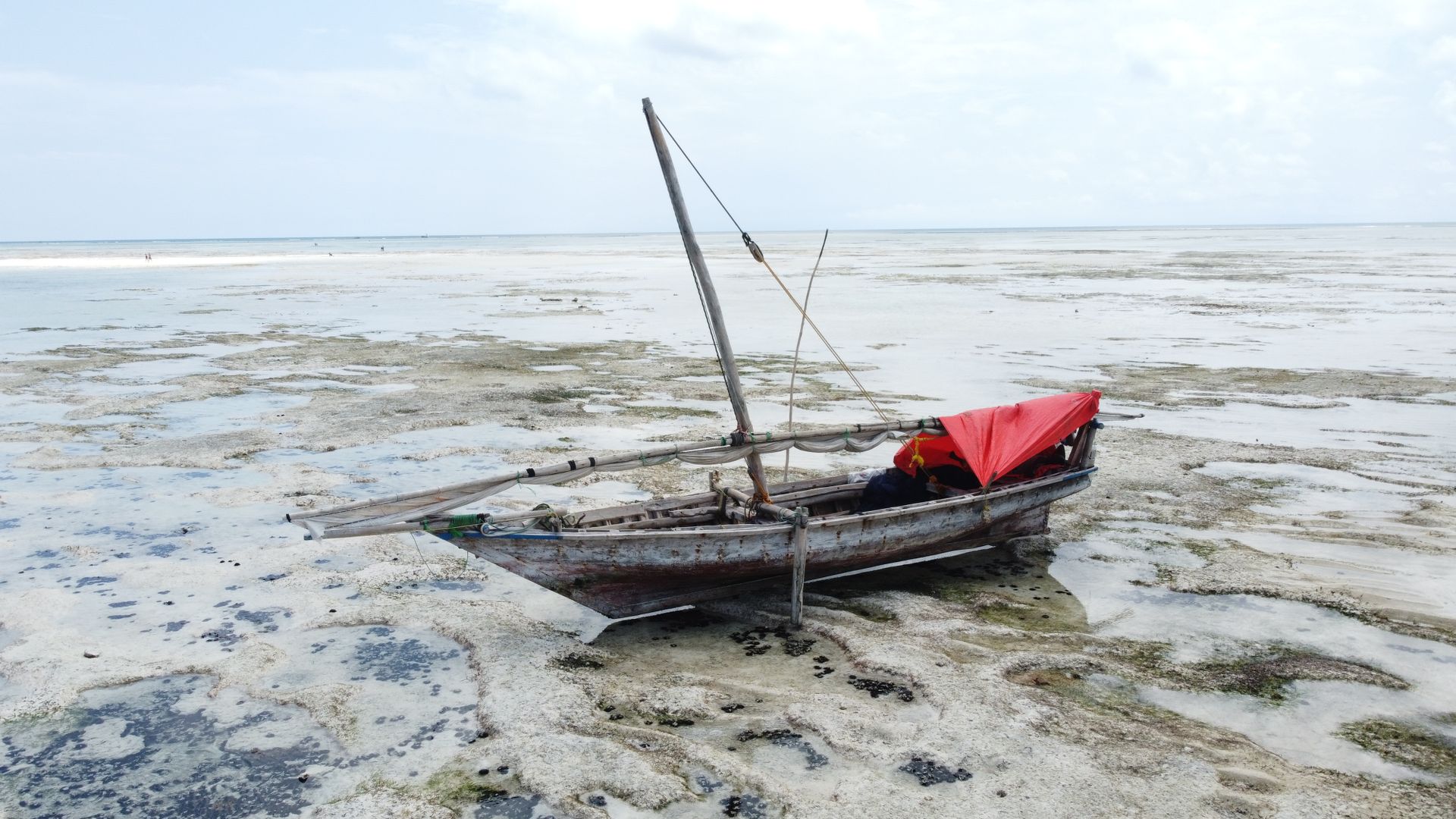
An archipelago of mangrove channels and coral islands, reached by dhow or small boat; Ibo Island has its own faded charm, with silversmiths still working entirely by hand. The Belgian foreign ministry currently advises against all travel to Cabo Delgado province, which these islands belong to; as long as that stands, we do not plan trips there.
underwater
Bazaruto Archipelago
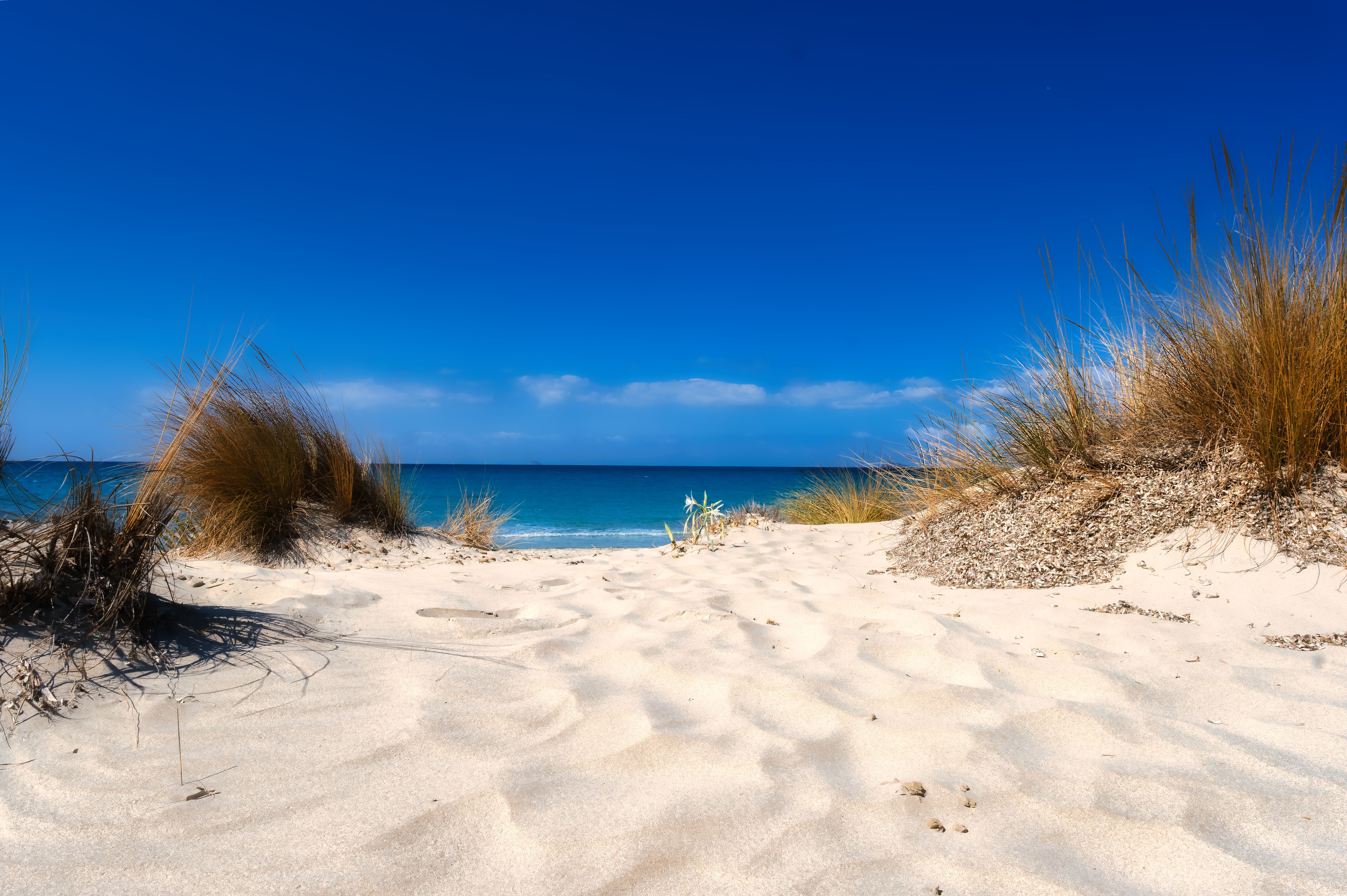
Sand dunes sliding straight into the sea, shallow turquoise water, and one of the last places in East Africa where dugongs still live.
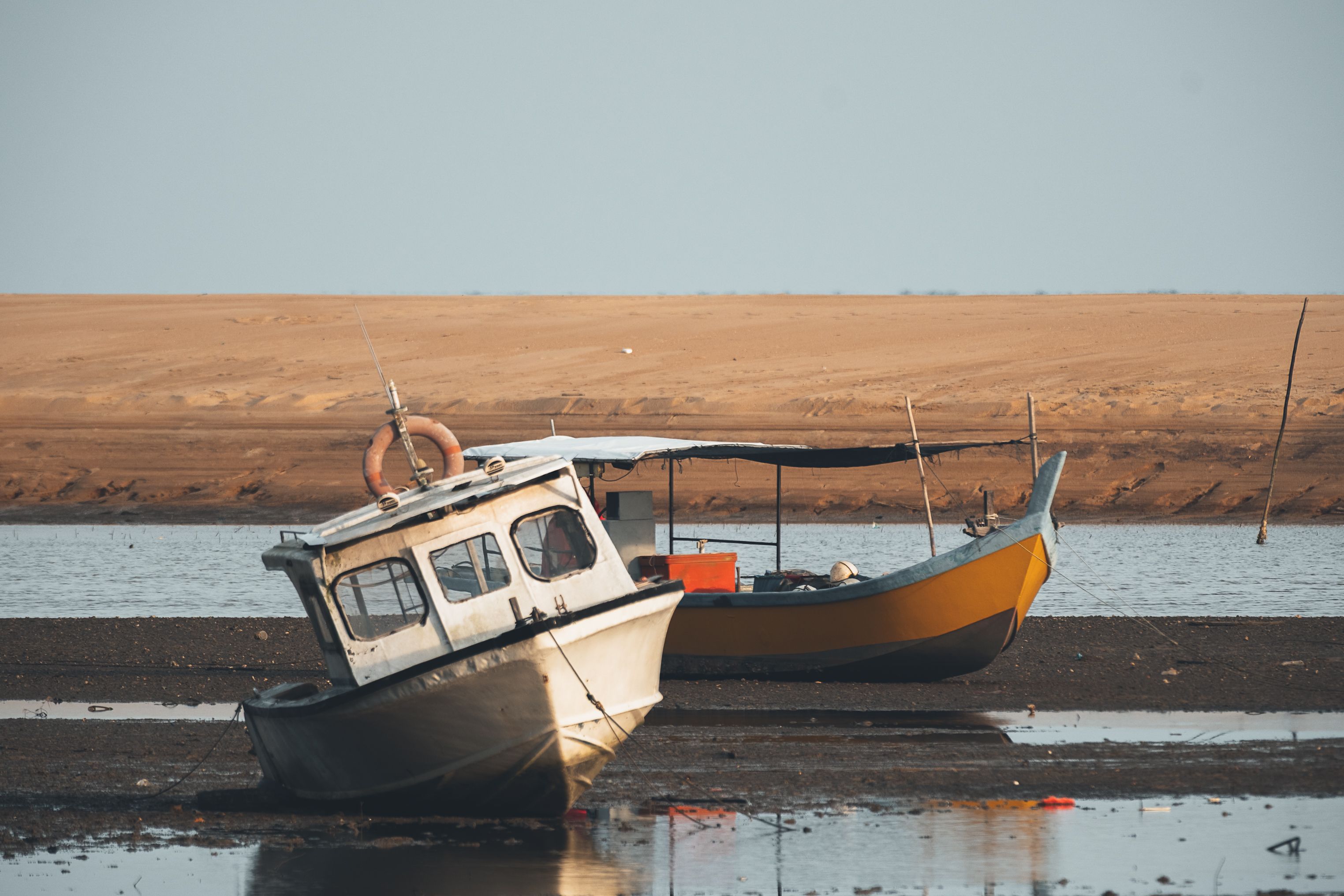
surf and stillness
Tofo & Inhambane
A near-deserted surf beach that also happens to be one of the most reliable places on earth to encounter whale sharks and manta rays.
city
Maputo
Art deco façades, jacaranda trees, and a food culture that blends Portuguese, Indian and East African flavours, a capital that was never built with tourists in mind.
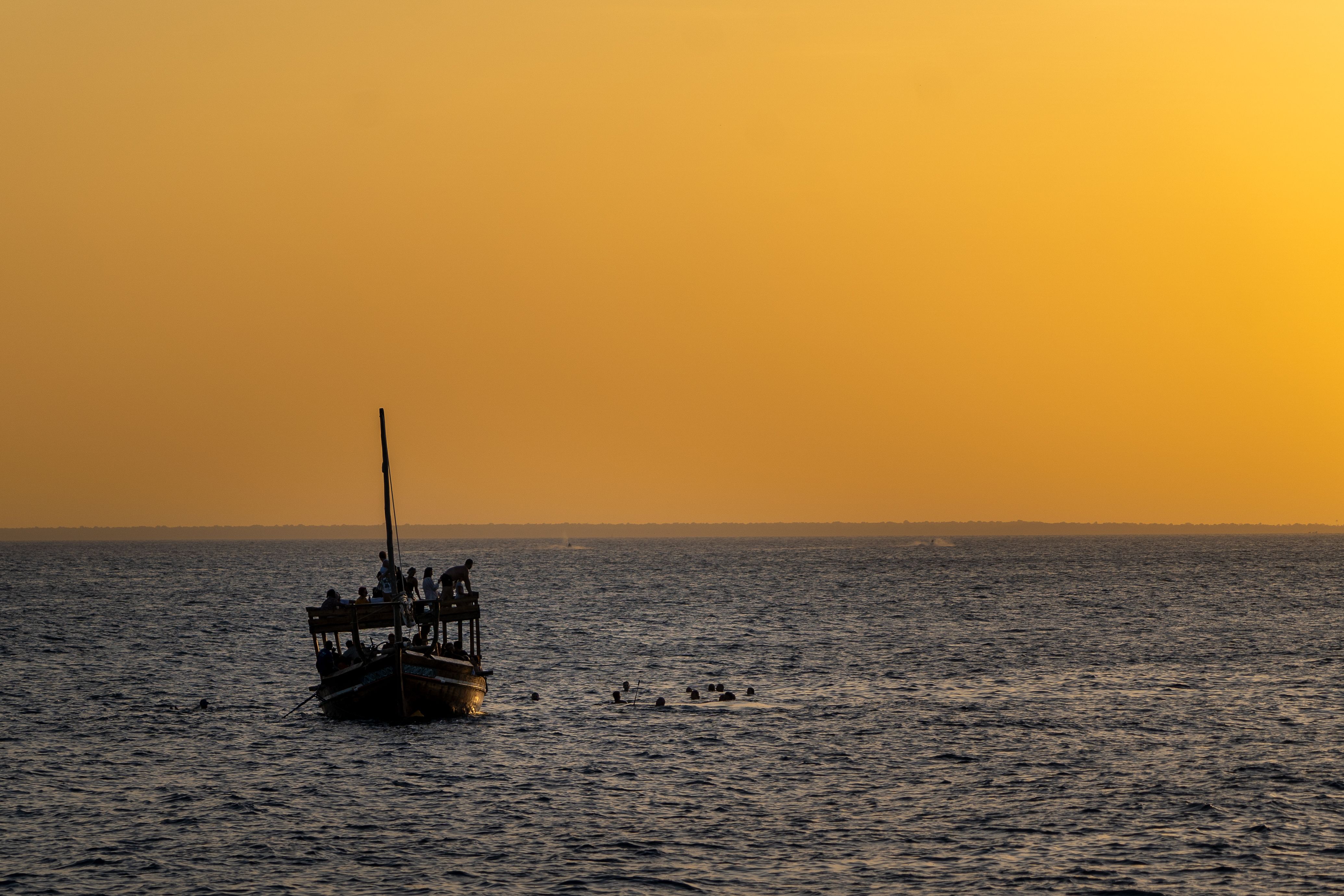
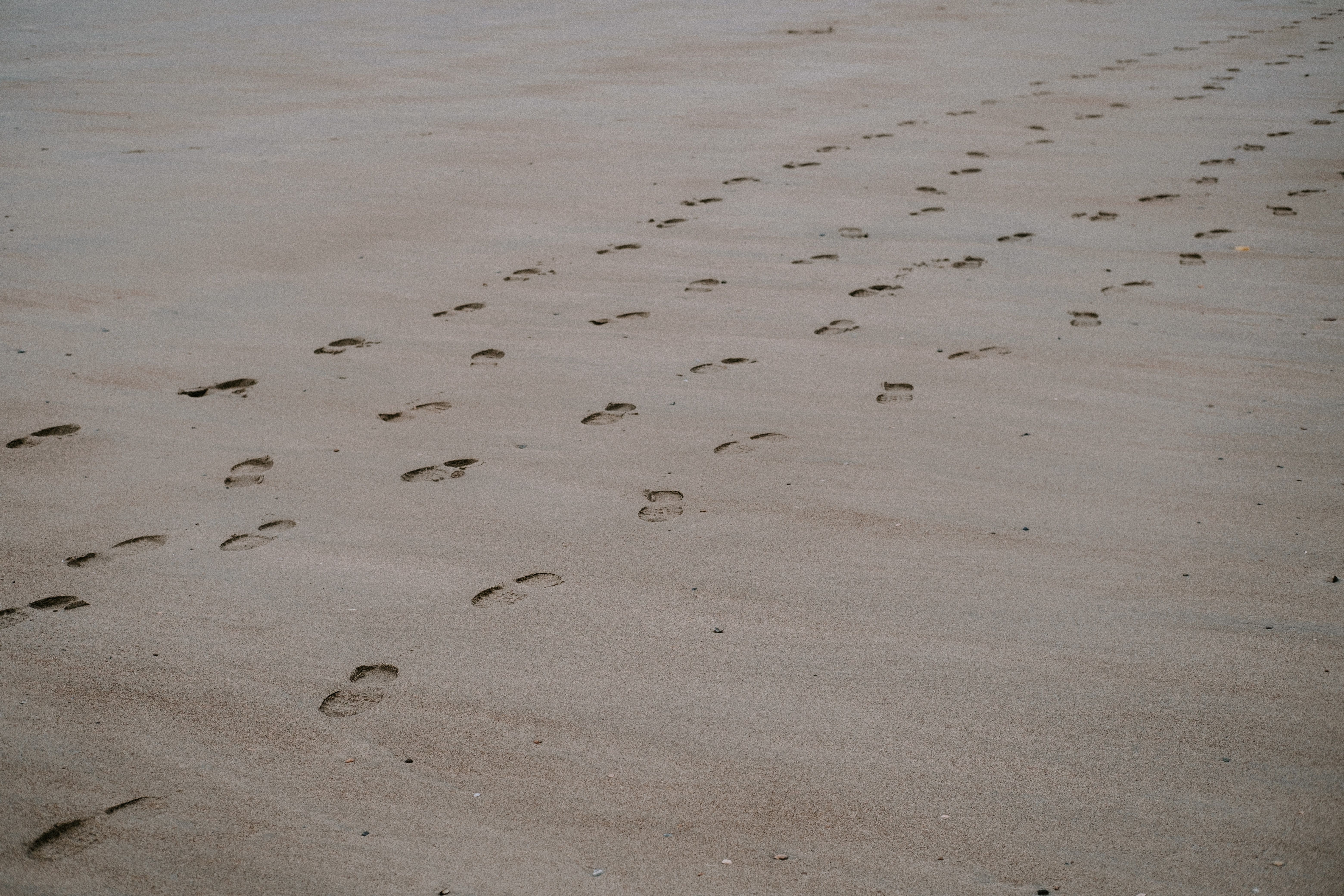
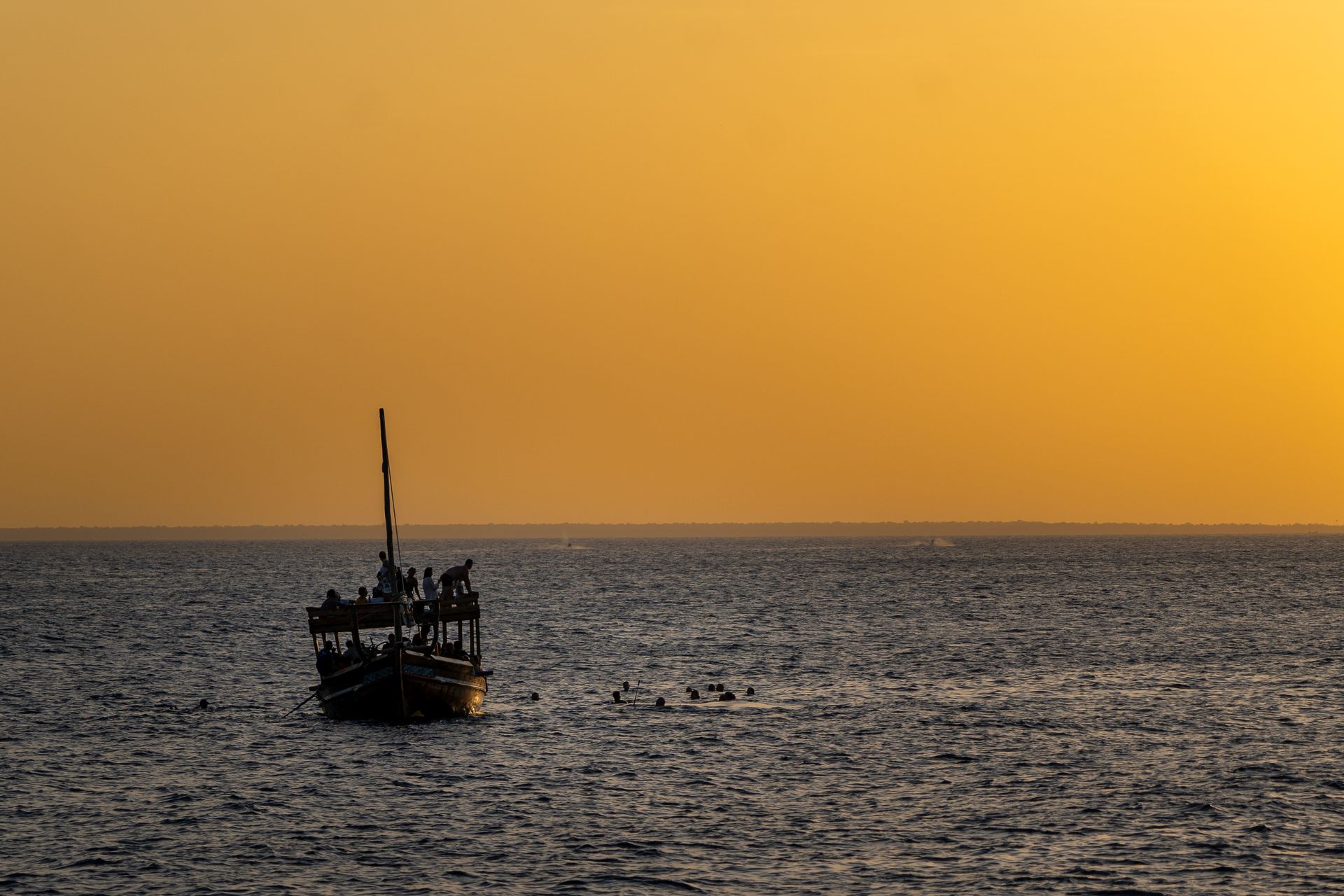
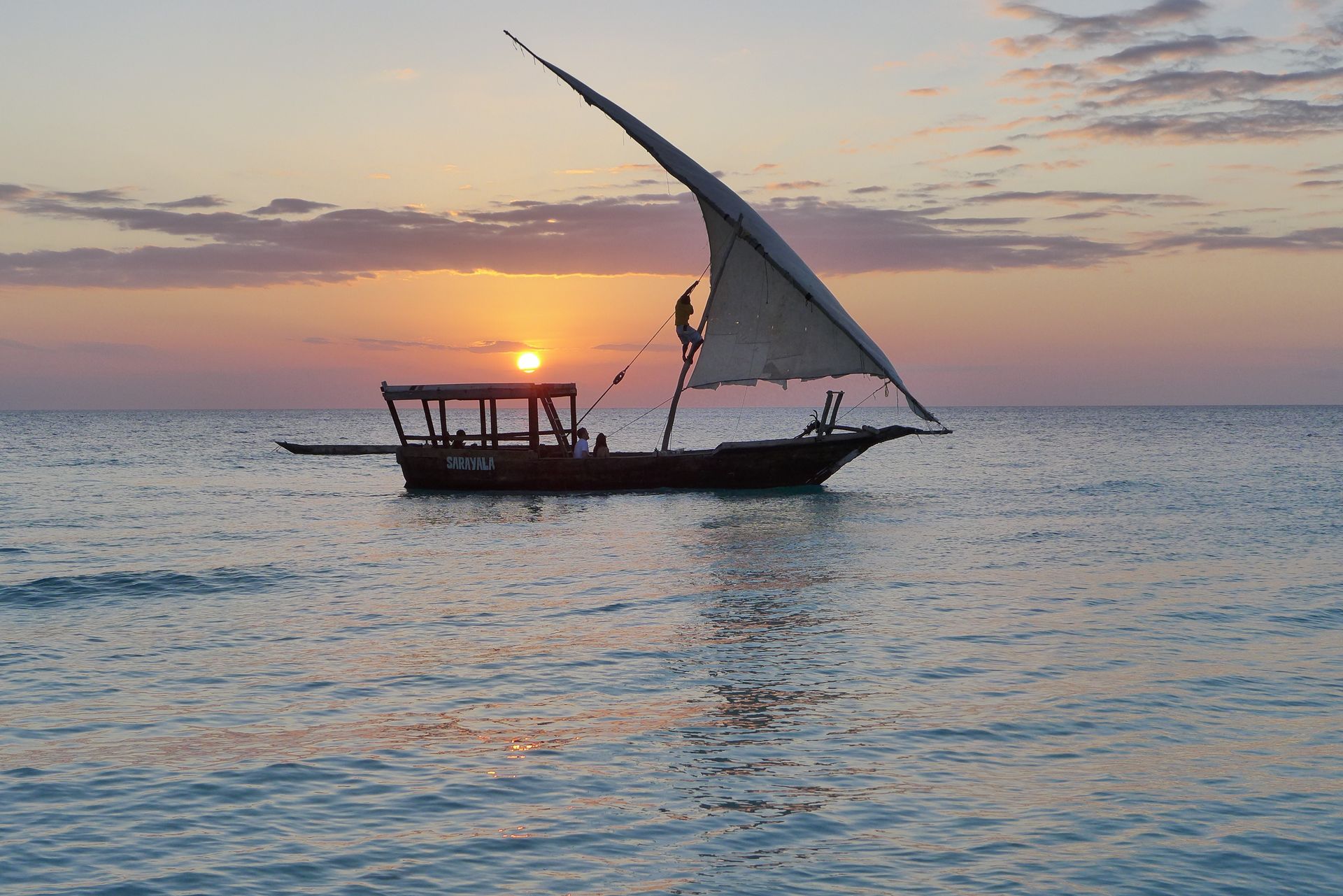
A dhow against the evening sky and a beach without a single sunbed, nothing staged, just an ordinary Tuesday.
Nature on the way back
From near-ruin to careful recovery.
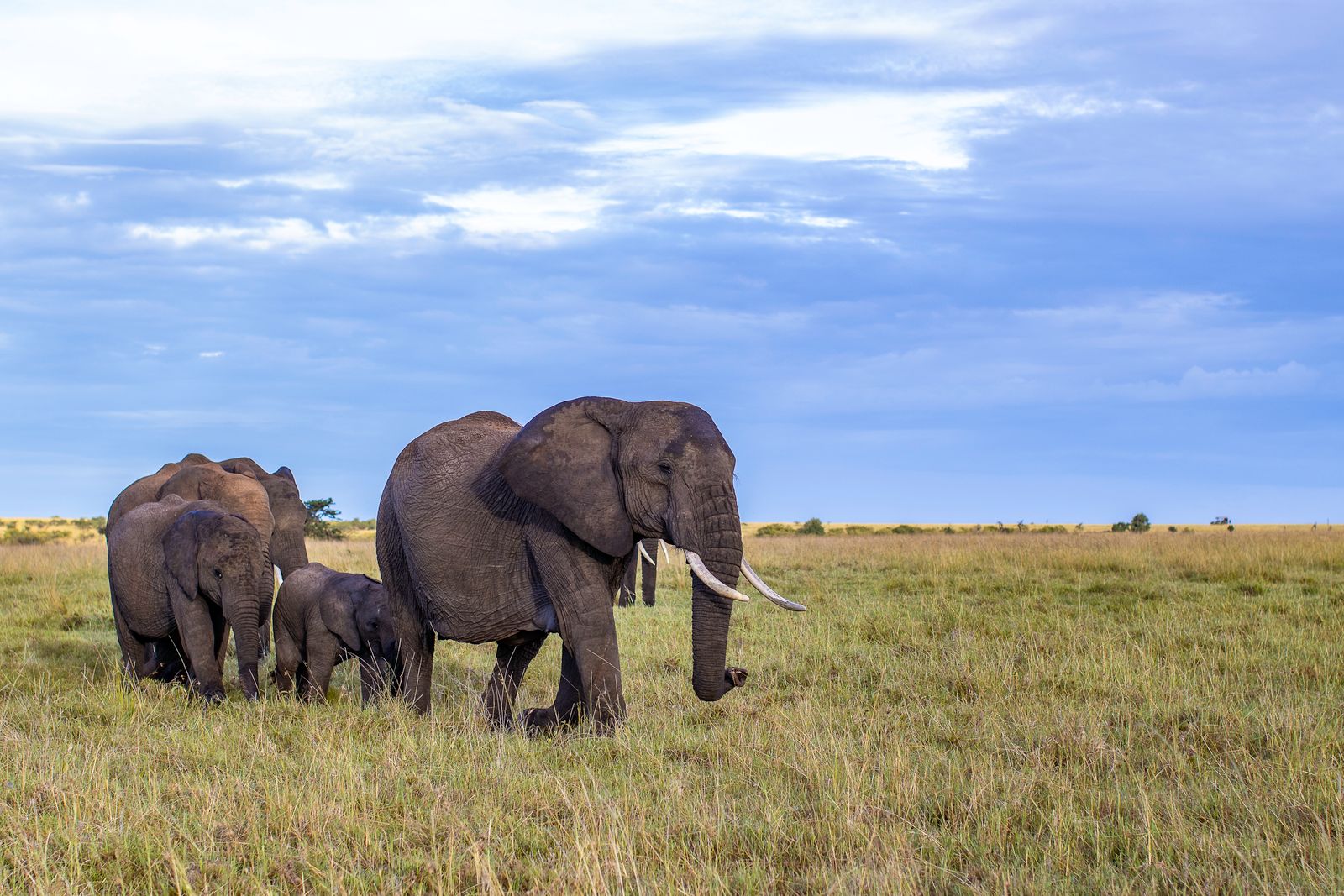
Gorongosa
After the civil war, the park had been shot empty; twenty years of restoration work brought back lions, elephants and wild dogs, alongside a community that now invests in it too.
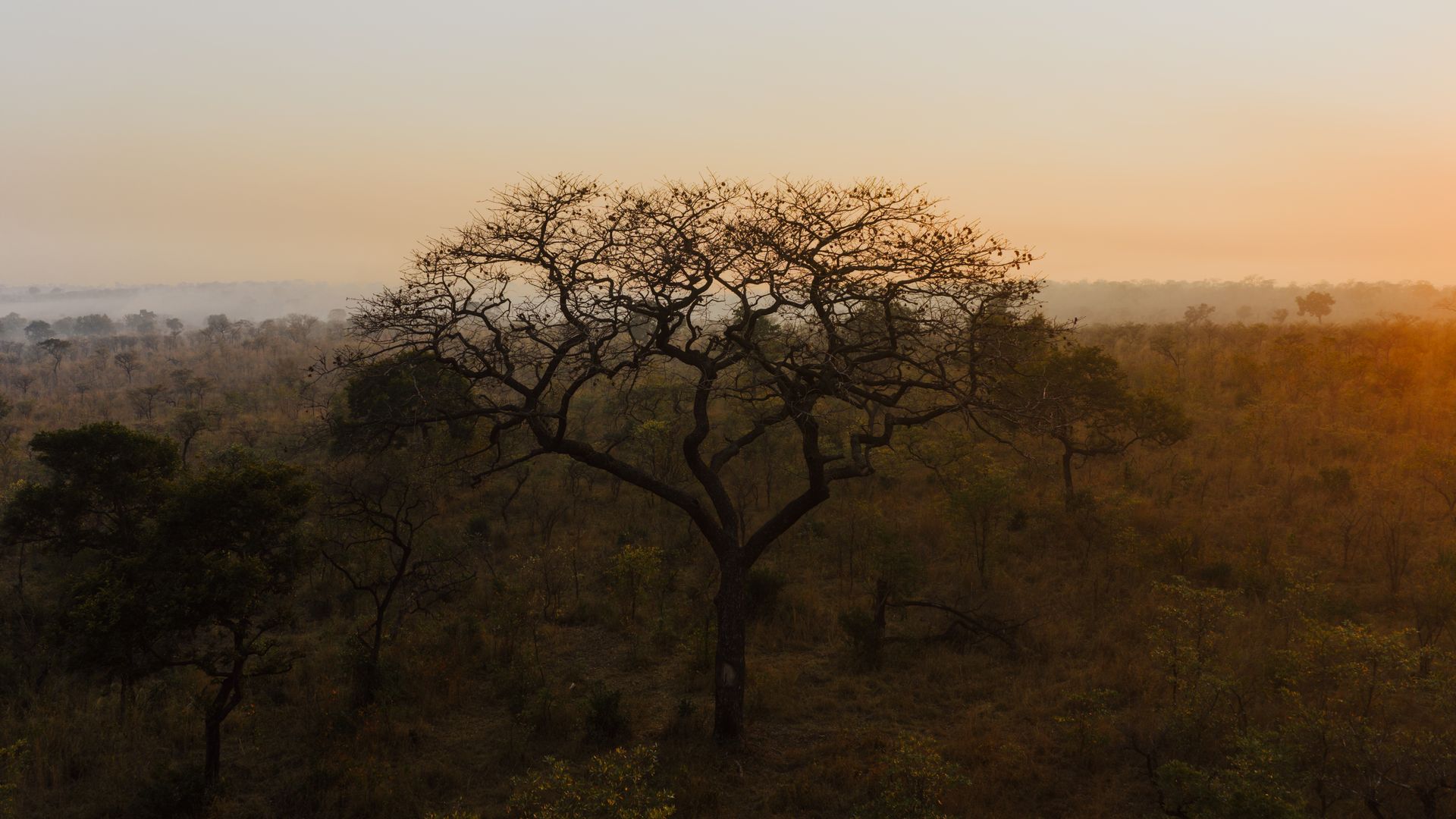
Niassa Special Reserve
One of Africa's largest protected wilderness areas, sparsely populated and barely developed, for anyone hungry for space rather than a dense concentration of jeeps.
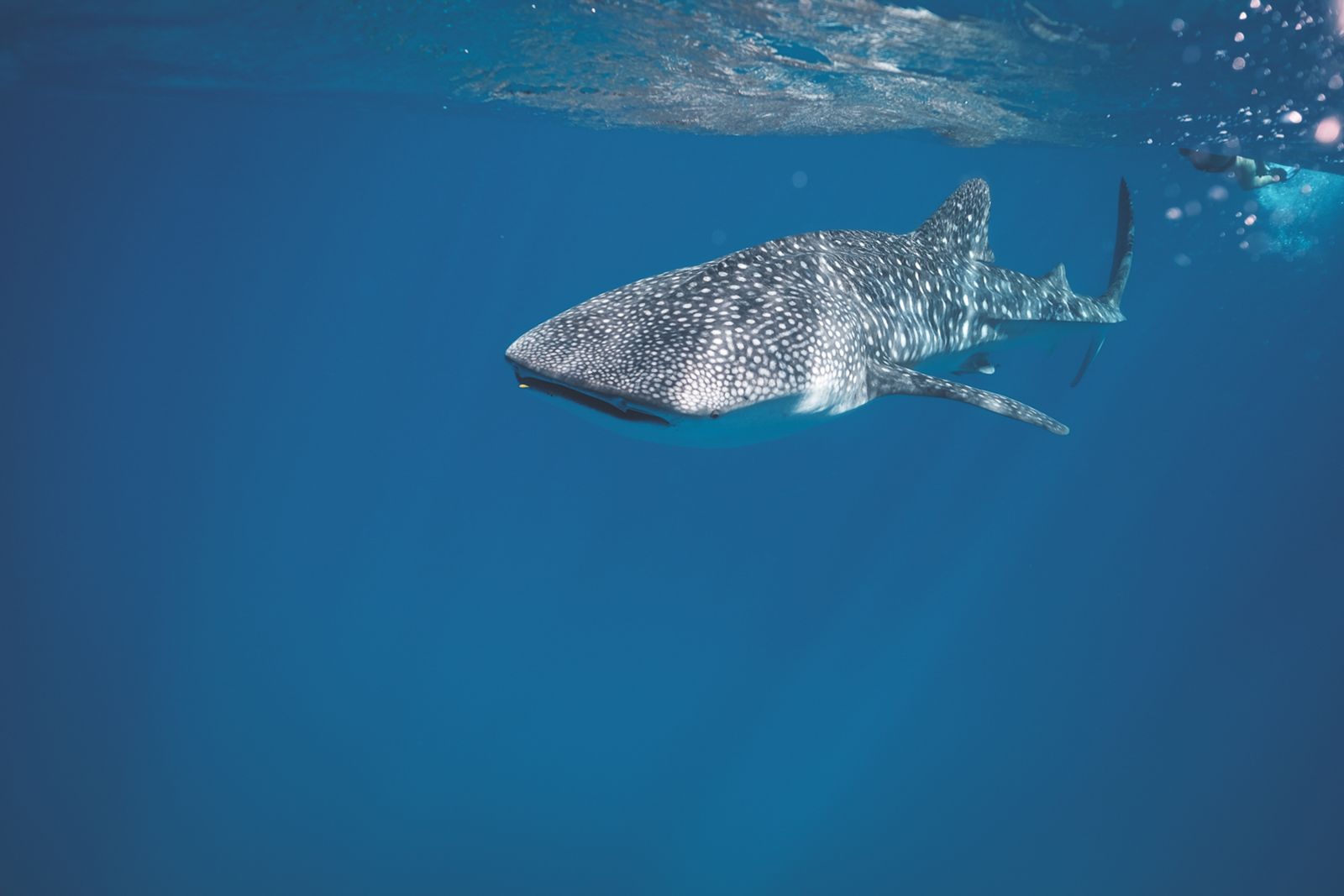
Underwater
Whale sharks at Tofo, manta rays all year round, and dugongs at Bazaruto, a coastline that offers just as much below the water as above it.
Looking past the highlights
How we look at Mozambique
More than a beach Mozambique is often sold as an add-on to South Africa, a few beach days tacked onto a safari. We treat it as a destination in its own right, with a history that deserves to take centre stage.
Slow travel is the point Domestic flights, ferries and dhows set the pace here, not the other way round. Anyone in a hurry is better off choosing a different coast.
Recovery, not untouched Gorongosa isn't pristine wilderness that was never touched. It's a park that was broken and has been deliberately brought back. That story is more interesting than the cliché.
Often combined, rarely overshadowed Mozambique combines well with Malawi, Zimbabwe or South Africa, but we build the trip so the coast never ends up as an extension of something else.
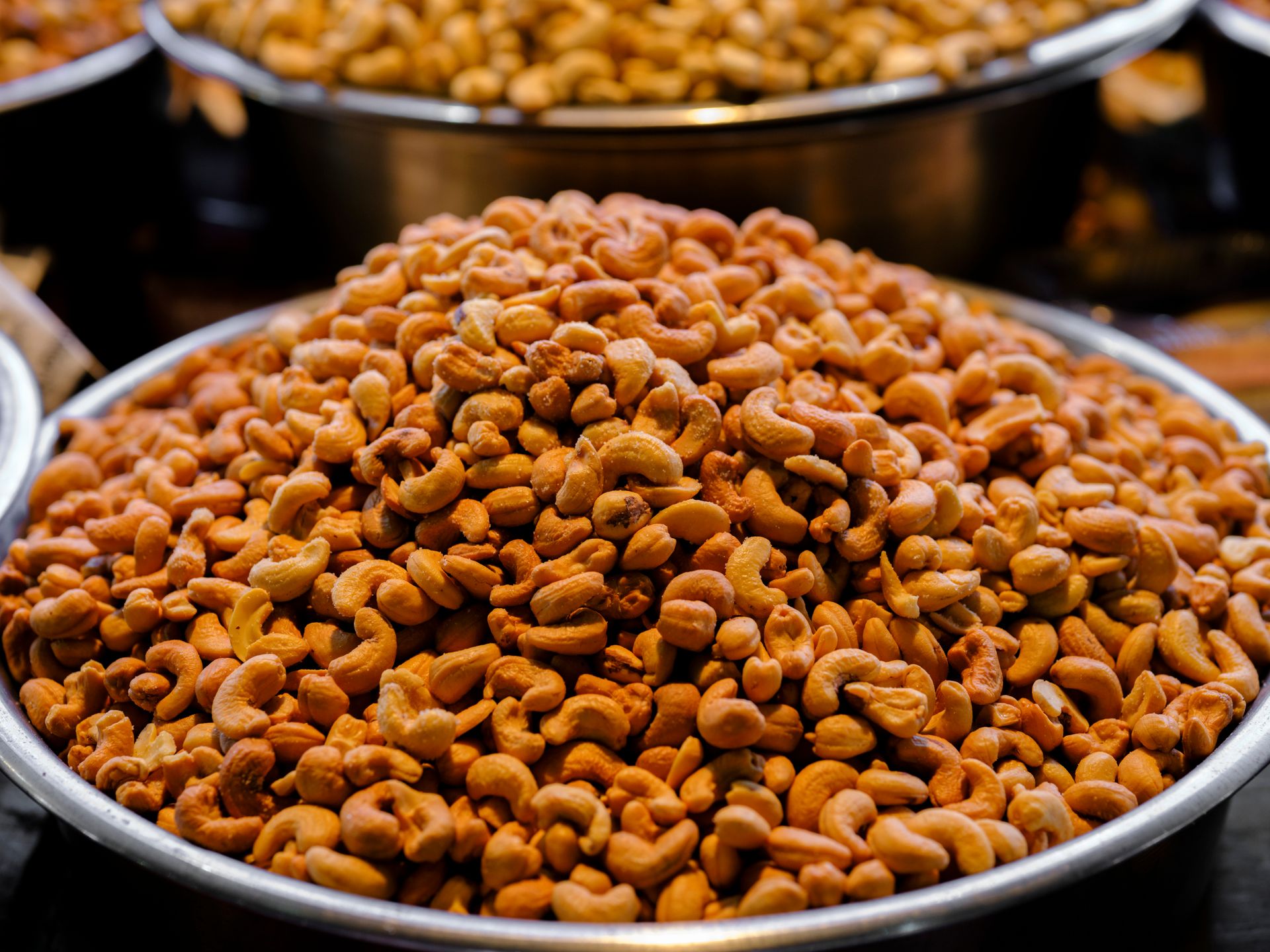
Table and market
Where piri-piri actually comes from.
The fiery piri-piri sauce that ended up on Portuguese restaurant tables the world over started here, out of the crossing between African chilli peppers and Portuguese cooking techniques. In Maputo you can still taste that history daily: camarão (prawns) in garlic and chilli, matapa made from pounded cassava leaves with coconut milk and peanuts, and cashew nuts that grow in almost every back garden in the south of the country.
At the Mercado Central and the weekly FEIMA art market in Maputo, you buy wood and silver carvings straight from the makers, not from a middleman with a marked-up price. Outside the capital, food gets simpler and more direct: fish from that same morning, grilled over charcoal, with little more than lemon and salt.
Possibilities
What a day here can look like.
No fixed programme, a number of ways to experience Mozambique, to combine as you're drawn to them.
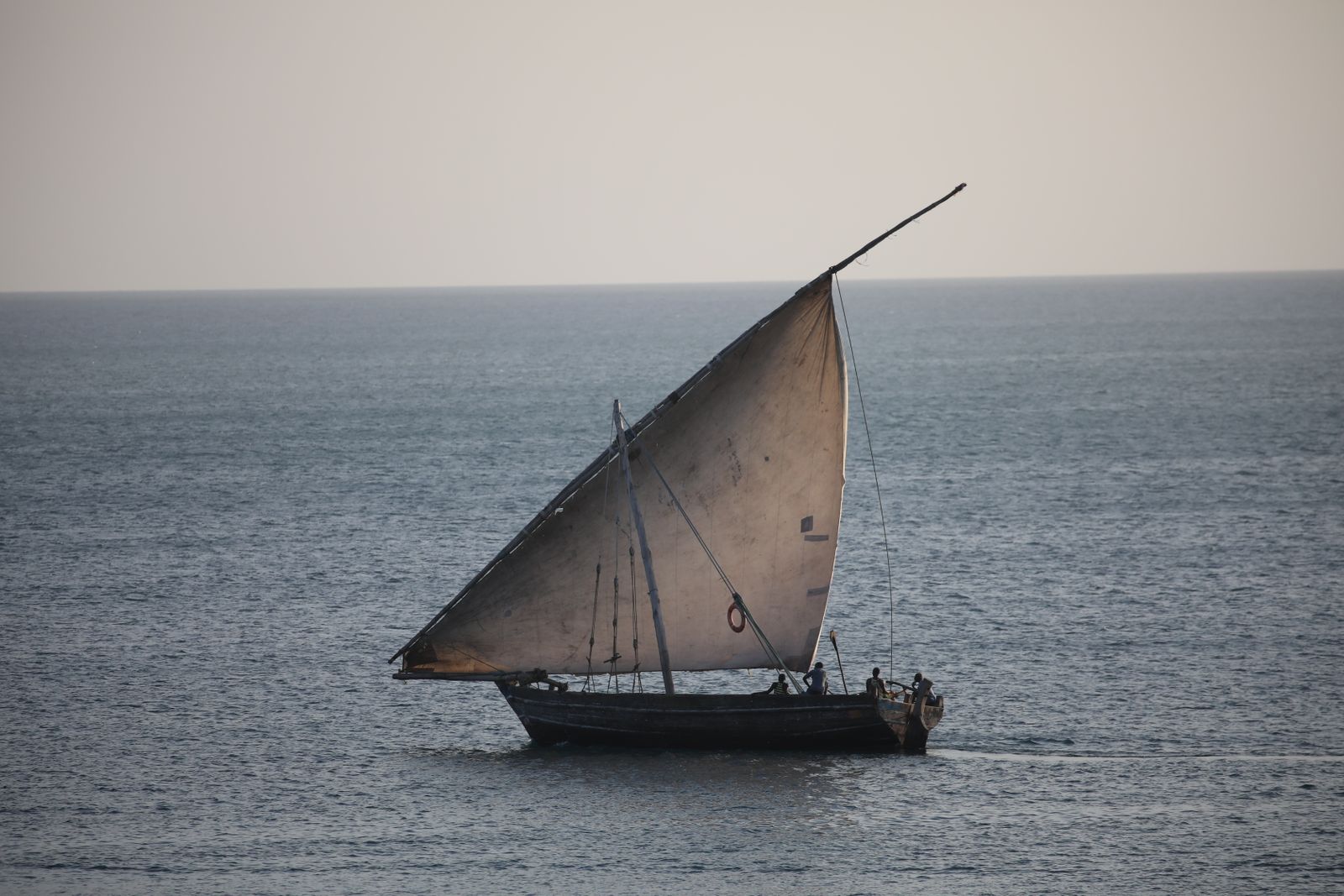
Sailing on a dhow
A trip between the islands of Bazaruto, with a skipper who knows the sandbanks better than any chart.
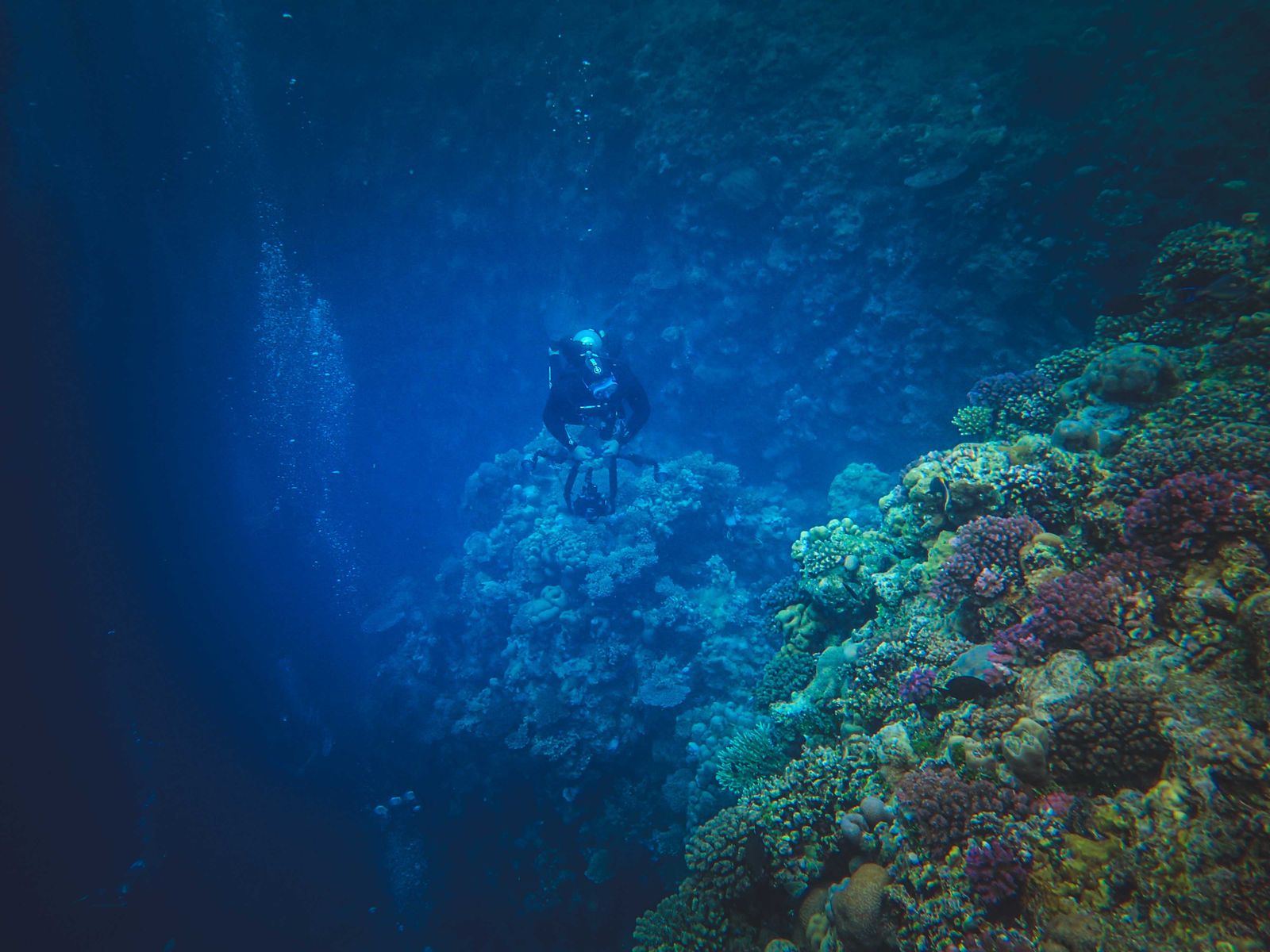
Diving at Bazaruto or Tofo
From dugongs in shallow water to whale sharks out in open sea. The underwater world here changes from one archipelago to the next.
Walking through Ilha de Moçambique
A local guide explaining the difference between Stone Town and Macuti Town, and why that difference still makes itself felt.
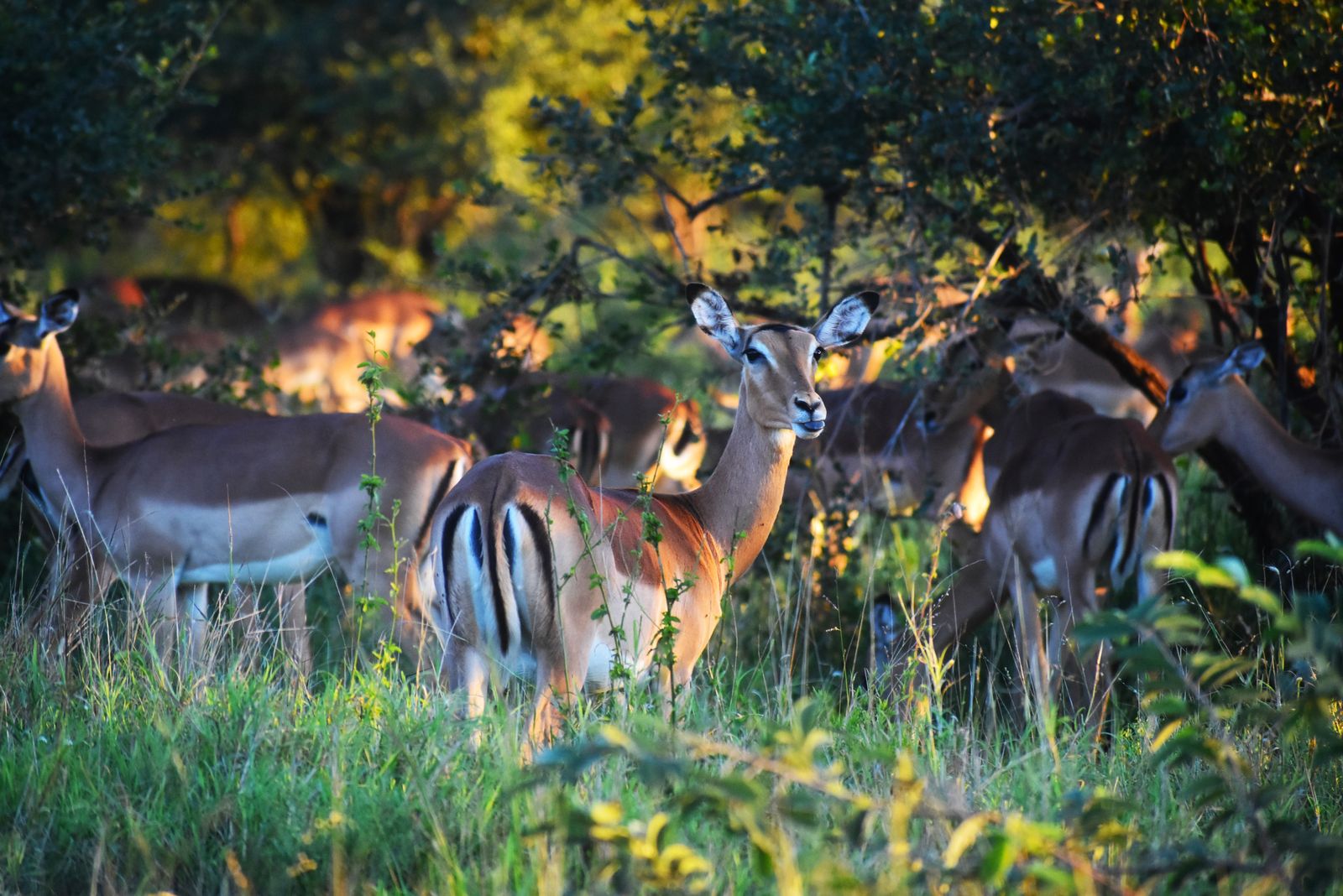
Gorongosa as an extension
A few days watching wildlife recovery in a park that was empty just twenty years ago.
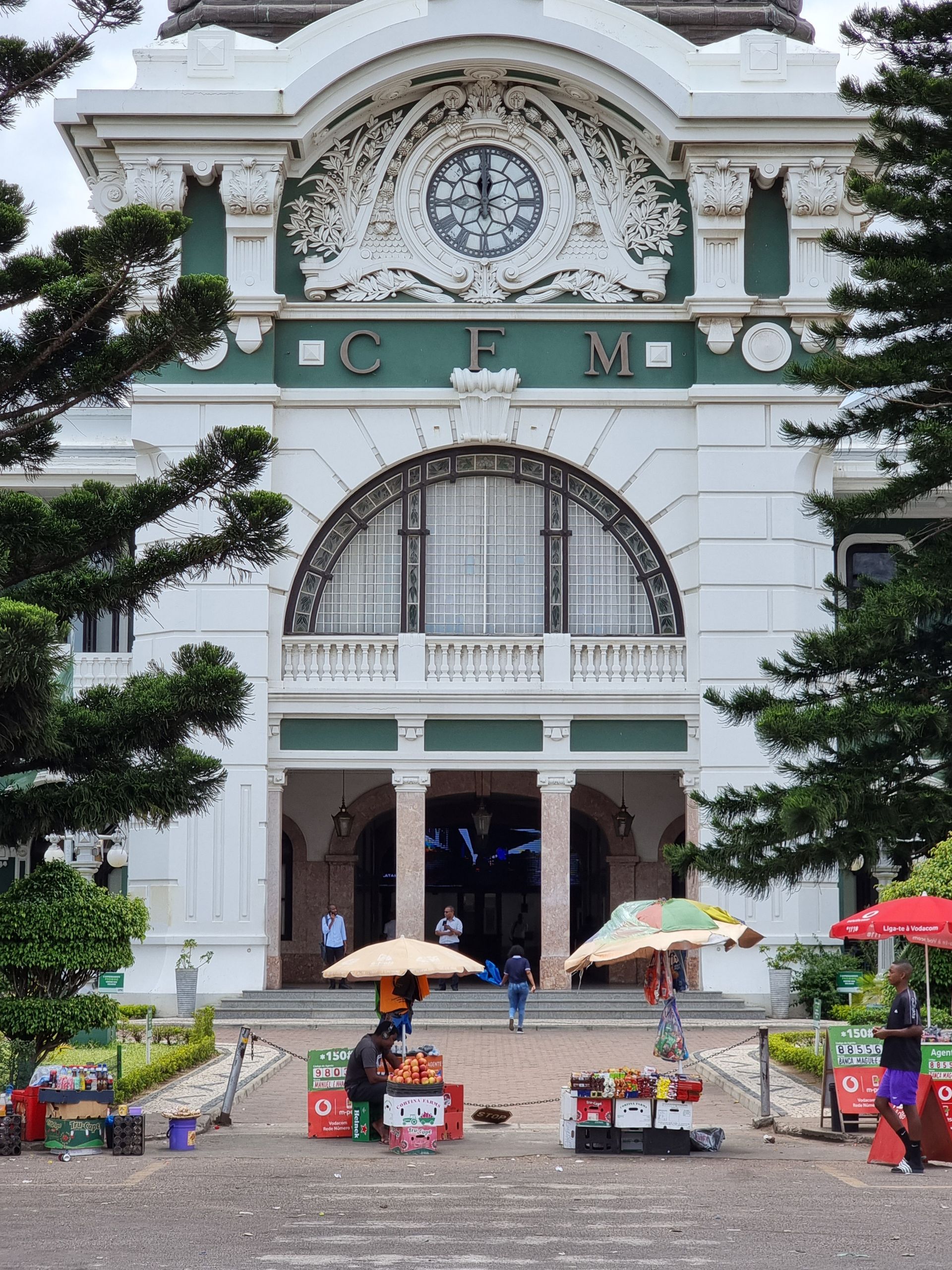
Discovering Maputo
Art deco neighbourhoods, a railway station designed by one of Eiffel's associates, and a food culture that tastes like nowhere else.
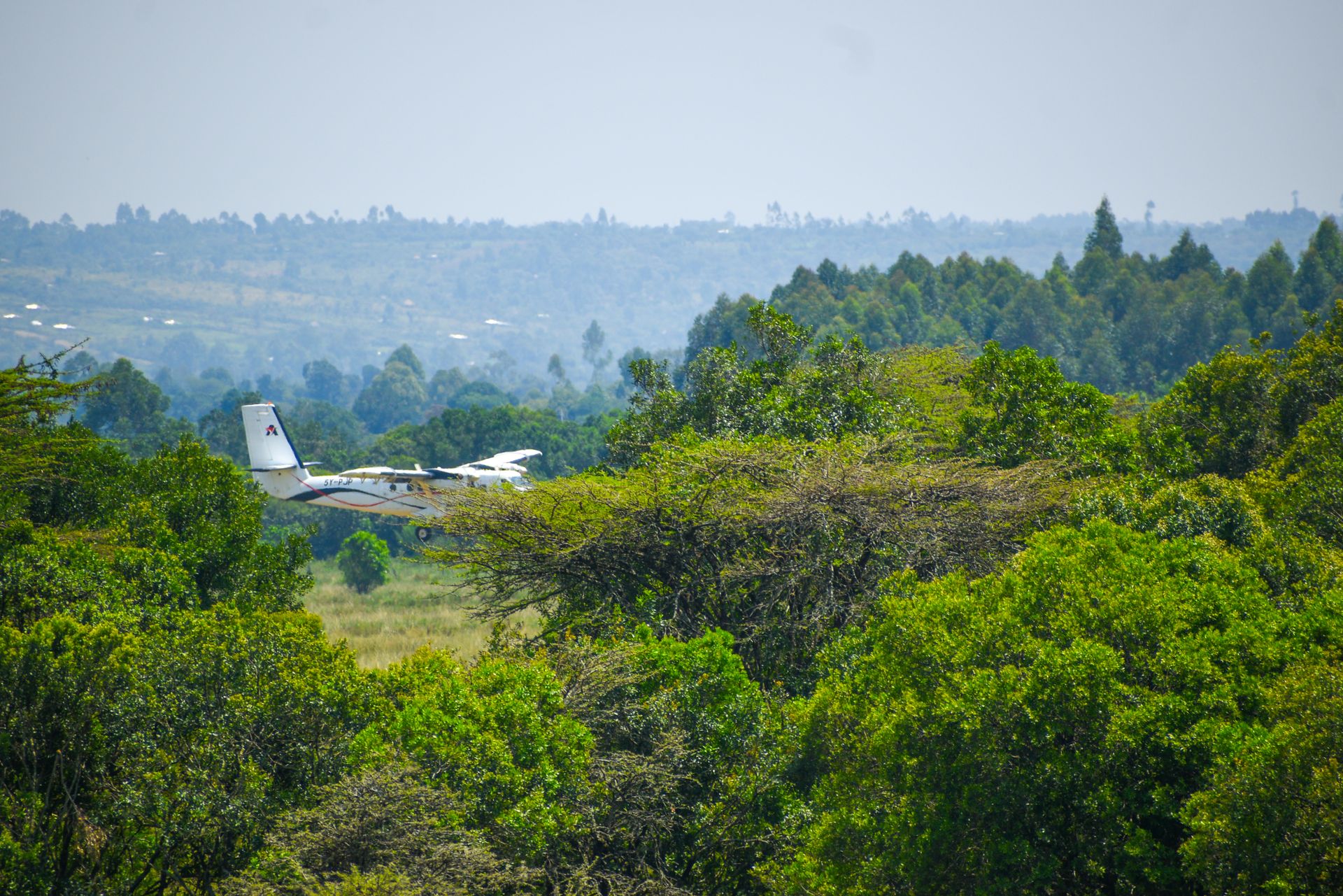
Niassa, for those who want to go further
Fly in to one of the last truly empty wilderness areas left on the continent.
Every combination depends on how much coast, how much nature and how much history you're after. We work that out together with you, not in advance.
When would you travel?
When to go
Mozambique has a pronounced dry season from May to October: pleasantly warm, little rain, and the best visibility for diving or snorkelling. Cyclone season runs from mid-November to April, felt most in the centre and south of the country, not impossible to travel through, but something to plan around seriously.
April and November are transition months: less predictable, but also quieter and greener, with fewer people on the same beaches.
Best time to visit Mozambique
Jan
Feb
Mar
Apr
May
Jun
Jul
Aug
Sep
Oct
Nov
Dec
Top: dry, calm water, best visibility underwater.
Good: transition month, more changeable but quieter.
Fair: rain and cyclone season, planning needs more care.
Same months, other destinations
Who else is at their best in these months?
Not ready to ask yet?
Leave your email address. A month before the good time begins, we send you one reminder. Nothing more.
You will first get an email to confirm. You can unsubscribe at any time, with one click.
Rather talk it over?
Leave your name and number. We will call you at a time that suits you.
Worth knowing
Practical, without the noise.
A few things that make travelling here practically different.
- Getting there
- No direct flight from Belgium; usually via Lisbon, Johannesburg, Addis Ababa or Doha, often with a domestic flight to follow.
- Documents
- Which travel documents you need depends on your nationality, and entry rules change regularly. We go through the current requirements with you before you leave.
- Health
- Malaria prevention is advisable across almost the whole country; ask a travel doctor for advice well ahead of time.
- Pace
- Distances are large and roads aren't always fast; domestic flights and boats are used more often than hire cars.
- Language
- Portuguese is the lingua franca; English gets you further in tourist zones than outside them.
A coast that hasn't prepared itself for visitors yet.
That's exactly why now is the moment.
Frequently asked questions
Is Mozambique safe to travel in?
The main tourist zones along the coast and in Maputo are generally calm; we keep you informed about areas that call for extra caution, particularly in the far north: the Belgian foreign ministry currently advises against travel to Cabo Delgado province, including Pemba, Ibo and the Quirimbas.
Do I need to speak Portuguese?
No, but a few words open doors. In tourist zones English gets you by, elsewhere a guide or driver who can translate helps.
Can I combine Mozambique with another country?
Yes, it combines well with South Africa, Zimbabwe or Malawi. We build that transition so neither destination feels like an afterthought.
Is this a beach destination or a safari destination?
Both, but not everywhere at once: the coast and the interior lie far apart and call for a deliberate choice of pace and order.
Or perhaps this
Other destinations
Still weighing it up? That is no problem at all. The right country often only becomes clear once the conversation starts.
Central American Pacific coast
El Salvador
A country that's compact, not small, with volcanoes running all the way to a coast that's never far away.
Central American highlands
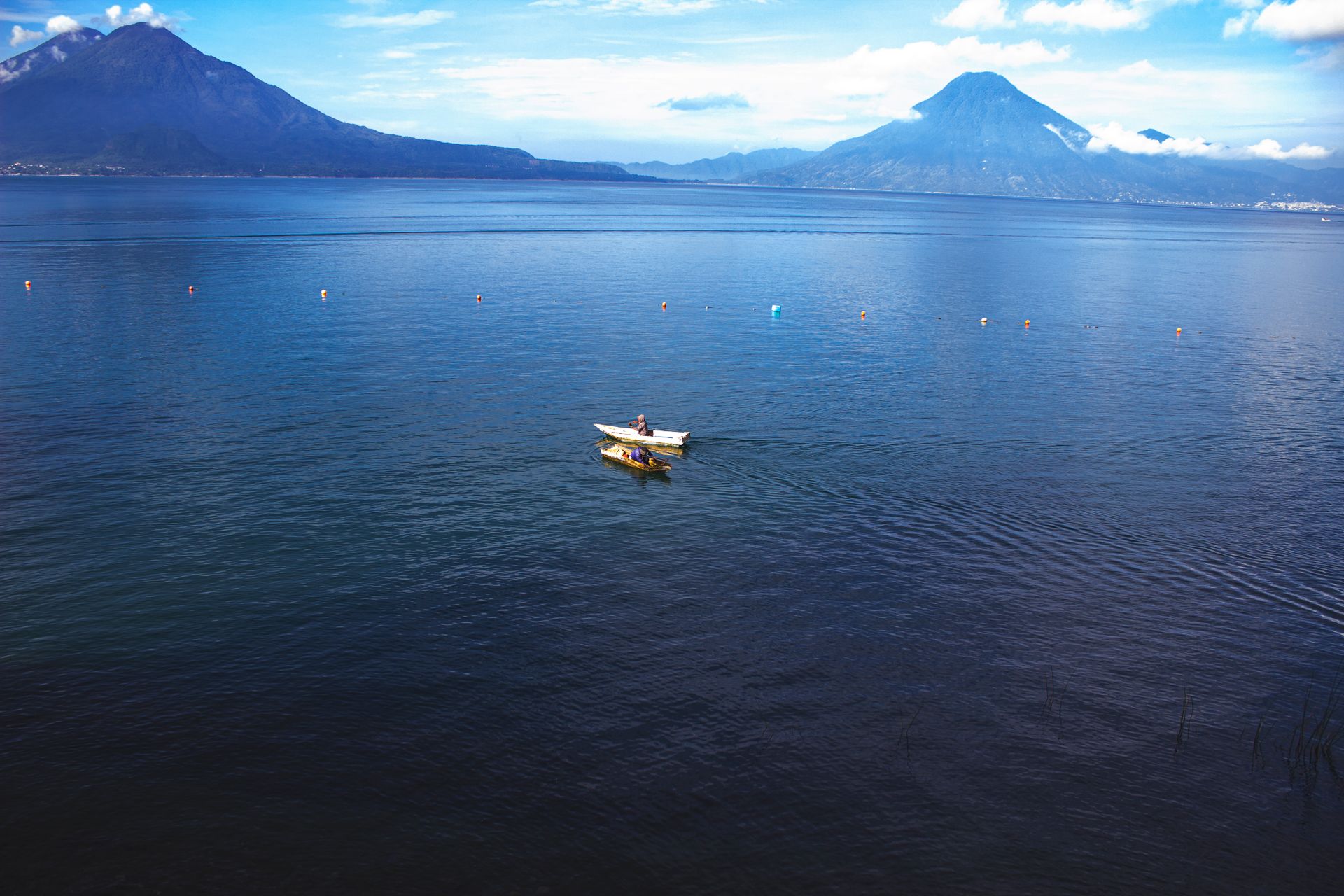
Guatemala
A highland where Maya culture isn't a backdrop but sets the rhythm of everyday life.
Central American lake district
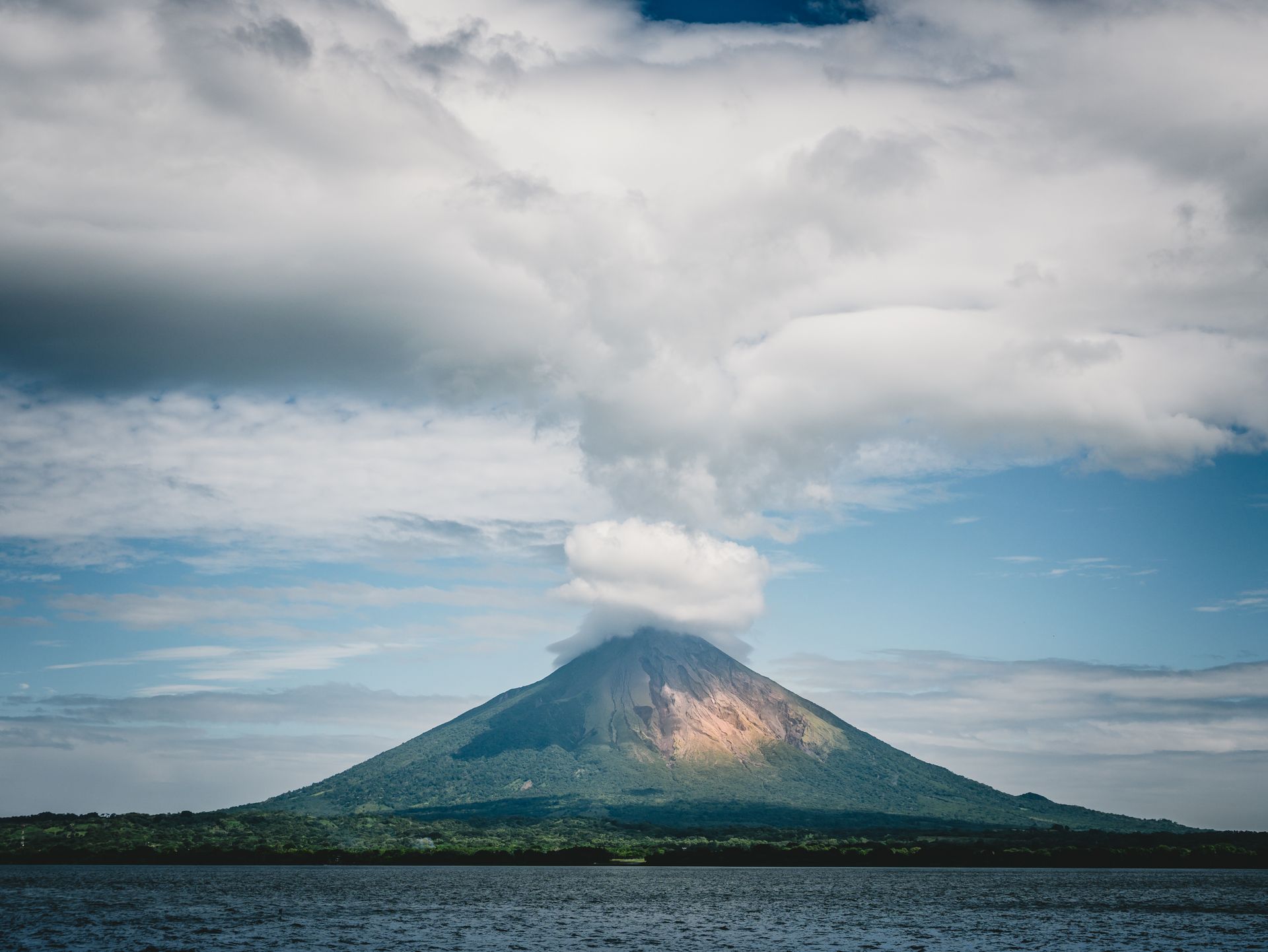
Nicaragua
Two colonial cities, centuries-old rivals, separated by a lake dotted with volcanic islands, rougher around the edges than its neighbours.
How it works
This is how your journey to Mozambique takes shape.
Six steps, from your first story to your homecoming. The conversation and the feasibility check cost you nothing.
-
01
Tell us your story
Fill in the form or give us a call. You do not need a route yet: a country, a period or just an idea is enough.
-
02
The conversation and the check
We call you within two working days. We talk through what you are looking for and check whether it can be done. If it can, we set down together what we will make for you.
-
03
We design your journey
We build your programme up, day by day, together with our own people in the country itself.
-
04
Your proposal
You read your journey day by day, with everything that is included. You say what you would like differently, until it is right.
-
05
Ready to depart
You send us your details, we send you your travel documents. You have one fixed contact who knows your journey.
-
06
Travelling, and after
Your contact stays reachable while you are away. Once you are home, we call one more time.
The next step
What draws you to Mozambique?
A coastline full of history, a park in the middle of recovering, or both at once. Tell us what you're after, and we'll build from there.
Updated in October 2026