Oceania
Australia
A continent with a reef off the north-east coast, red rock in the centre and a history that goes back tens of thousands of years.
This is Australia
A country the size of a continent, and you choose which part you see.
Australia is a continent. Distances are so great that most travellers fly between regions. Planning a tour therefore starts with deciding which regions belong together in one trip.
Off the north-east coast lies the Great Barrier Reef, with 400 types of coral and 1,500 species of fish. In the red centre stand Uluru and Kata Tjuta, part of the belief system of the Anangu, one of the oldest human societies in the world. In Kakadu, in the tropical north, people have lived for more than 40,000 years.
The south has a temperate climate: Sydney, Melbourne and the island of Tasmania, where glaciers once carved deep gorges and one of the last great expanses of temperate rainforest in the world survives.
Because the country varies so much from north to south, there is always a region in season. The question is which one, and for how long.
In short
- Best time to go
- April, May, September and October: the dry season in the north, warm but not as hot as summer in the centre, and mild in the south. From June to August the north is at its best, but nights in the centre drop to around 4 degrees. In January and February it is the wet season in the north, and around 37 degrees by day in Alice Springs.
- How long
- Three to four weeks for three or four regions, for example Sydney, the red centre, the reef and the south. With two weeks, choose two or three regions, and not the furthest corners.
- Who it suits
- For travellers who want to feel the space and think the long flight is worth it. For those who want to snorkel, walk and see animals in the wild. And for anyone who wants to learn the history of Aboriginal peoples in the places where it happened.
- What sets it apart
- A tropical reef, a red desert and a temperate rainforest all lie within the same country. Australia has 21 UNESCO World Heritage sites, from the Great Barrier Reef to the Sydney Opera House.
Seven regions
From Sydney Harbour to the rocks of the centre.
No single trip covers them all. These are regions to choose from.
The east coast
Sydney and the Blue Mountains
The Sydney Opera House, inaugurated in 1973, stands on a peninsula in the harbour and is a World Heritage site. A day trip from the city are the Blue Mountains, with the Three Sisters rock formation at Katoomba, lookouts, waterfalls and walking tracks.
The red centre
Uluru and Kata Tjuta
Uluru, an immense monolith, and the rock domes of Kata Tjuta to its west rise from a red sandy plain. They are part of the belief system of the Anangu, the traditional owners.
The tropical north
Kakadu
Kakadu, in the Northern Territory, has been inhabited for more than 40,000 years. Rock paintings record how its people lived, from hunter-gatherers to the Aboriginal people who live there today. The park takes in tidal flats, floodplains and plateaus.
The north-east coast
The Great Barrier Reef and the rainforest
The Great Barrier Reef is the world's largest collection of coral reefs, home to the dugong and the green turtle among others. Along the same coast, a strip of tropical rainforest, the Wet Tropics, runs for some 450 kilometres.
The south
Melbourne and the Great Ocean Road
The Great Ocean Road follows the south-west coast of Victoria. The Twelve Apostles are limestone stacks rising from the ocean, and in the Otways you see koalas, kangaroos and emus.
The island in the south
Tasmania
The Tasmanian Wilderness covers more than a million hectares, with steep gorges and one of the last great expanses of temperate rainforest in the world. Finds in limestone caves show people have lived here for more than 20,000 years.
The west coast
Perth and the Ningaloo Coast
Perth lies on the west coast, in its own time zone. On the same coast, but remote, is the Ningaloo Coast, one of the longest near-shore reefs in the world, where whale sharks gather every year.
First peoples
Uluru and Kakadu, and the people who have lived there for tens of thousands of years.
Uluru has been sacred to the Anangu for tens of thousands of years, and climbing it was not generally permitted under their law, Tjukurpa. Since 26 October 2019 the climb has been closed for good. You walk around the base of the rock, with a guide who knows the stories of the place.
The park is jointly managed by the Anangu and the Australian government. It has been on the World Heritage List since 1987, and today it is listed for both its nature and its culture.
In Kakadu, rock paintings and archaeological sites record more than 40,000 years of occupation. The traditional owners count the seasons differently too: they recognise six, where most visitors know two.
Tailor-made tour
A tailor-made tour of Australia
A tour of Australia usually combines three or four regions. Sydney and the Blue Mountains, Uluru and Kata Tjuta, and the Great Barrier Reef with its rainforest go well together. Then you choose between Kakadu in the north, Melbourne and the Great Ocean Road, or Tasmania in the south. Allow three to four weeks for that. With two weeks, keep it to two or three regions. If you also want to see New Zealand, you travel for longer: each country needs at least two weeks.
Between regions, you fly: distances are so great that most travellers take the plane. Within a region you drive, on the left. Along the Great Ocean Road and in Tasmania you drive yourself or travel with a driver. In the outback you travel with a guide or driver who knows the area.
As a couple, you alternate cities with days on the reef or in the desert. Australia works well with children: koalas and kangaroos in the wild, snorkelling in shallow water, short walks. Travelling alone, you take your own guide for the outback and the reef. With your own group of friends or family, you travel by minibus with a driver and, where possible, rent a house together.
The most memorable nights are spent outside the cities: in the desert within sight of Uluru, on an island on the reef, or in a house on the Tasmanian coast. In Kakadu, where you can stay depends on the season, as parts of the park close in the wet. In Sydney and Melbourne you stay close to the water or in the centre.
Reef, rainforest and wilderness
Three landscapes, thousands of kilometres apart.
The Great Barrier Reef, the Wet Tropics and the Tasmanian Wilderness are all on the World Heritage List. The reef and the rainforest lie in the tropical north-east, Tasmania in the cool south, and each has its own season.
The reef
Off the north-east coast: 400 types of coral, 1,500 species of fish, and the habitat of the dugong and the green turtle.
The rainforest
The Wet Tropics run for some 450 kilometres along the Queensland coast, with tropical rainforest and rare plants and animals.
The wilderness
In Tasmania, more than a million hectares of land shaped by ice, with gorges and temperate rainforest.
The road to Uluru, across the red plain of the centre.
Distances
Distances are so great that flying is the normal way to travel.
Sydney lies on the east coast, Perth on the west coast, Darwin in the tropical north and Hobart on an island in the south. Most travellers therefore take the plane to get around.
Driving is possible too. Along the Great Ocean Road and in Tasmania you drive yourself, on the left. In the outback you travel with a guide or driver who knows the area.
We plan the distances with you: which stretches you fly, which you drive, and where a driver or guide makes the difference.
When would you travel?
April, May, September and October, when north and south both cooperate.
In April, May, September and October it is the dry season in the north, warm but not as hot as summer in the centre, and mild in the south. That is when most regions fit into one trip.
From June to August the north is at its best: in July, Darwin gets almost no rain. In the centre, nights drop to around 4 degrees, and in the south it is winter, with daytime temperatures around 13 degrees in Hobart.
November, December and March are good for the south, with afternoons around 27 degrees in Sydney in December.
In January and February it is the wet season in the north. Darwin averages more than 470 millimetres of rain in January, and parts of Kakadu are flooded and closed. November to April is cyclone season along the northern coasts. In Alice Springs it is around 37 degrees by day.
Best time to visit Australia
Jan
Feb
Mar
Apr
May
Jun
Jul
Aug
Sep
Oct
Nov
Dec
Dry season in the north, mild in the centre and the south
Good travelling, with one region less favourable
Wet season in the north, heat in the centre
Same months, other destinations
Who else is at their best in these months?
Not ready to ask yet?
Leave your email address. A month before the good time begins, we send you one reminder. Nothing more.
You will first get an email to confirm. You can unsubscribe at any time, with one click.
Rather talk it over?
Leave your name and number. We will call you at a time that suits you.
Possibilities
What could Australia be for you?
Not parts of a fixed itinerary, but directions, to help you notice what draws you and what you would rather leave out.
Around Uluru with an Anangu guide
A walk around the base of the rock, with the stories of the place.
Rock art in Kakadu
In the dry season, when the floodplains are accessible and the streams run clear again.
Snorkelling on the reef
From the coast or from an island, with a guide who knows the reef and its animals.
A day in the Blue Mountains
From Sydney to the cliffs at Katoomba, with a walk along the edge and down to a waterfall.
The Great Ocean Road
Along the south-west coast of Victoria, with the limestone stacks of the Twelve Apostles and koalas in the Otways.
Walking in Tasmania
Through temperate rainforest and past mountain lakes, in a wilderness of more than a million hectares.
These are directions, not a route. What you end up doing, we build around what moves you.
Worth knowing
Practical, without the noise.
We go through the full, current picture with you personally, including what matters specifically for your trip.
- Getting there
- From Brussels you fly to Sydney with a connection. From there, you reach the other regions on domestic flights.
- Documents
- Belgians currently need an electronic authorisation (eVisitor) for a short stay, applied for online in advance. These rules can change: check them with the Belgian Federal Public Service Foreign Affairs. We confirm the current requirements before departure.
- Health
- Recommended vaccinations are listed on Wanda, the travel health site of the Institute of Tropical Medicine in Antwerp. Discuss it with your doctor too.
- Customs
- Australia is strict about food and plant or animal products. Fresh food may not be brought in. Declare medicines on arrival, with a prescription or letter from your doctor.
- Driving
- You drive on the left. With a Belgian licence you drive together with an official English translation or an international driving permit. Check the rules before departure; we confirm them with you.
- Travel advice
- The current travel advice is published by the Belgian Foreign Affairs service. We follow it and adapt the trip where needed. Also register your trip on Travellers Online.
Looking past the highlights
Where we look differently.
Fewer regions, more time in each. Try to see six regions in three weeks and you mostly see airports. Three or four regions done well make a better trip than everything by halves.
The season has a say. The north and the south each have their own good months. The month you travel in decides which regions fit into the trip.
Uluru is a sacred place. Since 26 October 2019, nobody climbs the rock any more. We plan a walk around its base, with a guide from the place.
Frequently asked questions
When is the best time to visit Australia?
The best time for Australia is April, May, September and October. It is then the dry season in the north, warm but not as hot as summer in the centre, and mild in the south. From June to August the north is at its best, and in January and February it is the wet season in the north.
Can you still climb Uluru?
No, Uluru in Australia can no longer be climbed: the climb has been closed for good since 26 October 2019. The rock is sacred to the Anangu. You can walk around the base of Uluru, ideally with a guide from the place.
Do you need a visa for Australia?
Yes, for Australia Belgians currently need an electronic authorisation, the eVisitor, applied for online in advance. These rules can change: check them with the Belgian Federal Public Service Foreign Affairs. We confirm the current requirements before departure.
Can you combine Australia and New Zealand in one trip?
Yes, you can combine Australia and New Zealand in one trip. Do allow more time, though, as each country needs at least two weeks.
Or perhaps this
Other destinations
Still weighing it up? That is no problem at all. The right country often only becomes clear once the conversation starts.
Oceania
French Polynesia
A hundred and eighteen islands and atolls in the Pacific, from the lagoons of the Society Islands to the cliffs of the Marquesas.
Oceania
New Zealand
Two islands of volcanoes, glaciers and fjords, with a Māori history you meet everywhere.
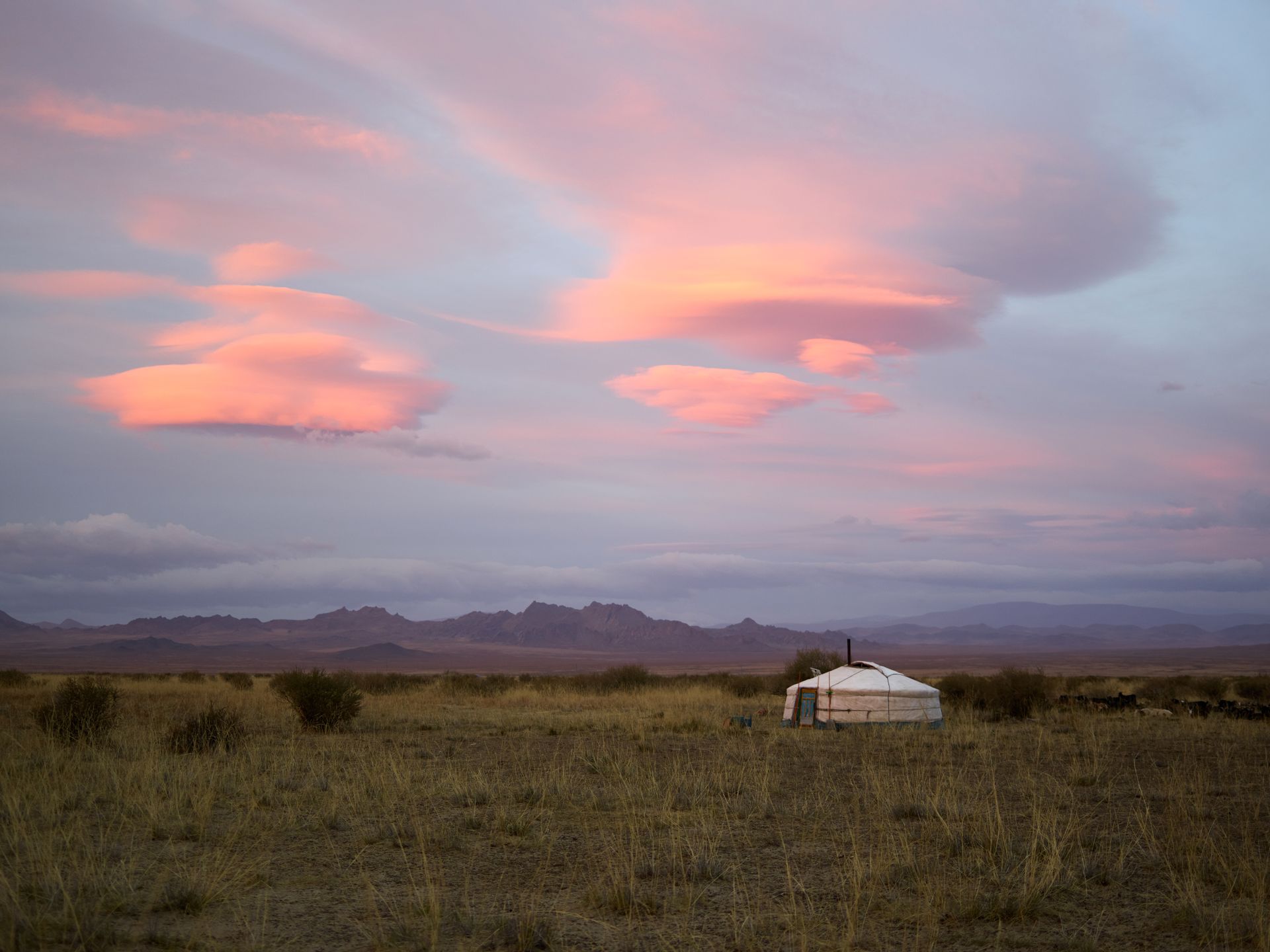
Central Asia
Mongolia
More horizon than border, with a rhythm still set by nomadic life rather than the clock.
How it works
This is how your journey to Australia takes shape.
Six steps, from your first story to your homecoming. The conversation and the feasibility check cost you nothing.
-
01
Tell us your story
Fill in the form or give us a call. You do not need a route yet: a country, a period or just an idea is enough.
-
02
The conversation and the check
We call you within two working days. We talk through what you are looking for and check whether it can be done. If it can, we set down together what we will make for you.
-
03
We design your journey
We build your programme up, day by day, together with our own people in the country itself.
-
04
Your proposal
You read your journey day by day, with everything that is included. You say what you would like differently, until it is right.
-
05
Ready to depart
You send us your details, we send you your travel documents. You have one fixed contact who knows your journey.
-
06
Travelling, and after
Your contact stays reachable while you are away. Once you are home, we call one more time.
The next step
How would you like to experience Australia?
Tell us what draws you to Australia, who you are travelling with and how much time you have. We get to know you as a traveller first and build from there, together with a local partner who knows the country from the inside.
Updated in October 2026