Journal
An hour with the mountain gorillas, and why Rwanda keeps it strict
Eight visitors, one hour, seven metres: the rules around Rwanda's mountain gorillas are mostly about calm and health. They have helped a population that is growing again.
At seven in the morning, the day's visitors gather at the headquarters of Volcanoes National Park in Kinigi. They are assigned to the gorilla families according to fitness, and briefed on the rules of the visit.
What happens next has little in common with a safari. You don't drive around until something appears. You walk with a guide and trackers to a single family, and there you stay for an hour. A whole set of rules surrounds that hour, and each has a reason. Once you know the reasons, the morning in the forest looks different.
A family that is used to people
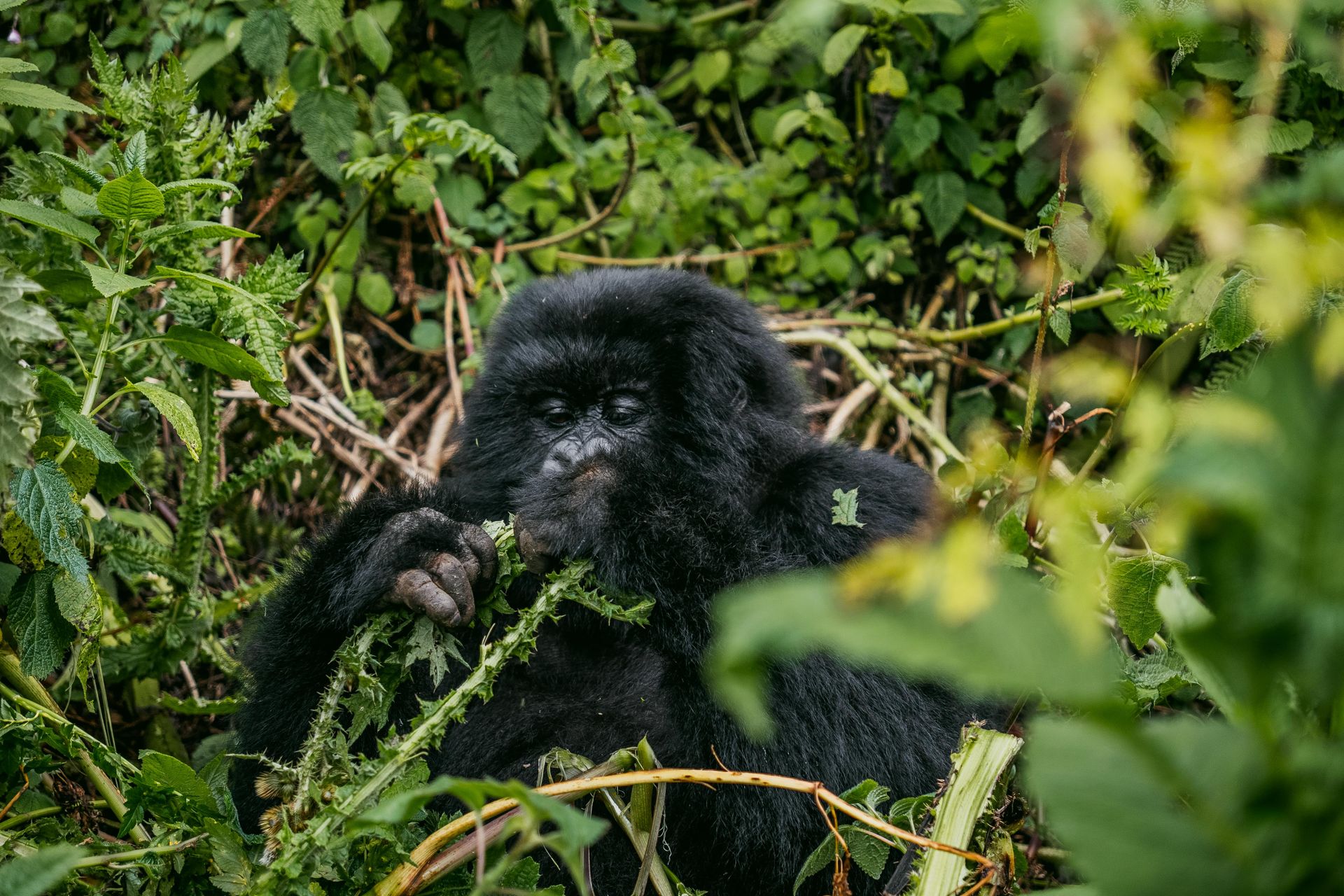
The gorillas you visit are accustomed to humans. The process is called habituation: a wild group learns to accept a human observer as a neutral part of its surroundings. According to the great ape tourism guidelines published by the IUCN in 2010, mountain gorilla groups have occasionally been habituated within a year. On average it takes two years of patient, repeated contact.
Visit Rwanda lists twelve families in Volcanoes National Park that are fully habituated and open to visitors, plus a few others habituated for scientific research only. A family has at least one silverback, with several females and young. Its make-up shifts over time, but each group tends to keep to a preferred area, and rangers monitor the families closely.
That monitoring is also why the young are given names. Since 2005 Rwanda has held Kwita Izina every year. Visit Rwanda writes that the ceremony is modelled on a centuries-old custom in which Rwandans name their children in the presence of family and friends. A name makes it easier to keep track of each animal and each group. In September 2026, 22 infant mountain gorillas were named, bringing the total to 460 according to the Rwanda Development Board.
Eight people, one hour
No more than eight visitors go to each family per day, and a family receives a maximum of one hour of visiting time. With twelve families, that comes to 96 permits a day for the whole country. Nobody under fifteen may join.
The numbers are not arbitrary. The IUCN guidelines explain that every extra person near a group of apes adds to two things: disturbance and the risk of disease. In dense forest a sudden noise or movement can cause alarm, and the more people there are, the harder it becomes to avoid hemming the group in. For new sites the IUCN recommends no more than four visitors. The mountain gorilla parks work with more, and the Mountain Gorilla Veterinary Project, which provides the animals' medical care, proposes six visitors rather than eight as a higher standard.
The hour follows the same logic. Disturbance is limited to one short, fixed moment, and for the rest of the day the family feeds, rests and moves on without an audience. An hour sounds brief. On the mountain it is brief, and that is the point.
Seven metres and an honest throat
Great apes can catch human diseases because we are so closely related. The IUCN points to research giving convincing evidence that viruses pass from humans to wild apes, and notes that apes are particularly vulnerable to diseases they have never been exposed to. The stress of habituation can also make them more susceptible. Among mountain gorillas, respiratory illness accounts for about a quarter of investigated deaths, the second leading cause after trauma. That comes from Emerging Infectious Diseases, the journal of the United States public health service, in a study that also shows how direct the link with people is: during outbreaks between June 2012 and February 2013, HRSV-A, a human virus circulating worldwide, turned up in twelve of twenty samples from sick gorillas, and in none of the samples from animals without symptoms. A cold that you shake off in a week carries real weight in a small population.
That makes the rules at the gorillas health rules first of all. The guidelines drawn up in 2009 by the Mountain Gorilla Veterinary Project as a minimum for Rwanda, Uganda and the Democratic Republic of the Congo ask you to keep seven metres away, not to eat or drink near the animals, and to leave backpacks, walking sticks and food at least 100 metres back. You speak softly and take photographs without flash. Anyone who feels unwell, or has diarrhoea or a sore throat, tells the guide, because people showing signs of infection should not be near the gorillas.
That last rule is the hardest, because it depends entirely on you. Only you know whether you woke up with a temperature or a scratchy throat. It is also the rule that protects the animals most.
What the strictness has achieved
In the early 1980s the Virunga Massif, the chain of volcanoes Rwanda shares with Uganda and the Democratic Republic of the Congo, held around 250 mountain gorillas. The Rwanda Development Board now puts the figure at more than 600. Together with the second population in Bwindi, Uganda, where the 2018 census came to 459 gorillas in 36 groups plus sixteen solitary animals, according to the International Gorilla Conservation Programme, there are more than 1,060 mountain gorillas. In 2018 the IUCN moved the subspecies from Critically Endangered to Endangered because its numbers had risen.
The RDB describes the mountain gorilla as the only great ape whose population continues to grow, and credits decades of collaboration between governments, conservation organisations, researchers, vets, rangers and communities. Tourism plays its part: ten per cent of national park tourism revenue goes to the communities around protected areas, funding schools, health centres and roads among other things. A compensation fund covers farmers when gorillas damage their crops, and work as rangers, trackers, porters and drivers gives local people an income.
The protection itself is older than the tourism. On 24 September 1967 Dian Fossey pitched two tents in the Virungas and started the Karisoke Research Center there; she made the name from the two mountains it sits between, Karisimbi and Bisoke. The Dian Fossey Gorilla Fund, which still works there, calls it one of the longest-running field studies of any animal species.
What it means when you go
According to Visit Rwanda, the walk to a family takes anything from half an hour to four hours or more, at altitudes between 2,500 and 4,000 metres. Nobody knows in advance how long it will be, because the gorillas move. Porters carry backpacks and cameras and offer a hand on the steep sections. Sturdy boots, gaiters and gloves are useful among the stinging nettles.
With only 96 places a day, the permit needs arranging well ahead. It is also worth thinking about how you want to spend the hour. A camera held permanently in front of your face puts the family at a distance. Our advice is simple: put it away for a while and watch.
The rules may feel like a restriction. They are also the reason more than twice as many gorillas live in the Virunga today as in the early 1980s.
Questions we are often asked
How long can you stay with the mountain gorillas?
One hour. Each habituated family in Volcanoes National Park receives a maximum of one hour of visiting per day, from a group of no more than eight people. The walk there and back comes on top of that.
What is the minimum age for gorilla trekking in Rwanda?
Fifteen. Younger children cannot take part. The IUCN gives mainly a health reason: children are more likely to carry common childhood illnesses, even when vaccinated, which makes them a greater risk to the gorillas.
What happens if I have a cold on the day of my trek?
Tell your guide. People showing signs of infection, such as a sore throat or diarrhoea, should not be near the gorillas, because mountain gorillas can catch human respiratory diseases. It is hard after months of anticipation, but it is the rule that protects the animals best.
How hard is the walk to the gorillas?
It depends on where the family is that morning. It can be half an hour or four hours and more, between 2,500 and 4,000 metres. Fitness is taken into account when groups are assigned, and porters help with your bags.
How many mountain gorillas are left?
More than 1,060, according to the Rwanda Development Board in September 2026. Just over 600 live in the Virunga Massif and the rest in Bwindi, Uganda. In the early 1980s the Virunga population stood at around 250.
Further reading
More from the journal
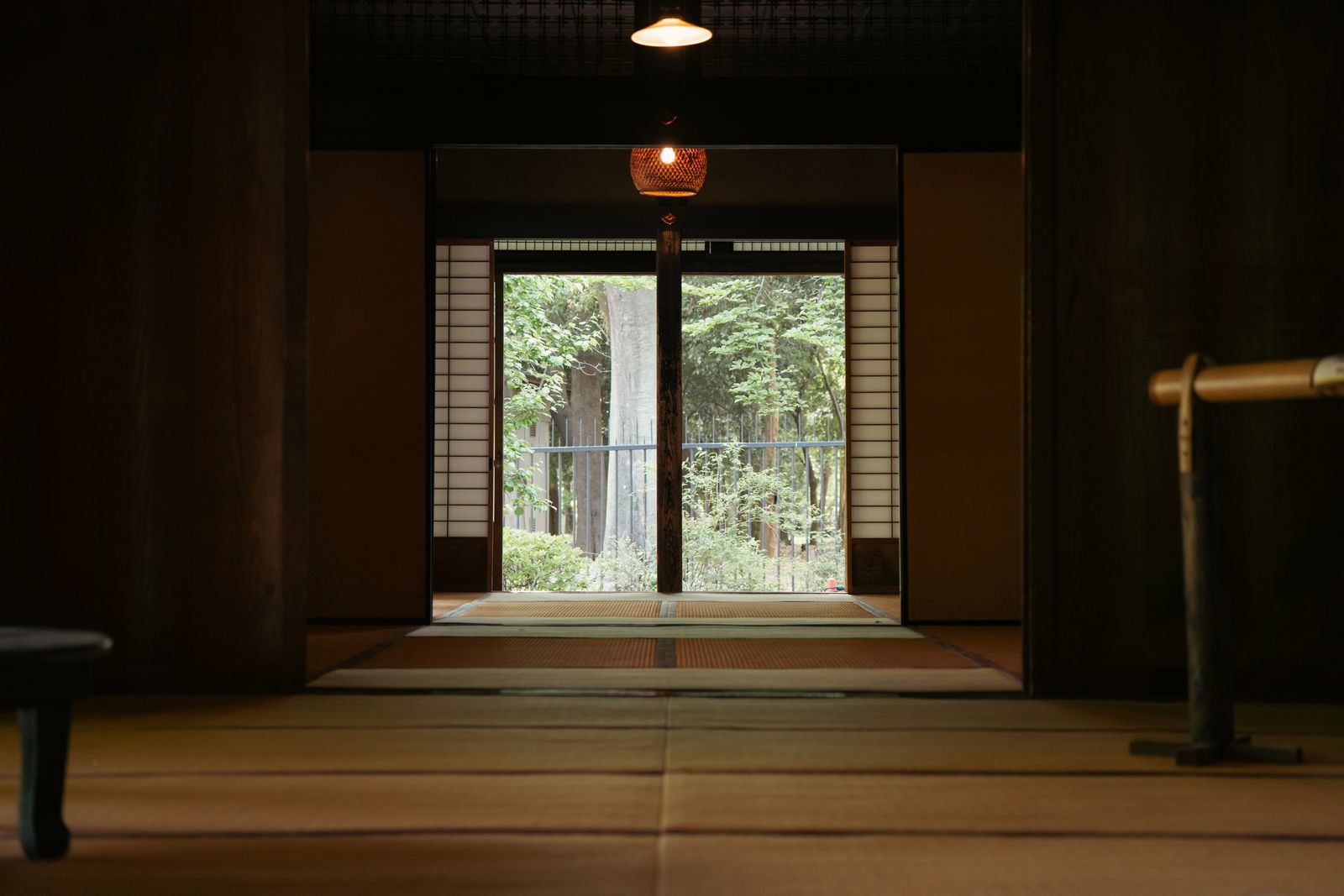
Ryokan and onsen: staying and bathing the Japanese way
A ryokan is not a hotel with Japanese decor. On shoes and slippers, the yukata, washing before you bathe, tattoos, kaiseki, and why a stay like this is part of the journey.
Read more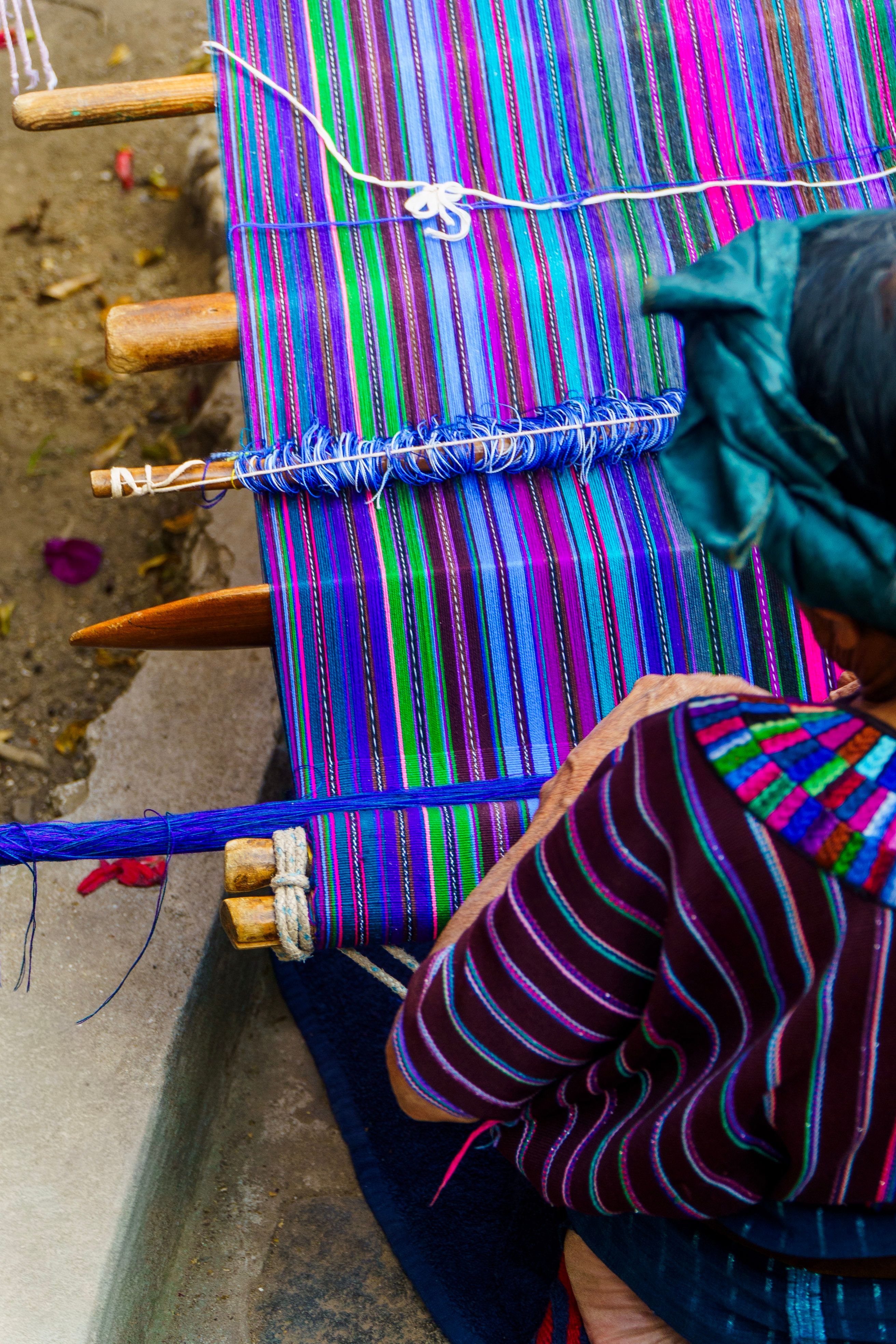
The huipil: how a Guatemalan village speaks through thread
In the Guatemalan highlands, a huipil tells you where a woman comes from. On backstrap weaving, designs that belong to a community, and what visitors should and shouldn't do.
Read moreAnd your trip?
From reading to a conversation.
What you read here is background, not an offer. Curious how a place like this fits into your trip? Tell us what you are looking for. That is where it starts.
Updated in October 2026